
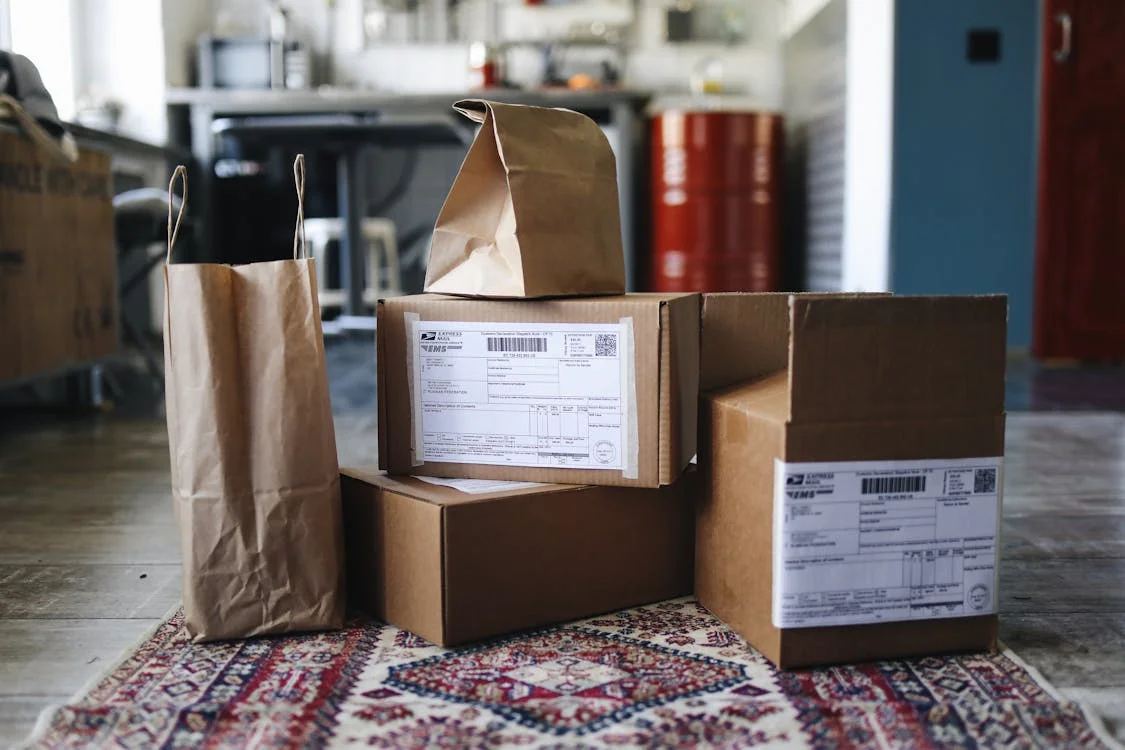
Most sellers calculate profit as revenue minus product cost and shipping. Returns are treated as a line item — "return shipping: $7" — and forgotten. The real number is far worse. A single return triggers costs across six or seven categories that never appear on any invoice, and the cumulative damage to your account health compounds over time.
This article breaks down exactly what one return costs, shows how that math scales across a typical month, and compares two strategies: reducing returns versus pushing more sales volume.
What One Return Actually Costs
Here is the full cost breakdown for a $45 apparel item with a 55% gross margin:
| Cost Component | Amount | Notes |
|---|---|---|
| Outbound shipping | $4.50 | Negotiated carrier rate, pick and pack |
| Return shipping | $6.00 | Return labels cost more — no volume discount on inbound |
| Packaging materials | $1.50 | Poly mailer, tissue, hang tag, tape — all wasted |
| Advertising spend (wasted) | $5.50 | PPC cost to acquire that click, now yielding $0 revenue |
| Warehouse labor (2×) | $3.00 | Pick-pack outbound + receive-inspect-restock inbound |
| Product depreciation | $4.00 | Opened, tried on, tags removed — cannot resell at full price |
| Platform opportunity cost | $2.00 | Conversion rate drops, ranking algorithm penalizes |
| Total per return | $26.50 |
On a $45 item with ~$25 gross profit, a single return wipes out the entire margin and then some. You don't break even on a returned order — you lose money.
The National Retail Federation's 2025 Retail Returns Landscape put the figure at $849.9 billion in returned merchandise — 15.8% of all retail sales and 19.3% of online sales. On a per-item basis, processing a return costs retailers between $10 and $65, with the average around $20-$30 depending on category and logistics setup.
Put plainly: a return is not the price of the return label. It is every cost the order already carried — acquisition, pick, pack, and shipping — plus the cost of reversing it, minus the sale you thought you had. That definition is why a $6 return label can sit on top of a $26.50 loss.
How Price Point Changes the Impact
Returns hit low-price items hardest in relative terms:
| Price Tier | Unit Price | Gross Margin | Return Cost | Returns Needed to Wipe One Sale's Profit |
|---|---|---|---|---|
| Budget | $15 | $5.25 (35%) | $12-15 | 0.4 (every return kills 2.5 sales) |
| Mid-range | $45 | $24.75 (55%) | $22-28 | 1.0 (one return kills one sale) |
| Premium | $120 | $72.00 (60%) | $35-50 | 0.6 (one return kills ~0.6 sales) |
Budget sellers running at 35% margins cannot absorb returns. At a 30% return rate, a $15 item generates negative net margin before accounting for any overhead.
2025 Return Rate Benchmarks by Category
| Category | Average Return Rate | Primary Reason |
|---|---|---|
| Apparel & footwear | 24-40% | Size/fit mismatch |
| Electronics | 10-15% | Did not meet expectations |
| Home & furniture | 8-15% | Size mismatch, color difference |
| Beauty & personal care | 5-8% | Allergic reaction, wrong shade |
| Books & media | 3-5% | Accidental order |
| All e-commerce (US avg) | 19.3% online / 15.8% total retail (NRF 2025) | — |
Apparel dominates the return problem. The Shopify Enterprise blog reports that clothing and shoes have the highest return rates in e-commerce, driven primarily by sizing issues — the one problem that better product images and annotations can directly address. If you sell more than one category, benchmark each line against the full size return rate by category before deciding where to spend the effort.
The Five Return Reasons (and Which Ones You Can Prevent)
| Rank | Reason | Share | Preventable? | Prevention Method |
|---|---|---|---|---|
| 1 | Size / fit doesn't match | 30-40% | Yes | Detailed size chart + dimension annotations on images |
| 2 | Item looks different than photos | 15-20% | Mostly | Accurate photography, proper white balance, no over-editing |
| 3 | Material / texture not as expected | 10-15% | Partially | Close-up detail shots + fabric composition in description |
| 4 | Impulse purchase regret | 15-20% | Barely | Clearer product info reduces post-purchase cognitive dissonance |
| 5 | Quality defect | 5-10% | Yes | Pre-ship quality inspection |
The top reason — size mismatch — accounts for 30-40% of all returns and is the most directly addressable through listing improvements. A clear size chart paired with annotated measurements on the product image eliminates the guesswork that causes buyers to order the wrong size.
How Returns Damage Your Account Beyond the Immediate Loss
The financial hit of a single return is painful. The algorithmic hit is worse:
| Metric | Low Return Rate (<10%) | Medium (10-20%) | High (>20%) |
|---|---|---|---|
| Search ranking | Positive signal | Neutral | Negative pressure |
| Buy Box eligibility | Strong | Normal | At risk |
| Advertising efficiency | Lower ACOS | Average | Higher ACOS (waste) |
| Account health | Safe | Monitor | Warning zone |
| Repeat purchase rate | Higher | Average | Lower (trust eroded) |
High returns create a death spiral: poor metrics → less organic traffic → higher ad spend to compensate → thinner margins → pressure to cut corners → more returns.
ROI Math: Reducing Returns vs. Selling More
Consider a seller doing 1,000 orders/month at $45 average order value with a 25% return rate:
Current state:
| Metric | Value |
|---|---|
| Orders | 1,000 |
| Returns | 250 |
| Net fulfilled | 750 |
| Gross profit (750 × $24.75) | $18,562 |
| Return costs (250 × $26.50) | -$6,625 |
| Net margin | $11,937 |
Scenario A — Drop return rate from 25% to 15%:
| Metric | Value |
|---|---|
| Returns | 150 (100 fewer) |
| Net fulfilled | 850 |
| Gross profit (850 × $24.75) | $21,037 |
| Return costs (150 × $26.50) | -$3,975 |
| Net margin | $17,062 |
| Gain | +$5,125 (+42.9%) |
Scenario B — Keep 25% return rate, push 200 more orders:
| Metric | Value |
|---|---|
| Orders | 1,200 |
| Returns | 300 (25%) |
| Net fulfilled | 900 |
| Extra ad spend (200 × $5.50) | -$1,100 |
| Gross profit (900 × $24.75) | $22,275 |
| Return costs (300 × $26.50) | -$7,950 |
| Net margin | $13,225 |
| Gain | +$1,288 (+10.8%) |
Cutting the return rate by 10 points delivers a 42.9% profit increase. Pushing 200 more sales at the same return rate only adds 10.8%. The leverage from return reduction far exceeds the leverage from volume growth.
Five Actions to Lower Your Return Rate
Ranked by effort-to-impact ratio:
Action 1: Add Dimension Annotations to Product Images
Time: 2-4 hours per SKU. Annotate 3-5 key measurements directly on a flat-lay product photo. Use clean lines, legible font, and high-contrast colors. The measurement has to be measured, not styled on: a line snapped to the product's real edges, so the number on the image matches the number on the unit. You can see the before/after in this wall cabinet size-label case study.
Expected impact: 20-40% reduction in size-related returns.
You cannot photograph your way out of a measurement problem; you can only label your way out. Before you spend the hours, size the prize: run your own order and return numbers through the return cost calculator to see what one point of return rate is worth to your store.
Action 2: Include a Reference-Object Comparison Photo
Time: 5 minutes per product during the photo shoot. Place a common object (phone, pen, coin) next to the product to give buyers an instant sense of scale.
Expected impact: Reduces "bigger/smaller than expected" returns significantly.
Action 3: Calibrate Photo Color Accuracy
Time: One-time setup. Use a gray card for white balance. Shoot under consistent lighting. Avoid heavy color grading in post-production.
Expected impact: 30-50% reduction in "looks different in person" returns.
Action 4: Add Fabric Weight and Texture Details
Time: 15 minutes per listing. Include fabric composition, GSM (grams per square meter), and a close-up texture shot. Describe the hand-feel in plain language: "lightweight and airy" vs. "thick and structured."
Expected impact: 20-30% reduction in material-expectation returns.
Action 5: Implement Pre-Ship Quality Checks
Time: 10-15 seconds per unit. Visual inspection for loose threads, stains, tears, and missing components before packing.
Expected impact: Near-zero quality-defect returns.
FAQ
What's a "normal" return rate?
It varies widely by category. NRF's 2025 Retail Returns Landscape put online returns at 19.3% and total retail returns at 15.8%. Apparel runs 24-40%. Electronics 10-15%. If your return rate is 10+ percentage points above your category average, something in your listing is misleading buyers.
Does Amazon penalize sellers for high return rates?
Not with a hard cutoff, but Amazon's search algorithm factors in customer satisfaction signals including return rate, negative reviews, and A-to-Z claims. Listings with persistently high returns gradually lose organic visibility and Buy Box share.
Will offering free returns increase my return rate?
Slightly — free returns lower the friction for buyers who are on the fence. But free returns also increase conversion rate because buyers feel safer purchasing. The net effect depends on your product category. For apparel, the conversion lift usually outweighs the return increase.
How much can better product images realistically reduce returns?
Industry data suggests that size-related returns specifically (the #1 category) can be reduced by 20-40% through better size charts and dimension annotations. Since size accounts for 30-40% of all returns, the net impact on total return rate is roughly a 6-16 percentage point reduction — significant for any seller.
Is return fraud a major cost driver?
The NRF reports that about 13.7% of returns involve some form of fraud or abuse (wardrobing, empty box, etc.). It's a real problem but secondary to the much larger category of legitimate returns caused by poor product information.
Sources & References
- NRF — 2025 Retail Returns Landscape — $849.9B returned; 15.8% total and 19.3% online return rates.
- NRF: Consumers Expected to Return Nearly $850 Billion in Merchandise in 2025
- Ecommerce Returns: Average Return Rate and How to Reduce It — Shopify Enterprise
- What's The Average Ecommerce Return Rate? — Red Stag Fulfillment
- 42 Ecommerce Return Statistics You Need to Know in 2026 — Ringly.io
- Reverse Logistics: Containing Costs Without Losing Customers — Radial