
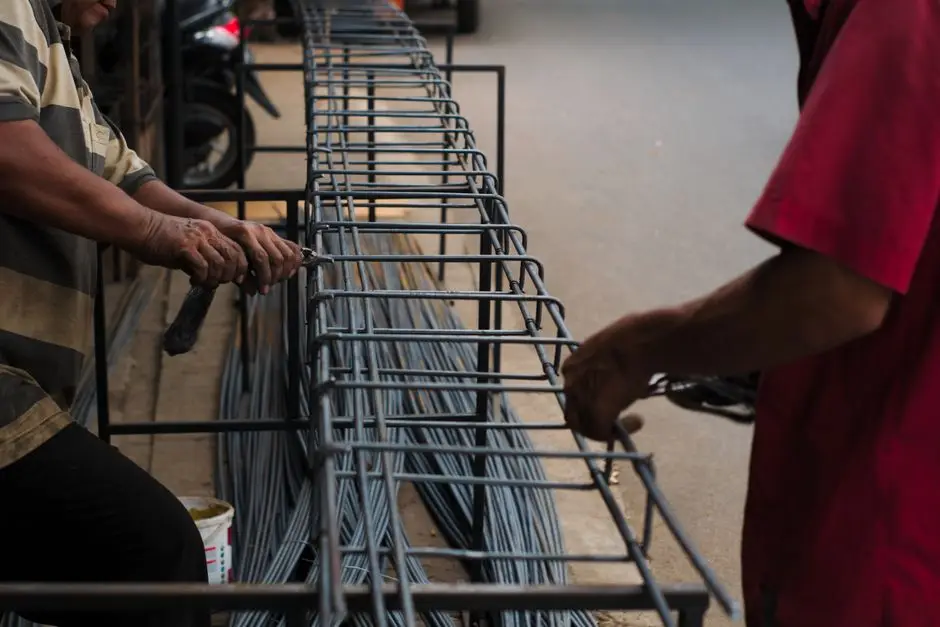
Las designaciones de varilla corrugada son el único código de producto en construcción donde el número marcado en la varilla y el número que el comprador tiene en la cabeza pueden diferir en un factor de tres sin que nadie lo note hasta que llega el contenedor. Seis creencias explican casi todos los casos. Cada una le ha costado un contenedor a alguien.
Una designación de varilla es una etiqueta para una sección transversal nominal, no un diámetro medido. Esa sola frase resuelve cinco de los seis mitos que siguen.
Mito 1: "La varilla #4 mide 4 mm"
Mide 12.7 mm.
Las medidas estadounidenses cuentan octavos de pulgada. La #4 son cuatro octavos —media pulgada—, es decir 12.7 mm. La #8 son ocho octavos, una pulgada, 25.4 mm. Arriba de la #8 el patrón se rompe: la #9, la #10 y la #11 se definen por área y no por una fracción simple, y la #14 y la #18 son un caso aparte.
| Medida EE. UU. | Diámetro nominal | Nombre métrico suave | Masa |
|---|---|---|---|
| #3 | 9.5 mm | #10 | 0.560 kg/m |
| #4 | 12.7 mm | #13 | 0.994 kg/m |
| #5 | 15.9 mm | #16 | 1.552 kg/m |
| #6 | 19.1 mm | #19 | 2.235 kg/m |
| #7 | 22.2 mm | #22 | 3.042 kg/m |
| #8 | 25.4 mm | #25 | 3.973 kg/m |
| #9 | 28.7 mm | #29 | 5.060 kg/m |
| #10 | 32.3 mm | #32 | 6.404 kg/m |
| #11 | 35.8 mm | #36 | 7.907 kg/m |
Quien lee "#4" como un valor en milímetros termina pidiendo una varilla con un tercio del diámetro y un noveno del área que necesitaba. Pasa sobre todo en pedidos de prueba pequeños, cerrados por correo y sin plano.
Mito 2: "La #13 es una varilla distinta de la #4"
Es la misma varilla con nombre métrico. El sistema de designación métrica suave renombra las varillas estadounidenses por su diámetro aproximado en milímetros —la #4 pasa a ser #13, la #8 pasa a ser #25— sin cambiar la varilla, la laminación ni el sistema de marcado. La referencia del CRSI sobre medidas y marcas de varilla lista ambos nombres para el mismo producto.
La trampa va en el sentido contrario: un comprador de un mercado métrico que pide "varilla de 13 mm" puede querer de verdad una varilla de 13 mm laminada bajo norma métrica, y no una varilla estadounidense de 12.7 mm con alias métrico. Pregunte qué norma rige antes de cotizar. Lo define el nombre de la norma; el número no.
Mito 3: "Grade 60, B500B y HRB400 son intercambiables"
Son tres límites de fluencia mínimos distintos.
| Designación | Norma | Fluencia mínima |
|---|---|---|
| Grade 60 | ASTM A615/A615M | 420 MPa (60,000 psi) |
| Grade 80 | ASTM A615/A615M | 550 MPa |
| B500A / B500B / B500C | BS 4449 | 500 MPa característico |
| HRB400 | GB 1499.2 | 400 MPa |
| HRB500 | GB 1499.2 | 500 MPa |
Sustituir por HRB400 donde el diseño pedía Grade 60 significa regalar 20 MPa de fluencia. En las conversaciones comerciales se le suele llamar "equivalente", y no lo es: es una sustitución que un ingeniero estructural tiene que aprobar, por escrito, antes de que entre en una losa. Los grados de BS 4449 también difieren entre sí: A, B y C describen clase de ductilidad, no resistencia, y quien especificó B500C lo hizo por algo.
La ductilidad, el comportamiento al doblado y los requisitos de fatiga también varían entre estas normas. ASTM A615/A615M y GB 1499.2 son documentos públicos: cite la cláusula, no la regla de dedo.
Mito 4: "El diámetro es lo que marque el calibrador"
Ponga un calibrador sobre una varilla corrugada y leerá algo mayor que el diámetro nominal, porque está midiendo sobre las corrugas. El diámetro nominal se deriva de la masa por unidad de longitud, calculada hacia atrás como si la varilla fuera un redondo liso del mismo acero.
Por eso la masa por metro es la medición de aceptación, no la lectura del calibrador. Y por eso también una varilla puede pasar la revisión con calibrador y reprobar la inspección de entrada: las corrugas están dentro de tolerancia mientras la sección de abajo viene ligera.
Consecuencia práctica para el proveedor: publique juntos el diámetro nominal, la masa nominal por metro y la desviación de masa permitida. Publicar un solo número es invitar al comprador a verificarlo por el camino equivocado.
Mito 5: "T12 significa grado T, 12 mm"
En la práctica británica, el viejo prefijo "T" marcaba una varilla corrugada de alta fluencia y el número era el diámetro en milímetros: T12 era una varilla corrugada de 12 mm, no un grado. La práctica británica actual de detallado bajo BS 8666 usa H para varilla corrugada grado B500B o B500C, así que la misma varilla hoy aparece como H12 en una planilla de doblado.
Si llega una planilla de despiece con marcas que empiezan con T, o es un plano viejo o es un despacho que no actualizó su plantilla. Cualquiera de las dos está bien, pero confirme el grado de forma explícita en lugar de asumir que la letra lo carga, porque antes lo cargaba y ahora no.
Mito 6: "La tolerancia de peso es un detalle"
La varilla se compra por masa y se usa por sección. La brecha entre esas dos cosas es donde el margen desaparece en ambos sentidos, y por eso los límites de desviación de peso están dentro de las normas de producto y no en un anexo comercial.
Este punto cambió hace poco y conviene conocerlo si usted vende desde China o compra allá: GB 1499.2-2024 reemplazó a la edición de 2018, entró en vigor el 25 de septiembre de 2024 y —esto es lo importante— pasó de ser una norma recomendada (GB/T) a una norma obligatoria (GB), con requisitos revisados de desviación de peso y de reinspección. Una cotización que todavía cite GB/T 1499.2-2018 está citando un documento derogado.
Lo que sí funciona: designaciones de varilla corrugada completas
Ponga la identidad completa de la varilla en el papeleo y en el plano, en este orden:
- Norma y edición —— ASTM A615/A615M-24, BS 4449:2005+A3:2016, GB 1499.2-2024
- Grado —— Grade 60, B500B, HRB400
- Medida —— la designación que usa esa norma, más el diámetro nominal en mm
- Masa nominal por metro y la desviación permitida
- Marcas de la varilla —— acería, medida, símbolo de grado, tal como vienen laminadas
- Referencia del certificado de ensayo —— número de colada, certificado de acería, EN 10204 3.1 si lo piden
Seis líneas eliminan toda la lista de mitos. Para las convenciones de etiquetado en el catálogo más amplio de materiales de construcción, cómo etiquetar dimensiones de materiales de construcción cubre el acomodo, la referencia de medidas estándar de varilla trae la tabla completa y los diagramas de especificación de materiales de construcción muestran cómo se ve una hoja terminada cuando sale de la oficina.
Próximos pasos
- Audite sus fichas de producto actuales en busca de designaciones sueltas. Cualquier lugar donde diga "#4" o "12 mm" sin una norma al lado es una disputa futura.
- Agregue la masa nominal por metro a cada fila de medida. Es el número que el inspector del comprador va a medir de verdad.
- Actualice las citas a las ediciones vigentes, en particular cualquier cosa que siga refiriéndose a GB/T 1499.2-2018.
- Ponga la medida y el grado en la imagen del producto, no solo en la tabla. Los atados se ven idénticos en fotografía; una imagen de especificación que lleva el diámetro medido, el grado y la norma sobre la varilla misma es la diferencia entre una foto de catálogo y un documento con el que un contratista puede ordenar. La medición tiene que ser real, y esa es la razón para usar anotación que se ajuste al borde verdadero y fije el valor medido sobre la imagen, en vez de una ilustración generada por IA que imprime un diámetro que nadie verificó.
Preguntas frecuentes
¿Qué significa varilla #4?
Las medidas estadounidenses de varilla cuentan octavos de pulgada, así que la #4 es 4/8 in —0.5 in, o 12.7 mm de diámetro nominal—, con una masa nominal de 0.994 kg/m. Su nombre métrico suave es #13, que es la misma varilla.
¿Cuál es la diferencia entre la varilla #4 y la #13?
Ninguna física. La #13 es la designación métrica suave de la misma varilla estadounidense #4, nombrada por su diámetro aproximado en milímetros. Si el comprador quiere una varilla genuinamente métrica de 13 mm laminada bajo BS 4449 o GB 1499.2, ese es otro producto: pregunte qué norma aplica.
¿HRB400 equivale a Grade 60?
No exactamente. HRB400 tiene una fluencia mínima de 400 MPa bajo GB 1499.2; ASTM A615 Grade 60 exige 420 MPa. Se comercian a menudo como equivalentes, pero sustituir uno por otro es una decisión de diseño que necesita la aprobación escrita del ingeniero.
¿Cómo verifico la medida de la varilla al recibirla?
Pese un tramo de longitud conocida y compárelo contra la masa nominal por metro; luego revise las marcas laminadas de acería, medida y grado. Un calibrador sobre las corrugas lee de más y no detecta una varilla con peso faltante.
¿Qué norma de varilla debo citar para exportación?
Cite la norma que especificó el diseñador del mercado de destino —ASTM A615/A615M para Estados Unidos, BS 4449 para el Reino Unido y buena parte de Medio Oriente, GB 1499.2 para obra doméstica en China— y nombre la edición. Una varilla puede producirse bajo más de una norma, pero solo si el certificado lo dice.