
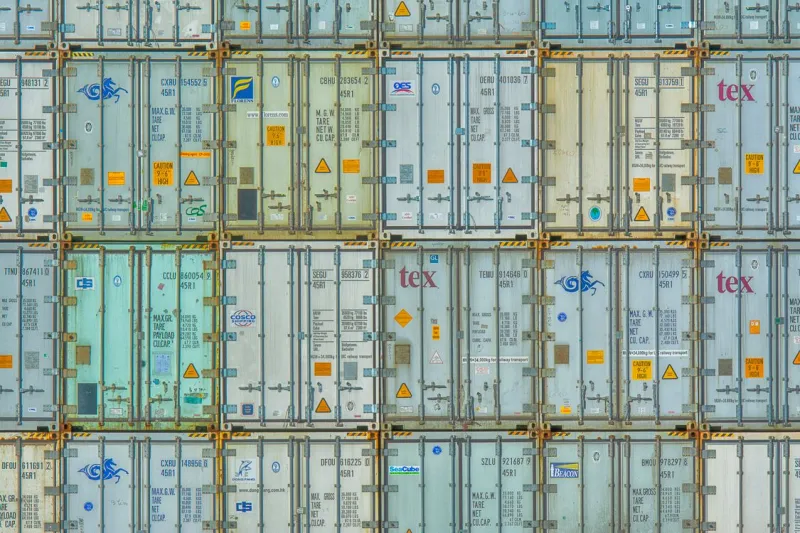
How clear spec images cut returns is easy to state and easy to ignore: a mis-sized container of tile, paneling, or extruded profile doesn't bounce back like a small parcel. It sits at the destination port, gets reweighed and re-measured, and turns into a multi-week argument over who eats the freight. Building materials are heavy, palletized, and shipped by the cubic meter or the container — so a size mismatch that would cost an apparel seller a $6 return label costs a building-material exporter thousands of dollars and a damaged buyer relationship. The fix isn't a nicer photo. It's a spec image the buyer signs off on, in writing, before the pallet is wrapped.
The Freight Math: How Clear Spec Images Cut Returns on Heavy Shipments
Run the numbers on an actual size-mismatch dispute and the case for confirming specs early stops being a "nice to have." Below is an illustrative breakdown for two common scenarios: a partial LCL (less-than-container-load) shipment of tile, and a full 40-foot container of panels or profiles, using 2026 freight benchmarks.
| Cost component | LCL shipment (~5 CBM) | FCL 40ft container | Basis |
|---|---|---|---|
| Outbound ocean freight | $350 – $900 | $5,000 – $13,000 | 2026 China–US LCL rates run $55–$180/CBM; FCL spot rates surged to this range on peak-season demand and blank sailings |
| CFS handling, THC, documentation | $150 – $300 | $200 – $400 | Container Freight Station fees plus terminal handling on both ends |
| Demurrage/detention while the dispute is investigated | $100 – $300 (partial share) | $1,000 – $4,500 | Ports commonly charge $100–$300 per container per day once free time expires, and disputes routinely run past it |
| Rework, resample, or replacement production | Often 1–3x the freight cost | Often 1–3x the freight cost | Scales with order size and how much of the batch has to be remade |
| Typical total exposure | roughly $1,300 – $4,000 | roughly $14,000 – $35,000 | Freight + demurrage + rework, all-in |
The pattern that matters isn't any single number — it's the multiplier. A small parcel return caps out around the price of shipping; a building-material export dispute compounds freight, port fees, and re-production into a bill that can wipe out the margin on the entire order. Run your own containers through a return cost calculator to see how the math changes with your specific freight class, order value, and lane.
The Confirmation Gap That Turns a Small Error Into a Building-Material Export Dispute
Almost every size-mismatch dispute traces back to the same gap: the buyer's mental picture of the spec and the factory's production spec were never actually the same document. A few ways that gap opens up on building-material orders specifically:
- Nominal versus actual dimension. A "600x600mm" ceramic tile is a nominal size; firing shrinkage means the actual batch can vary by a couple of millimeters, and if that tolerance was never stated, the buyer assumes exact. This single gap is behind most of the tile shipment dispute cases that reach a platform's mediation team.
- Sample-to-batch drift. The buyer approves a pre-production sample, but the mass-production run — sourced from a different clay batch, a different extrusion die, a different mill run — ships at a slightly different thickness or length.
- Description instead of diagram. "Panel thickness 18mm, length 2400mm" in a WeChat message or email thread is a claim, not a confirmed spec — there's no labeled reference image either party can point back to when something looks off.
- Unit and orientation mix-ups. Metric-to-imperial conversion errors and swapped length/width labels are common enough in cross-border trade that Alibaba and Made-in-China both treat "goods not matching the agreed description" as a standard dispute category, not an edge case.
- No documented sign-off before loading. The order proceeds to production and shipment without a specific "yes, this is the size" confirmation tied to the purchase order — so when a dispute opens, neither side has a clean record of what was actually agreed.
The mechanism is the same one driving up furniture return rate: the buyer's expectation of size and the shipped reality diverge, and by the time anyone notices, the product is already in transit. Building materials just make the consequence of that gap dramatically more expensive, because the freight is heavy and the batches are large.
The ROI of Pre-Shipment Spec Confirmation
Pre-shipment spec confirmation is the practice of getting the buyer's explicit, documented agreement on exact dimensions — usually via a labeled image or spec sheet tied to the purchase order — before production finishes and the container is loaded. It is the cheapest step in the entire export process, and it sits right before the most expensive failure mode on the timeline.
How clear spec images cut returns is ultimately a timing question, not a documentation one: confirm before the container is sealed, and the entire downside column in the table above simply never gets invoiced. At the low end, pre-shipment spec confirmation costs close to nothing: an annotated photo attached to an email, with a reply confirming the numbers, takes minutes and adds no line item to the order. At the higher end, a formal third-party pre-shipment inspection — the kind SGS, Bureau Veritas, or QIMA run before a container is sealed — costs roughly $150 to $700 per man-day depending on the inspector and the material category. Even that upper bound is under 5% of the typical exposure on a disputed FCL shipment from the table above.
This is the export-freight version of a pattern that shows up earlier in the sales funnel too: how to reduce pre-sale questions about size with a labeled image instead of back-and-forth messages. A building-material export dispute is what happens when that same question — "what size, exactly, am I getting?" — never got a documented answer before production started. Confirming the spec doesn't just prevent a dispute; it removes the ambiguity that a dispute needs in order to exist.
Two Workflows: Minimal vs Thorough Spec Confirmation
Not every order needs the same level of ceremony. The right tier depends on order value, whether the buyer is new, and how much natural variance the material has.
| Tier | Cost | Time added | Best for |
|---|---|---|---|
| Minimal | Near $0 | Same day | Repeat orders, standardized catalog SKUs, proven factories |
| Thorough | $150 – $700+ per inspection | 2 – 5 days | New buyers, custom dimensions, high-value or mixed-SKU containers |
Minimal-tier checklist:
- State exact dimensions and tolerance in writing (not just "approximately")
- Attach one labeled photo or diagram showing the measurements against the actual unit
- Get an explicit reply — "confirmed" or a signature on the proforma invoice line — not silence
- File the confirmation with the purchase order number so it's retrievable if a dispute opens later
Thorough-tier checklist:
- Ship a pre-production sample and get documented buyer sign-off before mass production
- Attach a formal spec sheet with per-batch tolerances to the proforma invoice
- Book a third-party pre-shipment inspection before the container is sealed
- Archive the inspection report and reference photos alongside the shipping documents
- Resolve and re-confirm any discrepancy before the bill of lading is issued
The minimal tier alone eliminates most disputes caused by simple miscommunication. The thorough tier exists for the cases where a miscommunication is expensive enough, or likely enough, to justify paying someone independent to catch it before the container leaves the yard.
When to Invest More Effort
Spend the extra time and money on the thorough tier when any of these apply:
- It's a first order with a new buyer or a new factory — no track record to lean on yet
- The dimensions are custom or off-catalog, not a standard SKU you've shipped before
- The material has known batch variance — natural stone, ceramic glaze runs, extruded profiles
- The container value is high enough that a rework or replacement run would materially hurt the quarter
- It's a mixed-SKU container, where one wrong line item is easy to miss until unloading
- The buyer is in a jurisdiction where formal dispute resolution is slow, costly, or uncertain to enforce
For everything else — repeat buyers, standard catalog dimensions, factories with a clean shipping history — the minimal tier is proportionate. That's how clear spec images cut returns at scale: match the confirmation effort to the size of the freight bill it's protecting, so the multiplier in the table above stays hypothetical instead of becoming an invoice.
FAQ
How much does a size-mismatch shipment dispute actually cost?
For a full 40-foot container, total exposure — freight both directions, port demurrage while the dispute is investigated, and rework or replacement production — typically lands between $14,000 and $35,000 based on 2026 freight benchmarks. A smaller LCL shipment scales down to roughly $1,300–$4,000, still far more than the cost of confirming the spec beforehand.
What is pre-shipment spec confirmation?
Pre-shipment spec confirmation is a documented agreement between buyer and supplier on exact product dimensions — typically a labeled image or spec sheet tied to the purchase order — obtained before production finishes and the goods are loaded for export. It converts an assumed spec into a recorded one both sides can point back to.
How can suppliers reduce cross-border return costs on heavy freight?
The highest-leverage move is preventing the mismatch rather than resolving it after shipment: confirm exact dimensions and tolerances with the buyer in writing, backed by a labeled reference image, before the container is sealed. Because reverse freight, demurrage, and rework compound quickly on bulky materials, avoiding one dispute usually saves more than any discount or expedited-shipping fix applied after the fact.
Who is responsible for a wrong-size shipment under Alibaba Trade Assurance or Made-in-China dispute rules?
Both platforms treat "goods not matching the agreed specification" as a standard dispute category. Size mismatch dispute resolution on Alibaba's Trade Assurance starts with direct negotiation between buyer and supplier, and escalates to platform mediation and a ruling if that fails. Made-in-China follows a similar path — negotiation first, then platform intervention based on the evidence and agreed terms on file. In both cases, whoever has the clearer documented record of the agreed spec is in the stronger position, which is exactly what a pre-shipment confirmation creates.
What's the difference between a spec confirmation image and a CAD drawing?
A spec confirmation image is buyer-facing: it shows the finished product with the key dimensions labeled clearly enough for a non-technical buyer to check and approve. A CAD drawing is production-facing, built for an engineer with tolerances and manufacturing detail the buyer doesn't need and usually can't read. Sending a buyer a CAD file to "confirm the size" typically just shifts the ambiguity instead of removing it.
Sources & References
Alibaba.com Help Center — What's the Dispute Process for a Trade Assurance Order?
Made-in-China.com — Buyer's Guide and Dispute Resolution
Freightos — Container Shipping Cost Calculator and 2026 Rate Data
Freightos — What Is Demurrage: Meaning, Charges & Detention
QIMA — Pre-Shipment Inspection Services and Pricing
Next Steps
If disputes keep happening even though a spec technically exists somewhere in the email thread, the confirmation step usually broke down between the factory floor and the buyer's inbox. A few ways to close that gap, roughly in order of effort:
- Email confirmation with a labeled photo. Free, takes minutes, and works for repeat orders on standard dimensions — the minimal-tier checklist above covers what to include.
- A formal proforma-invoice spec sheet. Attach exact dimensions and tolerances to the commercial document the buyer already signs, so the confirmation is part of the paper trail rather than a separate step someone can skip.
- A dimension and spec annotation tool. For suppliers producing these confirmation images across many SKUs or containers a month, a tool built to label accurate measurements directly on the product photo turns this from a one-off task into a repeatable step — every image shows the same numbers the buyer agreed to, with nothing lost in translation.
None of these add more than a day to the production timeline, and every one of them is cheaper than a single averted container dispute.