
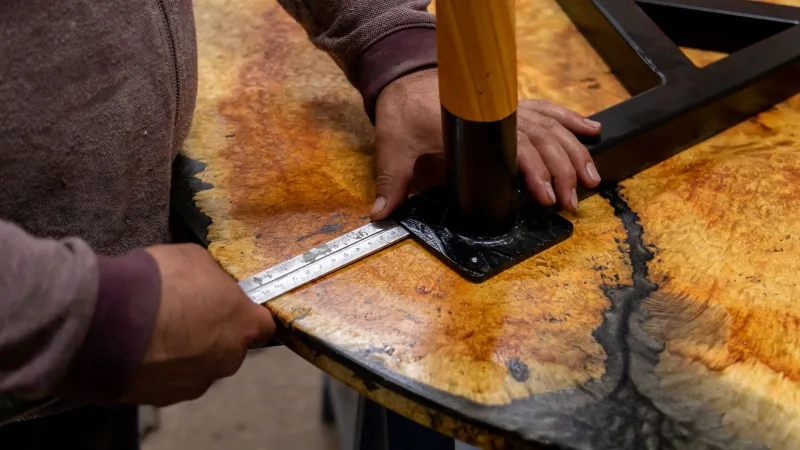
Custom-made goods return rights are the one corner of EU and UK consumer law where the supplier has the upper hand — and most exporters hand it back in their own checkout copy. Article 16(c) of the Consumer Rights Directive removes the 14-day right of withdrawal for "the supply of goods made to the consumer's specifications or clearly personalised." The exemption is real, it is not discretionary, and it is worth nothing if you cannot show which specification the buyer chose.
Custom-made goods return rights describe whether a consumer may cancel an order for goods produced to their own specification. In the EU and UK the answer is normally no — provided the goods were both non-prefabricated and made on the basis of the consumer's own individual choice or decision. Those two conditions are where every dispute actually lives.
What follows is a decision tree. Start at branch 0, follow the line that matches your order, stop when you hit an answer.
Branch 0: is the contract even in scope?
Two filters before anything else.
| Filter | In scope | Out of scope |
|---|---|---|
| Who is buying | A consumer — a natural person acting outside their trade, business or profession | A retailer, distributor or contractor buying for resale or their trade. B2B orders have no statutory withdrawal right; your terms govern |
| How they bought | Distance contract (webshop, email, phone, marketplace) or off-premises contract (trade fair, buyer's home, site visit) | The buyer walked into your showroom and bought off the floor — no statutory 14-day right exists at all |
That second row catches out a lot of furniture and building-material suppliers who assume every consumer order carries a cooling-off period. It does not. The 14 days in Article 9(1) attaches to distance and off-premises contracts specifically.
If you are out of scope on either filter, stop reading — the question is answered by your contract, not by the Directive.
Branch 1: did the buyer specify, or merely choose?
This is the branch that decides most cases, and the Directive defines the term with unusual precision. Article 2(4): "goods made to the consumer's specifications" means non-prefabricated goods made on the basis of an individual choice of or decision by the consumer.
Two conditions, both required:
- Non-prefabricated — it did not exist as finished stock before the order landed.
- Individual choice or decision by the consumer — the specification came from them, not from your catalogue.
Read that against orders you actually take:
| The order | Non-prefabricated? | Individual choice? | Exemption |
|---|---|---|---|
| Roller blind cut to 1,347 mm for one specific window | Yes | Yes | Applies |
| Worktop cut to 2,400 mm from a 3,000 mm stock slab | Yes, once cut | Yes — their measurement | Applies |
| Sofa built to order in a fabric the buyer picked from your 40 swatches | Yes | Choice from your range | Contested edge — weakest ground |
| Stock desk in walnut, chosen from three finishes you hold in inventory | No — finished stock | Choice, but from stock | Does not apply |
| Engraved tumbler, blank held in stock | Blank was prefabricated; the engraving is not | Yes | Applies on the "clearly personalised" limb |
| Standard 600 mm cabinet, buyer just wants it sooner | No | No | Does not apply |
UK trader guidance is explicit that whether goods qualify "will very much depend on the facts of each individual case," and the same is true across member states — national courts decide, not you. Treat configurator orders assembled purely from your standard modules as your weakest position, and a dimension the buyer supplied in millimetres as your strongest.
The one-line test worth memorising: if you can resell the item to the next customer without modifying it, it was not made to that buyer's specifications, and the 14 days still runs.
Branch 2: did you tell them before they paid?
Here is the branch that turns a win into a twelve-month liability, and it is the reason this exemption gets lost rather than defeated.
Article 6(1)(k) requires you, before the consumer is bound by the contract, to state "that the consumer will not benefit from a right of withdrawal or, where applicable, the circumstances under which the consumer loses his right of withdrawal." Separately, Article 6(1)(h) requires — for contracts where the right does exist — "the conditions, time limit and procedures for exercising that right," plus the model withdrawal form in Annex I(B).
Now the sting. Article 10(1): where the trader has not provided the Article 6(1)(h) information, "the withdrawal period shall expire 12 months from the end of the initial withdrawal period."
Follow the chain. You judge your product exempt under Branch 1. Because you believe it is exempt, you omit the withdrawal information. A year later a buyer disputes it, and it turns out your configurator order was assembled from prefabricated modules — Branch 1 goes against you. You did not merely lose a 14-day argument. You lost a 14-day plus 12-month argument, on an order you have already made, delivered and spent.
That asymmetry should drive your behaviour: the cost of over-disclosing is a slightly longer terms page. The cost of under-disclosing on a misjudged product is a refund window nearly thirteen months wide.
Branch 3: does it matter whether you have started making it?
No. This was settled.
In Case C-529/19 (Möbel Kraft), decided 21 October 2020, a consumer ordered a fitted kitchen at a trade fair, then sought to withdraw before the trader had begun manufacturing. The Court of Justice held that a trader may rely on the Article 16(c) exception from the outset — not only once production has started.
Two practical consequences. "We hadn't cut anything yet, so we'll refund" is a commercial choice, not a legal obligation. And a buyer arguing "you haven't started, so I can cancel" has no support in EU law.
Branch 4: which market are you selling into?
Three markets, three different answers, and the gap is wider than most exporters expect.
| Market | Statutory cooling-off, distance consumer sales | Custom / personalised carve-out | Instrument |
|---|---|---|---|
| EU / EEA | 14 days | Yes — Article 16(c) | Directive 2011/83/EU |
| UK | 14 days | Yes — regulation 28(1)(b), word-for-word the same wording | Consumer Contracts (Information, Cancellation and Additional Charges) Regulations 2013 |
| United States (federal) | None for online orders | Not applicable | FTC Cooling-Off Rule: 3 business days, sales over $25 at your home or over $130 at a temporary location, and it does not apply to sales made entirely online, by mail or by phone |
The US row is the one suppliers misread. There is no federal 14-day equivalent for a US online order. What binds you is your own published policy, and above that, whatever the marketplace decided.
Branch 5: are you selling through a marketplace?
Then read the platform policy first and the statute second.
A marketplace routinely grants buyers a more generous return window than any statute requires, and funds it from your account rather than its own. The statutory exemption is a defence in a legal dispute between you and a consumer; it is not a button in a platform claim flow. This is field practice rather than law, and it holds across every large marketplace: winning on Article 16(c) and losing the platform case at the same time is entirely possible.
Which means custom-made goods return rights are best understood as your floor, not your ceiling. They stop a bad month becoming a catastrophic one; they do not run your returns policy for you.
What the exemption never covers
Three things it does not touch, and confusing any of them for the withdrawal right is expensive.
- Conformity. Under Directive (EU) 2019/771 the seller is liable for a lack of conformity that becomes apparent within two years of delivery, with the burden of proof reversed in the buyer's favour for the first year. A made-to-measure wardrobe that arrives 20 mm narrower than ordered is non-conforming goods. The withdrawal exemption is simply not in play.
- Not as described. A separate and much more common failure mode, with its own evidence problem — we broke it down in goods not as described claims.
- Your own promise. If your listing says 30-day free returns, you owe 30-day free returns. Statute sets a minimum, not a maximum, and your marketing overrides it upwards.
The uncomfortable consequence: escaping the withdrawal right drops you directly into a conformity argument about whose number was correct. If the buyer's specification was never written down in a form you both approved, you have swapped a 14-day risk for a two-year one.
Custom-made goods return rights: the decision matrix
| Your situation | Can the consumer withdraw within 14 days? | Where your real exposure sits |
|---|---|---|
| B2B order, any spec | No statutory right | Your contract terms |
| Consumer, distance, cut or built to buyer's dimensions, disclosed properly | No | Conformity — was it built to the number they gave? |
| Consumer, distance, cut to buyer's dimensions, no disclosure given | Probably no withdrawal right, but you have breached an information duty | Regulator plus platform pressure |
| Consumer, distance, configurator order from prefabricated modules, no disclosure | Likely yes — and possibly for 14 days + 12 months | The worst cell in this table |
| Consumer, showroom purchase off the floor | No statutory right | Your own policy |
| Consumer, trade-fair order, made to specification | No | Conformity plus disclosure proof |
Next steps
Pick by volume, not by ambition.
- Occasional custom work. A written spec confirmation email before production starts, restating every buyer-supplied dimension in the buyer's own units, plus one line stating that the goods are made to their specification and therefore not subject to the 14-day withdrawal right. That single email covers Branch 1 and Branch 2 at once.
- Regular made-to-measure. Turn the above into a standing order-confirmation template with an explicit approval reply required before you cut. Our made-to-measure order process checklist covers the surrounding steps — deposit, tolerance, lead time.
- High volume, or marketplace-led. Make the approved specification visual. A dimensioned drawing or annotated photograph of the exact item, with each buyer-supplied figure labelled against the feature it describes, sent for approval and filed against the order. This is the one artefact that closes both arguments simultaneously: it evidences that the goods were made to the buyer's specification, and it fixes what the specification was if conformity is later challenged. Software built for dimension annotation snaps each figure to the real measured edge of the item and exports a buyer-readable sheet in minutes — which is a different thing from a generic photo editor where you hand-draw arrows, and a very different thing from an AI image generator, which will produce a dimension that looks plausible without ever having measured anything. In a conformity dispute, plausible is worthless.
- Before deciding how much process is justified, price the downside. Run your category's figures through the return cost calculator and compare it against the cost of one confirmation email per order.
FAQ
Can customers return custom-made products in the EU?
Generally no. Custom-made goods return rights in the EU start from Article 16(c) of Directive 2011/83/EU, which excludes "the supply of goods made to the consumer's specifications or clearly personalised" from the 14-day right of withdrawal. The exclusion is automatic where the goods qualify — but the goods must be non-prefabricated and made on the buyer's own individual choice or decision, per Article 2(4).
Do I have to refund a personalised item if the buyer changes their mind?
Not under the statutory withdrawal right, if the personalisation is genuine and you disclosed the position before they paid. You may still owe a remedy under the conformity rules, and any promise in your own listing or the marketplace's policy still binds you.
Does the exemption apply if I haven't started making the item?
Yes. In Case C-529/19 (Möbel Kraft, 21 October 2020) the Court of Justice held that a trader can rely on the Article 16(c) exception from the outset, regardless of whether manufacture has begun.
Are made-to-measure blinds and curtains exempt from the 14-day return?
Cut to a specific window's measurements, yes — this is the textbook case in UK guidance, and regulation 28(1)(b) of the 2013 Regulations uses the same wording as the EU Directive. Standard-size blinds picked from stock sizes are not exempt, even if the buyer chose the size.
Does the custom-made exemption cover faulty goods?
No, and this is the most costly misunderstanding of the lot. Withdrawal and conformity are separate regimes. Under Directive (EU) 2019/771 the seller remains liable for lack of conformity appearing within two years of delivery, with reversed burden of proof for the first year, on custom goods exactly as on stock goods.
Sources & References
- Directive 2011/83/EU on consumer rights — Articles 2(4), 6(1)(h), 6(1)(k), 9(1), 10(1), 16(c)
- Case C-529/19 Möbel Kraft, judgment of 21 October 2020
- Consumer Contracts (Information, Cancellation and Additional Charges) Regulations 2013, regulation 28
- Exemptions from the right to cancel consumer contracts — UK business guidance
- Directive (EU) 2019/771 on the sale of goods — seller's liability for lack of conformity
- FTC — Buyer's remorse: the FTC's Cooling-Off Rule may help