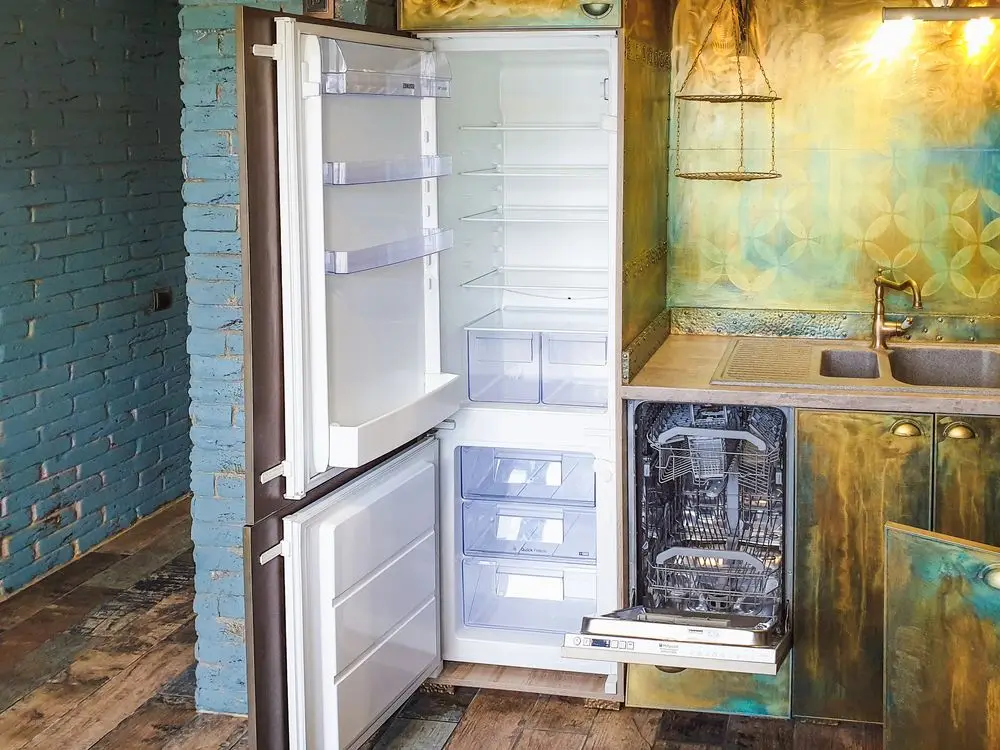
Gross vs net capacity is the spec gap that makes a buyer feel misled by a number that was technically correct. You print 500 L on the listing because the test report says 500 L. The buyer loads the shelves, finds they have filled it at what feels like 420 L of groceries, and writes a review calling the capacity "exaggerated." Neither of you lied. You were quoting different numbers and nobody said which one.
Capacity is the most-quoted and least-defined spec in exported goods. Dimensions have tolerances and standards. Weight has a scale. Capacity has at least three legitimate values for the same product, and the industry habit is to print the biggest one.
Gross vs Net Capacity: The Three Numbers, Not Two
Most spec discussions frame this as a pair. It is actually a ladder, and the buyer is standing on the bottom rung while your test report is standing on the top one.
Number
What it measures
Who uses it
Typical relationship
Gross capacity
Total internal volume measured to the walls, with shelves, drawers, dividers and fittings ignored
Test reports, energy calculations, marketing
Baseline, 100%
Net capacity
Volume after deducting fixed internal structures the standard says to deduct
Regulatory labels (EU energy label declares net volume)
Roughly 80–92% of gross
Usable capacity
What the buyer can actually load, with shelves, drawers and clearances in place
Nobody, officially — and it is the only one the buyer experiences
Commonly 65–85% of gross
The gap is not a rounding artefact. Testing to the North American AHAM HRF-1 method deliberately does not deduct the space taken by shelves, removable partitions, containers, automatic ice makers or interior light housings — it measures the cabinet stripped to the walls, because the method exists to calculate energy consumption rather than to describe storage. Consumer Reports, comparing declared figures against measured usable space, found differences as large as 32%.
The nail: capacity is the only spec where the number in your test report and the number in your buyer's head can differ by a third and both be honest.
Why the Gap Exists
Three separate causes, and it helps to know which one applies to your product because they call for different labelling.
Measurement method. International methods for household refrigerating appliances — ISO 15502, and the earlier ISO 7371 and ISO 8187 — define characteristics and test methods that treat the internal volume as a geometric cavity. Fittings that a user cannot remove get deducted; fittings that come out do not. That is defensible for a test lab and invisible to a shopper.
Physical intrusion. Compressor humps, evaporator covers, door gaskets, wall thickness at the hinge side, drainage channels. In tanks and containers, the fill line sits below the brim by design — a "20 L" jerrycan that you fill to 20 L has no expansion room and will weep in the sun.
Loading reality. You cannot stack rectangular groceries into a cavity with curved corners and lose nothing. Storage products lose 10–20% to packing inefficiency before anyone has done anything wrong.
Two of these deserve a warning label of their own. Backpack and luggage liters are not standardised — one maker measures the main compartment, another measures every pocket, a third fills it with beads. Comparing two brands' liter figures is comparing two different experiments. Dishwasher place settings are a defined load per IEC 60436, not a household concept; a buyer hearing "14 place settings" is imagining dinner parties, not a standardised test load.
The Unit Conversions That Cost Real Money
Capacity units carry a trap that dimensions do not: the same word means different amounts in different markets.
Unit
Metric equivalent
Trap
1 cubic foot
28.32 L
US appliance listings use cu ft; EU uses L. A "20 cu ft" fridge is 566 L.
1 US gallon
3.785 L
—
1 imperial gallon
4.546 L
20% larger than a US gallon. A "5 gallon" container is 18.9 L or 22.7 L depending on whose gallon.
1 US quart
0.946 L
Cooler capacity in the US is quoted in quarts.
1 imperial quart
1.137 L
Same word, 20% more liquid.
1 US fluid ounce
29.57 mL
—
1 imperial fluid ounce
28.41 mL
Smaller than the US ounce, unlike gallons and quarts. Reversed direction.
If you sell containers, drinkware, coolers or tanks into both the US and the UK/Commonwealth markets, write the metric figure first and the local figure in brackets, and specify which gallon. "18.9 L (5 US gal)" ends the argument. "5 gal" starts one.
This is the same failure mode as nominal vs actual dimensions — an industry convention that everyone inside the trade understands and no buyer does.
How to Label Capacity So It Survives a Dispute
The goal is not to print the smallest number. It is to print a number the buyer can verify and then not feel tricked by.
Lead with the number the buyer experiences, and show the standard one next to it.Net 420 L (gross 500 L, ISO 15502) reads as confidence. 500 L alone reads as marketing until the box is opened.
Name the method. A capacity figure with a standard reference attached — ISO 15502, AHAM HRF-1, IEC 60436 — is a checkable claim. One without is an assertion. Purchasing managers at chain retailers treat the second kind as a red flag, because they have been burned by it.
Give one physical anchor. Volume is abstract; objects are not. "Holds 24 × 330 ml cans plus 4 kg of ice" tells a cooler buyer more than "48 qt" ever will. "Fits a 2.5 kg turkey on the middle shelf" does more for a fridge listing than another decimal place.
State the fill limit where one exists. Tanks, jerrycans, kettles and fuel containers all have a working volume below the nominal. Print both.
Put the internal dimensions next to the volume. Capacity in liters does not tell a buyer whether their specific box fits. Internal W × D × H does. For anything sold as storage, the interior dimensions are the more useful spec and are almost always missing.
Where the Number Belongs
Capacity fails in the same place dimensions fail: it lives in a downloadable spec PDF that nobody opens, while the decision happens on image two.
The practical fix is to put the capacity ladder onto the product photo itself — net figure large, gross figure smaller and attributed to its standard, internal clear dimensions marked with leader lines to the actual interior edges, and one physical anchor object shown at true scale. Because those labels are anchored to measured points on the image rather than floated on top of it, the same annotated base photo exports at each marketplace's spec-image size without redrawing anything, and the numbers stay attached to the surfaces they describe when the image is scaled down to a thumbnail.
The accuracy requirement is the whole point here. A capacity claim is a promise a buyer will physically test on day one, so the figure has to be measured and placed, not estimated — which is where an AI-generated product image falls down. It will render a clean-looking spec callout with a number it invented, and an invented capacity figure is a dispute with a delivery date. The same discipline applies to the other spec buyers verify by hand, covered in how to label weight capacity on product images.
Capacity Labelling Checklist
Both gross and net capacity are stated, with net given prominence
The measurement standard is named (ISO 15502, AHAM HRF-1, IEC 60436, or your category's equivalent)
Metric figure appears first, with the local unit in brackets
Where gallons or quarts are used, US or imperial is specified explicitly
Internal clear dimensions (W × D × H) are published alongside the volume
Working / fill-limit volume is stated for any tank, container or kettle
One physical anchor is given ("holds 24 × 330 ml cans") rather than volume alone
For soft goods measured in liters, the measurement basis is disclosed — main compartment or total
The capacity figures appear on a product image, not only in an attached PDF
The figures on the image match the figures in the spec sheet, character for character
FAQ
What is the difference between gross and net capacity?
Gross capacity is the total internal volume measured to the cabinet walls with removable fittings ignored. Net capacity deducts the fixed internal structures that the applicable standard says to deduct, and is what regulatory labels such as the EU energy label declare. Net typically runs 80–92% of gross, and the volume a buyer can actually load — usable capacity — is commonly 65–85% of gross.
Why does my refrigerator hold less than the advertised capacity?
Because the advertised figure is usually measured with the shelves, drawers, ice maker and light housing treated as if they were not there. The AHAM test method measures the cabinet stripped to the walls, since its purpose is energy calculation rather than storage description. Independent testing has found gaps of up to 32% between declared capacity and measured usable space.
How do I convert cubic feet to liters for capacity?
Multiply cubic feet by 28.32. A 20 cu ft refrigerator is 566 L; an 18 cu ft is 510 L. Going the other way, divide liters by 28.32. Publish both figures on any listing that reaches both North American and metric markets rather than making the buyer convert.
Is a 5-gallon container the same everywhere?
No, and this one causes real disputes. A US gallon is 3.785 L and an imperial gallon is 4.546 L, so "5 gallons" is either 18.9 L or 22.7 L — a 20% difference. Always write the metric volume first and specify which gallon in brackets.
How should capacity appear on a product listing image?
Show the net figure large, the gross figure smaller with its standard named, the internal clear dimensions marked with leader lines to the actual interior edges, and one real-world anchor object at true scale. The reason to do this on the image rather than in a spec sheet is that buyers compare listings visually and only open attachments after they have already shortlisted. Annotation software that snaps labels to measured points on the photo and exports at each platform's spec-image size lets one base photograph serve every marketplace, and keeps the number tied to the surface it describes. If capacity confusion is already generating returns for you, a return cost calculator will tell you what each of those returns is worth before you decide how much effort the relabelling deserves.