
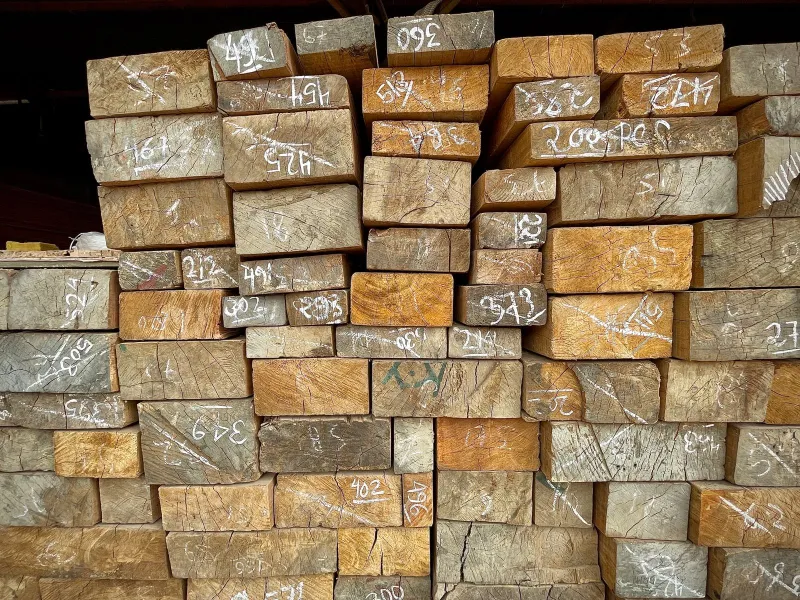
Nominal vs actual dimensions is the gap that quietly wrecks overseas orders: a buyer measures a wall for a "2x4," the framing arrives at 1.5 by 3.5 inches, and suddenly you're defending a full container of lumber that met spec perfectly. Nobody lied. The buyer just read the nominal name as a measurement — and in building materials, the name on the label almost never equals the size in your hands.
If you sell lumber, plywood, steel pipe, or brick to buyers in other countries, this one misunderstanding drives more disputes, wrong orders, and "your product is undersized" complaints than any tolerance issue. Here's exactly how nominal sizing works across the main material categories, why the numbers differ, and what has to be on your product images so a buyer 8,000 miles away orders the right thing the first time.
Nominal vs Actual Dimensions: What's the Difference?
Nominal dimensions are the standardized name of a product size, not a measurement. Actual dimensions are what you get when you put a tape measure on the finished product. The nominal size is a trade shorthand everyone in the supply chain agrees to use; the actual size is smaller (or different) because of drying, planing, wall thickness, or mortar allowances that are baked into the standard.
Here's the core disambiguation in one table:
| Term | What it means | Example (dimensional lumber) |
|---|---|---|
| Nominal size | The name/category used in the trade and in codes. Not a live measurement. | "2x4" |
| Actual size | The real, measurable finished dimension. | 1.5 in × 3.5 in (38 mm × 89 mm) |
| Specified size | The as-manufactured target used in specs and POs (mostly a masonry term). | Brick: 3.625 in × 2.25 in × 7.625 in |
The one-line version worth remembering: nominal is the name, actual is the number, and buyers assume they're the same until an undersized shipment teaches them otherwise.
Why does the naming survive if it's "wrong"? Because it makes construction math clean. A nominal 2x4 spaced on 16-inch centers, a nominal 8-inch brick course, a nominal 4-foot plywood sheet — the nominal numbers tile neatly into a building grid. The actual numbers (1.5, 7.625, 47.75) never would.
Why Is a 2x4 Not 2 Inches?
A 2x4 starts life as a rough-sawn board close to 2 by 4 inches when green and unfinished. Then it's dried and surfaced (planed smooth on all four sides), and both steps shave material off. What's left — and what ships — is 1.5 by 3.5 inches for dry, dressed softwood lumber. It has been that size for over 60 years, and it's not a manufacturer cutting corners: it's written into a national standard.
In the United States, softwood lumber sizes are fixed by Voluntary Product Standard PS 20, the American Softwood Lumber Standard, overseen by the American Lumber Standard Committee. PS 20 sets the minimum finished dimensions for every nominal size and ties them to moisture content, so a "2x4" from any compliant mill is the same 1.5 × 3.5 inches. Every piece of dimensional lumber sold at retail meets it.
The full lumber conversion (dry, surfaced) reads like this:
| Nominal | Actual (inches) | Actual (mm) |
|---|---|---|
| 1x4 | 0.75 × 3.5 | 19 × 89 |
| 2x2 | 1.5 × 1.5 | 38 × 38 |
| 2x4 | 1.5 × 3.5 | 38 × 89 |
| 2x6 | 1.5 × 5.5 | 38 × 140 |
| 2x8 | 1.5 × 7.25 | 38 × 184 |
| 2x10 | 1.5 × 9.25 | 38 × 235 |
| 4x4 | 3.5 × 3.5 | 89 × 89 |
A useful pattern for buyers: for nominal faces of 2 to 7 inches, subtract 1/2 inch; for 8 inches and up, subtract 3/4 inch. That rule of thumb is the fastest way to answer "what's the lumber nominal vs actual size" without a chart. If you sell framing, the cleanest fix is to publish a full nominal-to-actual table right on the listing — the kind laid out in these dimensional lumber sizes so no buyer has to guess.
Nominal Sizing Across Building Materials
Lumber is the famous case, but nominal-vs-actual naming runs through the whole building-materials aisle — and each material hides its real size a different way.
| Material | Nominal (name) | Actual / specified | Why they differ |
|---|---|---|---|
| Dimensional lumber | 2x4 | 1.5 × 3.5 in | Dried + surfaced from rough green size (PS 20) |
| Plywood panel | 3/4 in | 23/32 in (0.71875 in) | Sanded to a smooth, consistent thickness (PS 1) |
| Steel pipe | NPS 1/2 | 0.840 in outside diameter | NPS once meant bore; OD later standardized (ASME B36.10) |
| Modular brick | 4 × 2⅔ × 8 in | 3.625 × 2.25 × 7.625 in | Nominal includes the 3/8-in mortar joint |
Plywood and Panels
Panel thickness is the sneakiest one because the gap is small enough to ignore until a drawer won't fit its dado. A sheet sold as nominal 3/4 inch is actually 23/32 inch — 0.71875 inch, or 1/32 inch thinner than a true 3/4. Nominal 1/2-inch plywood is really 15/32, and nominal 5/8 is 19/32. The panels are sanded during manufacturing to hit a smooth, uniform surface, which trims that last 1/32.
These finished thicknesses come from US Product Standard PS 1, the structural plywood standard published with APA – The Engineered Wood Association, which also sets the thickness tolerances (roughly ±1/32 inch, with more allowance on the plus side for thicker panels). When you list panels, show both the nominal call-out and the real thickness — buyers cutting joinery need the standard plywood sheet sizes down to the 1/32.
Steel Pipe: NPS Is Not the Diameter
Pipe is where nominal sizing surprises even seasoned buyers. Nominal Pipe Size (NPS) is a size class, not a diameter — an NPS 1/2 pipe has an outside diameter of 0.840 inch, not 0.5 inch. NPS originally approximated the inside diameter of old standard-wall pipe; when wall thicknesses were later standardized into schedules, the outside diameter was locked and the NPS name stuck.
Two rules make nominal pipe size vs actual behavior predictable, per ASME B36.10:
- For NPS ⅛ through 12, the OD is a fixed number that does not equal the nominal (NPS 2 = 2.375 in OD, NPS 1 = 1.315 in OD).
- For NPS 14 and larger, the nominal size finally does equal the outside diameter in inches.
Because the OD is fixed for a given NPS, the schedule number (40, 80, etc.) changes only the wall thickness — the extra steel comes out of the bore, not the outside. That's why one fitting fits every schedule of the same size. For overseas buyers, always state NPS and the actual OD plus schedule; "1/2 inch pipe" alone tells them almost nothing.
Brick: Three Terms, Not Two
Masonry adds a third word. Brick has nominal, specified, and actual dimensions:
- Nominal — the size including the mortar joint, used for layout math. A standard modular brick is nominal 4 × 2⅔ × 8 inches.
- Specified — the as-manufactured target you put on a PO: 3.625 × 2.25 × 7.625 inches.
- Actual — the real brick as measured, which can vary slightly from specified within tolerance.
The nominal size equals the specified size plus one 3/8-inch mortar joint, the standard joint under masonry code (TMS 602). That 3/8 inch is exactly why nominal brick dimensions are clean whole numbers that tile into a 4-inch module. Sell brick or block internationally and you must be explicit about which of the three numbers you're quoting — a buyer who orders on nominal and receives specified will think they've been shorted every single unit.
When Nominal vs Actual Dimensions Matter
Nominal-vs-actual doesn't matter equally in every situation. Knowing when it bites saves you the argument.
- Cross-border orders where the buyer can't see the product. This is the danger zone. A domestic contractor knows a 2x4 is 1.5 × 3.5; an overseas buyer sourcing from a catalog often does not, and reads the nominal name as the delivered size.
- Fit-critical assemblies. Cabinet dados, pipe fittings, brick coursing, and anything that mates with another part fails on the 1/32 or the 0.840, not on the nominal name.
- Quantity and load math. Container fill, pallet counts, and coverage per square meter are calculated on actual sizes. Get the nominal-actual mix wrong and the whole estimate drifts.
- Disputes and returns. When a buyer believes the product is undersized, they open a claim — and you eat inspection, reship, or refund costs even though you shipped exactly to standard. Before you write that off as unavoidable, run the numbers on what one wrong-size dispute actually costs with a return cost calculator; the freight-both-ways math usually dwarfs the price of labeling it correctly up front.
Where does it matter less? Pure decorative or loose-fit uses, and domestic sales to trade buyers who already speak the shorthand. Even then, showing the actual number costs nothing.
Common Confusion Points
"Nominal must just be rounding." No. 3/4-inch plywood rounds up from 23/32, but a 2x4 loses a full half inch on each face and NPS 1/2 pipe is bigger than half an inch on the outside. The relationship isn't consistent across materials, so you can't infer actual size from nominal without the standard.
"Nominal and specified are the same thing." Only outside masonry. In brick and block, nominal includes the mortar joint and specified does not — mixing them up misprices every unit. This is closely related to how you communicate acceptable variation; see how to label a product dimension tolerance so buyers know the allowed range instead of guessing.
"Metric buyers are safe." They're not. A 38 × 89 mm stud is still a nominal 2x4, and metric plywood (18 mm sold as 3/4) has its own nominal-actual gap. Converting units doesn't remove the naming convention — it just hides it in a new number.
"An AI-generated product image will sort it out." It won't. AI image tools restyle backgrounds and lighting, but they can't measure or guarantee a dimension — the 1.5, the 23/32, the 0.840 have to come from the standard and be placed deliberately. These are buyer-facing spec diagrams, not CAD drawings; the goal is a labeled photo the buyer trusts, not an engineering file.
How to Show Actual Dimensions on a Product Listing
The fix for every problem above is the same: put the actual dimensions on the product image itself, next to the nominal name, so the number travels with the photo into every marketplace, PDF, and WeChat chat. A spec line buried in the description gets skipped; a labeled image doesn't.
A listing that survives cross-border scrutiny does this:
- Show the nominal name and the actual size together ("2x4 — actual 1.5 × 3.5 in / 38 × 89 mm")
- Give dimensions in both inches and millimeters so no buyer has to convert
- Put the numbers on the main image, not only in the text spec sheet
- For pipe, list NPS + actual OD + schedule/wall; for brick, label which of nominal/specified/actual you're quoting
- State the governing standard (PS 20, PS 1, ASME B36.10, TMS 602) so the buyer can verify
- Include a tolerance note where fit matters, so "slightly under" isn't read as a defect
That's the whole game: the nominal name keeps the trade happy, and the actual number keeps the buyer from opening a dispute. Show both, on the image, and the "your product is undersized" email mostly stops arriving.
FAQ
Why is a 2x4 not 2 inches?
A 2x4 is milled from a rough board close to 2 × 4 inches, then dried and surfaced (planed smooth), which removes material. The finished, dry, dressed size is 1.5 × 3.5 inches, fixed by the US American Softwood Lumber Standard PS 20. "2x4" is the nominal name, not a measurement.
What does nominal size mean in building materials?
Nominal size is the standardized trade name for a product dimension, used in codes and ordering, that does not equal the measured size. It exists to keep construction math on clean modules (16-inch spacing, 4-inch brick courses). The actual size is always smaller or different because of drying, sanding, wall thickness, or mortar allowances built into the standard.
Is nominal pipe size the same as the actual diameter?
No. Nominal Pipe Size (NPS) is a size class, not a diameter. For NPS ⅛ through 12 the outside diameter is a fixed value that doesn't match the nominal — NPS 1/2 pipe is 0.840 inch OD. Only at NPS 14 and above does the nominal number equal the outside diameter in inches, per ASME B36.10.
What is the actual thickness of 3/4 plywood?
Nominal 3/4-inch structural plywood is actually 23/32 inch (0.71875 inch), about 1/32 inch thinner than a true 3/4, because the panel is sanded to a smooth, uniform surface during manufacturing. The finished thickness and its tolerance are set by US Product Standard PS 1.
Should a product listing show nominal or actual dimensions?
Both. Lead with the nominal name buyers search for ("2x4," "3/4 plywood," "NPS 1/2"), then show the actual measured size in inches and millimeters directly on the product image. Showing only the nominal name is the single most common cause of "the product is undersized" disputes in cross-border building-materials orders.
Sources & References
- Voluntary Product Standard PS 20, American Softwood Lumber Standard (WBDG / NIST)
- PS 20-20 American Softwood Lumber Standard, full text (American Lumber Standard Committee)
- Structural plywood and PS 1 panel standards (APA – The Engineered Wood Association)
- Nominal Pipe Size and ASME B36.10 outside-diameter tables
- Technical Notes 10: Dimensioning and Estimating Brick Masonry (Brick Industry Association)
Next Steps
If undersized-complaint emails and wrong-nominal orders are eating your time, pick the option that fits how you sell:
- Rewrite the spec text on every listing to pair the nominal name with the actual size in inches and millimeters. Cheapest fix; still gets skipped by buyers who only look at the image.
- Have your designer add measurements to the main photos. Accurate, but slow and expensive across a large catalog, and it re-costs every time a spec changes.
- Use a dimension and spec annotation tool to place the actual sizes, tolerances, and standard call-outs directly onto the product photo yourself — a clear spec diagram in minutes, so the real number rides along with the image into every channel.
- Publish a nominal-to-actual reference table on your site and link it from each product, so buyers can self-serve the conversion.
Most suppliers combine the last two: a labeled main image for fast scanners, plus a reference table for buyers who want to verify against the standard. Either way, the principle holds — show the actual number where the buyer is already looking.