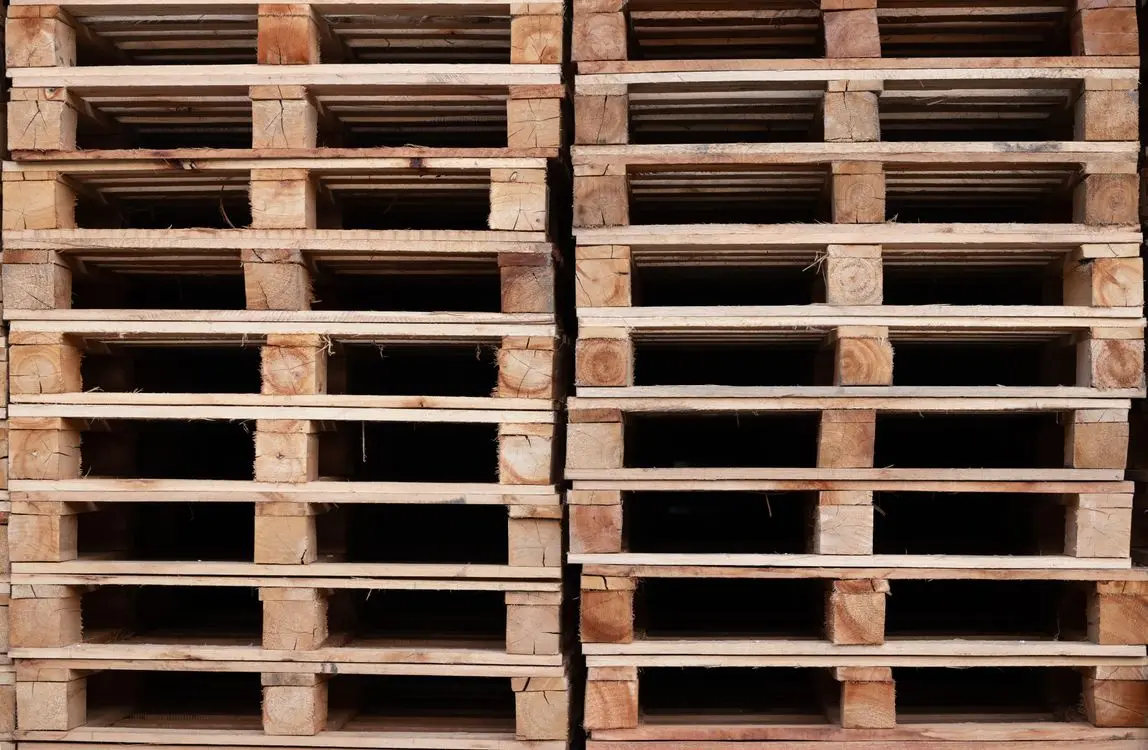
Nobody teaches you how to set MOQ, so most exporters round to 500 and put it on the price list. Then the first order arrives, the packing line makes twenty full cartons and one carton with four pieces rattling in it, and that carton costs as much to make, label, palletise and ship as the twenty that are full.
A minimum order quantity (MOQ) is the smallest quantity of one trade item a supplier will accept on a single purchase order — and the unit it is counted in is part of the definition, not a footnote.
What does MOQ actually mean — a minimum of what?
"MOQ 500" is read at least five different ways by five different buyers.
| What the buyer assumes |
What it means in practice |
Who usually means this |
| 500 pieces, any mix |
You accept 100 of five colours |
Small retailers, first orders |
| 500 pieces per SKU |
Each colour/size is its own 500 |
Most factories |
| 500 pieces total across the PO |
Mixed pallets allowed |
Trading companies |
| 500 cases |
500 × units per case — often 12,000 pieces |
Wholesale/distribution |
| 500 of the smallest sellable pack |
Depends entirely on your inner pack |
Retail-ready goods |
More MOQ arguments start with the unit than with the number. Write the unit into the same sentence as the figure — "MOQ 480 pieces per SKU (20 cases of 24)" — and most of the negotiation disappears before it starts.
How to set MOQ from the case pack up: the five-rung ladder
Your MOQ should land on a rung of the packaging ladder, never between rungs.
| Rung |
What it is |
Who sets it |
What breaks if you land between rungs |
| Unit (each) |
One sellable item |
Product design |
Nothing yet |
| Inner pack |
Smallest protected bundle |
Packaging line, retail shelf |
Buyer opens a case to split it |
| Case / master carton |
The shipping unit, with its own barcode |
Carton size and handling weight |
Part-full cartons, damage claims |
| Pallet layer / full pallet |
Cases per layer × number of layers |
Pallet footprint and stack limits |
Crushed bottom layer, wasted cube |
| Full container |
Pallets per container |
Container class and ratings |
You pay freight on air |
Work upward, not downward. Fix the case pack first — it is the rung everything else is a multiple of — then express the MOQ as a case, layer or pallet multiple, and say which.
Why should MOQ be a case multiple instead of a round number?
Because the round number invents a part-carton, and a part-carton is priced like a full one.
Take a case pack of 24 and an MOQ of 500. Twenty cases is 480. The remaining 20 pieces need a twenty-first carton that is one-sixth full — consuming a full carton blank, a full label, a full pallet footprint and a line on the packing list. It is also the carton most likely to arrive crushed, having no product inside supporting the walls.
Set the MOQ at 480 and everything downstream is clean. Set it at 504 (21 full cases) if you need the number to look bigger. Either is defensible. Five hundred is not. That is the whole of how to set MOQ in one move: pick the rung, then pick the multiple.
An MOQ that is not a case multiple is not a minimum — it is a part-carton you pay for on every single order.
The carton itself is a design decision, not a given; if you are still choosing one, work from standard carton box sizes rather than whatever the supplier has in stock.
What happens if you change the case pack to hit a buyer's number?
This is the trap in every MOQ negotiation. The buyer wants 400, your case pack is 24, and someone suggests switching to a 20-pack so 400 becomes exactly 20 cases. It sounds like a packing-line tweak. It is not.
GS1's guideline An Introduction to the Global Trade Item Number (GTIN), Release 2.1, July 2021, states that "Each packaging level is identified by a unique GTIN," and answers the question directly: "Is a unique GTIN required for every level of packaging? Yes, there should be a unique GTIN identifying the consumer unit, inner pack, multi-pack, case, or pallet."
On when that number has to change, the same guideline says "A new GTIN is required whenever any of the pre-defined characteristics of a trade item are modified in any way that is relevant to the trading process," and lists among its guiding principles that a new GTIN should be assigned when "There is a substantial impact to the supply chain (e.g., how the product is shipped, stored, or received)."
Changing how many units sit in a case is exactly that. So the "small favour" actually costs you:
- a new GTIN for the case level
- new case-label artwork and a new barcode
- new case gross weight and case dimensions in every catalogue, feed and quotation
- new cases-per-layer and cases-per-pallet figures
- a new line in the packing list, and new declared measurements on the shipping documents
- every downstream partner's system holding two case configurations for one product
Decide it deliberately or not at all. If a 20-pack is genuinely the better retail unit, change it once and reissue every number. If it is a one-off concession, concede on price or lead time instead — those do not fork your product data.
How do you set MOQ when the pallet is the real constraint?
For dense goods — tiles, fittings, fasteners, hardware, stone — the pallet runs out of weight long before it runs out of space, and the MOQ has to respect the smaller of the two.
EPAL publishes hard numbers for the Euro pallet: 1,200 × 800 × 144 mm, an own weight of approximately 25 kg, a safe working load of 1,500 kg, and a stacking rule that when laden pallets are stacked on a solid, even surface, "the bottommost pallet must not exceed a load of max. 5.500 kg."
Two consequences most MOQ calculations miss:
- Run the weight math and the cube math, then take the lower answer. A case of ceramic tile at 22 kg hits the 1,500 kg working load at 68 cases, which may be a half-height pallet. The MOQ is 68 cases, not "as many as fit."
- The pallet's own 25 kg is freight you pay for. Across a container of pallets, that tare is hundreds of chargeable kilos carrying nothing.
Then the paperwork rung: solid wood packaging in international trade must be treated and marked under ISPM 15 — a per-pallet cost and a per-pallet lead time that belongs in the MOQ calculation, not in a surprise invoice. Footprints and loading patterns are laid out in standard pallet sizes.
Where does the container rung come in?
ISO 668 fixes the classification, dimensions and ratings of series 1 freight containers, which is what decides how many pallets you can load and therefore where a "full container" MOQ sits — the point at which freight cost per unit stops moving. The loading arithmetic is worked through in container loading quantity.
One variable people forget: the same MOQ has two break-evens depending on which of the ICC's Incoterms 2020 rules you quoted. Under EXW the buyer absorbs a badly-cubed load; under CIF you do. Sell CIF and your MOQ has to be a container-efficient number, or you are quietly funding the gap.
Is MOQ per SKU, per colour, or per order?
There is no standard here — this is field practice, not a rule — but three policies cover almost everyone.
| Policy |
Set it this way when |
Cost to you |
| Per SKU |
Each variant has its own tooling, colour batch or fabric roll |
Highest barrier, cleanest production |
| Per order, mixed allowed |
Variants share a production run and a case size |
Mixed cases, more picking, possible mixed-case barcode issues |
| Per SKU with a lower "add-on" MOQ |
You want a big first order and easy repeats |
Two numbers to police, but the friendliest to reorders |
If a colour means a separate dye lot or a separate mould, per-SKU is the only honest number.
How do you hold an MOQ without losing the order?
Do not cut the number. Move it to a lower rung, and show your working.
- Offer a layer instead of a pallet. "We cannot do 300 pieces, but one pallet layer is 288 — can you take that?" You have conceded nothing structural and the buyer gets a smaller number.
- Price the part-case rather than refusing it. A stated part-case handling fee converts an argument into a line item.
- Trade the MOQ against lead time. Accepting a longer lead time lets you consolidate the buyer's small order into a scheduled run.
- Never trade the case pack. See the GTIN section above — that concession has a tail.
- Publish the packing configuration. Most MOQ resistance is not disagreement, it is disbelief. A buyer who can see that a case is 24 pieces at 395 × 295 × 250 mm, that 40 cases make a layer and that 5 layers make a pallet, stops treating your MOQ as a sales tactic. The same figures belong on your wholesale line sheet, where buyers actually look for them.
Quick-reference summary
| Question |
Short answer |
| What unit should MOQ be in? |
Whatever rung it lands on — pieces, cases, layers or pallets — stated explicitly |
| What number should I pick? |
The nearest case multiple, never a round decimal number |
| Can I change the case pack to fit a buyer? |
Only deliberately — it requires a new case GTIN and new labels |
| What caps a pallet MOQ? |
The lower of cube and weight; the Euro pallet's safe working load is 1,500 kg |
| What caps a container MOQ? |
Pallets per container under ISO 668, and which Incoterms 2020 rule you quoted |
| Per SKU or per order? |
Per SKU when variants have separate runs; per order when they share a case |
Before you publish an MOQ
FAQ
What is a good MOQ for a new export product?
The nearest case multiple above your production break-even — not a round number. Add up setup cost, material minimum and packing cost per run, find the quantity that covers them, then round up to the next full case. For most first-time exporters that lands between one pallet layer and one full pallet.
Is MOQ per SKU or per order?
There is no industry standard, so you have to state it. Per SKU is normal when each variant has its own tooling, dye lot or fabric roll. Per order with a mixed load is normal when variants share a production run and a case size, and it wins more first orders.
Does changing the case pack require a new barcode?
Yes, in effect. GS1's GTIN guidance requires a new GTIN whenever a pre-defined characteristic of a trade item changes in a way that is relevant to the trading process, including changes with "a substantial impact to the supply chain." Units per case is such a characteristic, and each packaging level carries its own GTIN — so a new case pack means a new case GTIN and new case label artwork.
How do I calculate MOQ from pallet capacity?
Run it twice. Cube: pallet footprint divided by case footprint gives cases per layer, times the layers your stack height allows. Weight: the pallet's safe working load — 1,500 kg on an EPAL Euro pallet — divided by case gross weight. Take the lower of the two, and that is your one-pallet MOQ.
Can I offer a lower MOQ for sample or trial orders?
Yes, and it is usually worth it — but publish it as a separate number with its own price and pack, typically one inner pack or one case. Keep it off your standard MOQ line so it never becomes the anchor in a bulk negotiation.
Next steps
Pick whichever of these you are missing, in this order.
- Fix the case pack and recompute the MOQ as a multiple of it. This one change removes the part-carton from every future order.
- Publish the packing ladder alongside the price. Cases per layer, layers per pallet, case dimensions and gross weight — on the line sheet and in the quotation, in the same units.
- Make the configuration visible, not just tabulated. A buyer arguing with an MOQ is usually arguing with a number they cannot picture. A packing diagram carrying the measured case and pallet dimensions — lines snapped to the actual edges rather than typed in from memory, exported at the size each catalogue expects — turns the argument into a check. Generated imagery is no help here: software can invent a carton that looks plausible and a dimension that is simply wrong, and an invented case size becomes a chargeback the first time the carton does not fit the layer.
- Re-quote one live enquiry with the new number and the diagram attached, and see whether "can you do 300?" still comes back.
Sources & References