
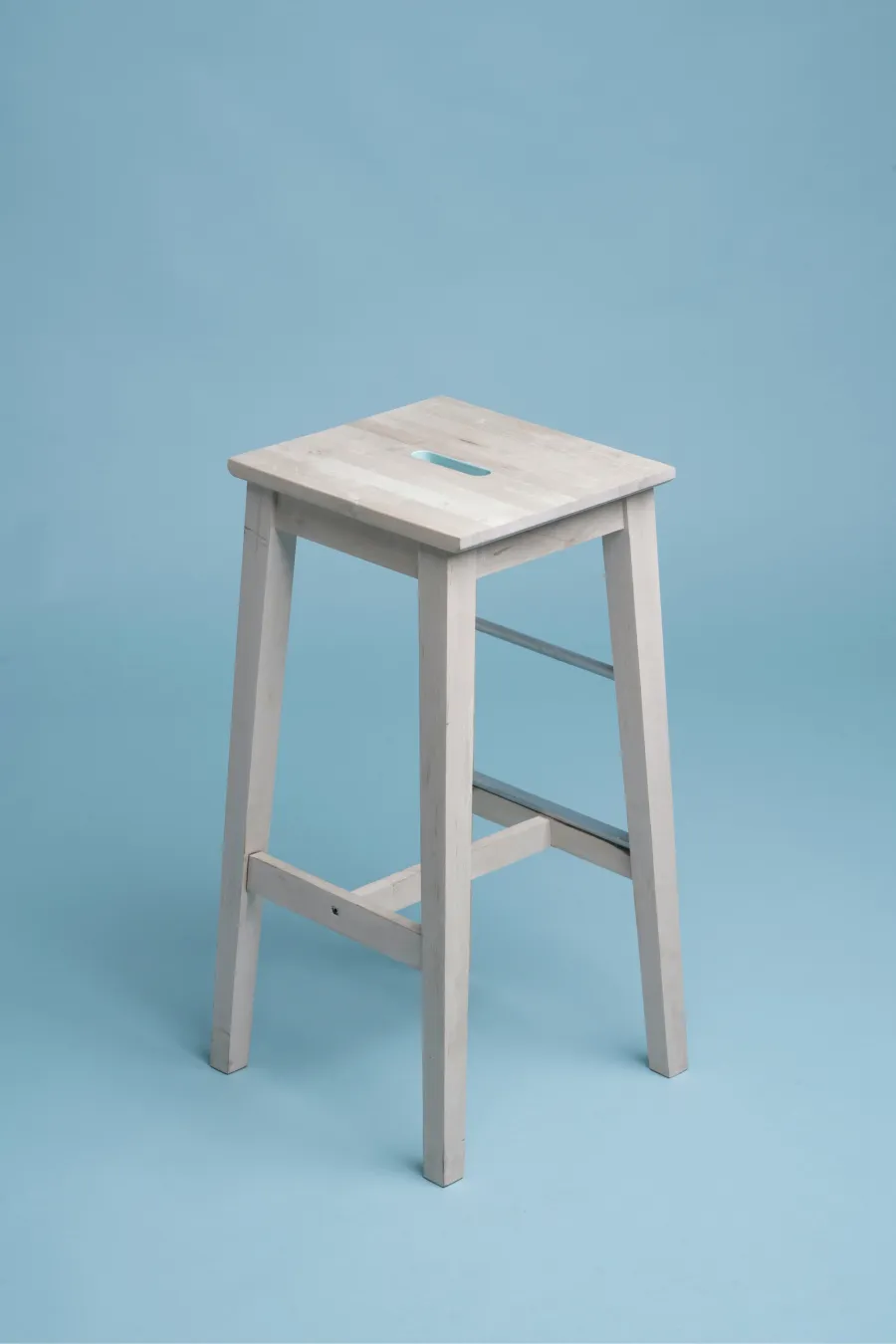
What this bar stool listing tells a buyer at a glance
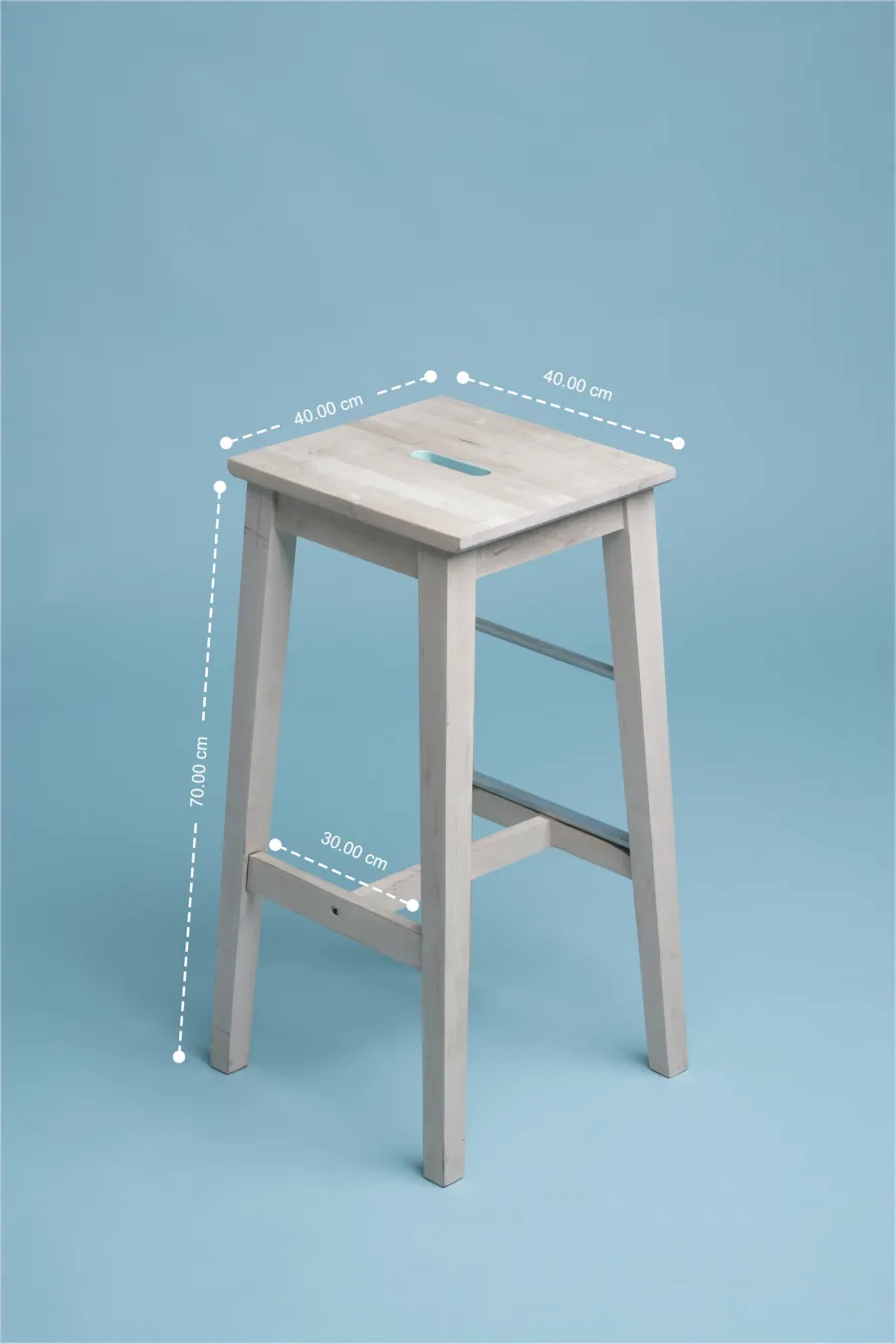
This listing turns a plain studio photo of a whitewashed wooden bar stool into a spec image: the seat measures 40 cm wide by 40 cm deep, it sits 70 cm off the floor, and the footrest stretcher spans 30 cm. Those four numbers decide the sale — a buyer holds the 70 cm seat height against their own counter and knows straight away whether the stool works, without messaging you first.
What's marked on the image
| Marker | Annotation type | Value |
|---|---|---|
| Seat width | Dimension | 40 cm |
| Seat depth | Dimension | 40 cm |
| Seat height, floor to seat top | Dimension | 70 cm |
| Footrest stretcher | Dimension | 30 cm |
Every marker here is a dimension line, and each answers a different question:
- Seat height (70 cm) decides counter compatibility. Seating is comfortable with roughly 25–30 cm between the seat and the work surface, so a 70 cm seat suits a counter around 95–100 cm high.
- Seat width and depth (40 × 40 cm) tell a buyer how much room the stool takes at the counter, and how many will fit side by side.
- The footrest stretcher (30 cm) is the detail most listings leave out — it sets where your feet rest through a long meal, and it shows the frame is braced rather than wobbling.
Everything is marked in centimetres, directly on the photo. Nothing depends on a buyer scrolling down to a spec table that reads "Height: 70" and leaves them guessing which height it means.
Why it matters for furniture sellers
Bar stools are bought for one specific counter, and a bare "height" in the title is ambiguous — seat height or overall height? That ambiguity is where pre-sale questions and size-driven returns come from. Furniture is heavy and expensive to ship back, so a return you prevent is worth more than a sale you rush.
Every marker is stored in normalized 0–1 coordinates, so the lines stay pinned to the stool when the same image is resized — a 2000 px hero shot, a marketplace thumbnail, a phone screen. The "70.00 cm" line never drifts off the leg.