
Ang mamimiling nagtatanong ng "meron ba kayong 6205?" ay naibigay na sa iyo ang tatlong sukat. Karamihan sa sales team ay sumasagot ng presyo at litrato; ang sumasagot ng 25 × 52 × 15 mm, kasama ang uri ng seal at klase ng clearance, ang nakakakuha ng order — dahil kapapatunay pa lang nila na alam nila kung ano ang ibig sabihin ng bearing numbers.
Ang designation ng bearing ay isang dimension code, hindi pangalan ng produkto. Sa ilalim ng ISO 15, ang 6205 ng kahit sinong manufacturer ay 25 mm bore, 52 mm outside diameter, at 15 mm lapad. Iyan mismo ang dahilan kung bakit makakaorder ang isang machine builder sa Ohio mula sa supplier sa Ningbo nang hindi nagpapadala ng drawing.
Ano ang Ibig Sabihin ng Bearing Numbers: Ang Talahanayan
Sakop ng single-row deep groove ball bearing families ang halos lahat ng dumadaan sa isang export desk. Ang bore, OD at lapad ay nasa milimetro.
| Designation | Bore d | OD D | Lapad B | Katangian ng series |
|---|---|---|---|---|
| 6200 | 10 | 30 | 9 | Light (02) |
| 6201 | 12 | 32 | 10 | Light (02) |
| 6202 | 15 | 35 | 11 | Light (02) |
| 6203 | 17 | 40 | 12 | Light (02) |
| 6204 | 20 | 47 | 14 | Light (02) |
| 6205 | 25 | 52 | 15 | Light (02) |
| 6206 | 30 | 62 | 16 | Light (02) |
| 6207 | 35 | 72 | 17 | Light (02) |
| 6208 | 40 | 80 | 18 | Light (02) |
| 6305 | 25 | 62 | 17 | Medium (03) |
| 6306 | 30 | 72 | 19 | Medium (03) |
| 6405 | 25 | 80 | 21 | Heavy (04) |
Ihambing ang huling tatlong row sa 6205. Parehong 25 mm na shaft, pero tatlong magkaibang panlabas na sukat: 52, 62 at 80 mm OD. Iyan ang punto ng dimension series — ang shaft ay nakatakda na ng makina, ang kapasidad sa karga ang pinipili sa pamamagitan ng housing.
Paano Basahin ang Kahit Anong Bearing Number sa Apat na Hakbang
Hakbang 1: Ang unang digit ay ang uri ng bearing
Ang 6 ay single-row deep groove ball bearing. Ang 7 ay angular contact, ang 3 ay double-row angular contact, ang 2 ay spherical roller o self-aligning ball, ang 1 ay self-aligning ball, ang prefix na N/NU/NJ ay cylindrical roller, at ang apat-na-digit na numero na gaya ng 32/303 ay tapered roller. Sinasabi ng type digit sa inhinyero ng mamimili kung anong karga ang kayang tanggapin ng bearing — hindi kung gaano ito kalaki.
Hakbang 2: Ang mga sumunod na digit ay ang dimension series
Sa 6205, ang "2" ang dimension series — width series 0 na pinagsama sa diameter series 2, karaniwang isinusulat bilang 02 at tinatawag na light series. Ang 63xx ay series 03, medium; ang 64xx ay 04, heavy. Mas mataas na series ay nangangahulugang mas malaking OD at mas malaking kapasidad sa karga sa parehong bore.
Hakbang 3: Ang huling dalawang digit ay ang bore code
Dito nagkakamali ng hula ang marami. Mula 04 pataas, ang bore code ay simpleng numero na ini-multiply sa 5. Sa ibaba nito, may apat na code na arbitraryo at kailangang kabisaduhin.
| Bore code | Diyametro ng bore |
|---|---|
| 00 | 10 mm |
| 01 | 12 mm |
| 02 | 15 mm |
| 03 | 17 mm |
| 04 | 20 mm |
| 05 | 25 mm |
| 08 | 40 mm |
| 12 | 60 mm |
| 20 | 100 mm |
Kaya ang 6205 ay bore code 05 → 25 mm. At ang 6202 ay hindi 2 mm; ito ay 15 mm. Ang isang palit na iyon ang nagpadala ng mas maraming maling bearing kaysa sa anumang iisang pagkakamali sa industriyang ito.
Hakbang 4: Ang suffix ang nagdadala ng lahat ng hindi kayang sabihin ng numero
| Suffix | Kahulugan | Bakit mahalaga ito sa mamimili |
|---|---|---|
| ZZ o 2Z | Metal shields, magkabilang gilid | Non-contact, mababang friction, humaharang sa magaspang na dumi |
| 2RS / 2RS1 | Contact rubber seals, magkabilang gilid | Mas mahigpit na seal, mas malaking drag, mas mababang max speed |
| C3 | Radial internal clearance na mas malaki sa normal | Kailangan sa interference fit o sa mainit na operasyon |
| C2 | Clearance na mas maliit sa normal | Para sa precision at low-vibration na aplikasyon |
| /P6, /P5 | Tolerance class ayon sa ISO 492 | Mas mahigpit na katumpakan sa sukat at pag-ikot |
| /HT, /VT | High-temperature grease, alternatibong grease | Saklaw ng temperatura sa operasyon |
Ang designation na walang suffix ay naglalarawan ng open bearing sa normal na clearance at standard na tolerance class. Kung sealed ang produkto mo, o C3, o iba sa normal sa kahit anong aspekto, at hindi mo ito nailagay sa quotation, ibang bearing ang na-quote mo kaysa sa nasa loob ng kahon.
Saan Ito Nasisira sa mga Export Order
Numero lang ang ipinapadala ng mamimili. Ang 6205 mag-isa ay hindi nagsasabi kung sealed o open, C3 o normal, chrome steel o stainless. Sagutin gamit ang buong designation na balak mong ipadala — "6205-2RS1/C3" — at humingi ng kumpirmasyon. Ang isang linyang iyon ang pumipigil sa pinakakaraniwang disputa sa bearing.
Ipinagpapalagay na lang ang tolerance class. Ang mga klase ng katumpakan sa sukat at pag-ikot ay galing sa ISO 492, at ang Normal na klase ay hindi marketing claim — numerikong limitasyon iyon. Kung P6 ang kailangan ng aplikasyon ng mamimili, sasabihin niyang P6; kung wala siyang sinabi at Normal ang ibinigay mo, tama kayong dalawa hanggang sa may inspection report na magsabi ng kabaligtaran. Ilagay ang klase sa quotation.
Kinu-quote ang load rating nang walang pinagkunan. Ang open na 6205 ay karaniwang may dynamic load rating na nasa 14.0 kN at static rating na nasa 7.8 kN, pero nagkakaiba ang rating depende sa manufacturer at sa internal design. I-quote ang sarili mong nasubukang datos at sabihin kung kanino galing.
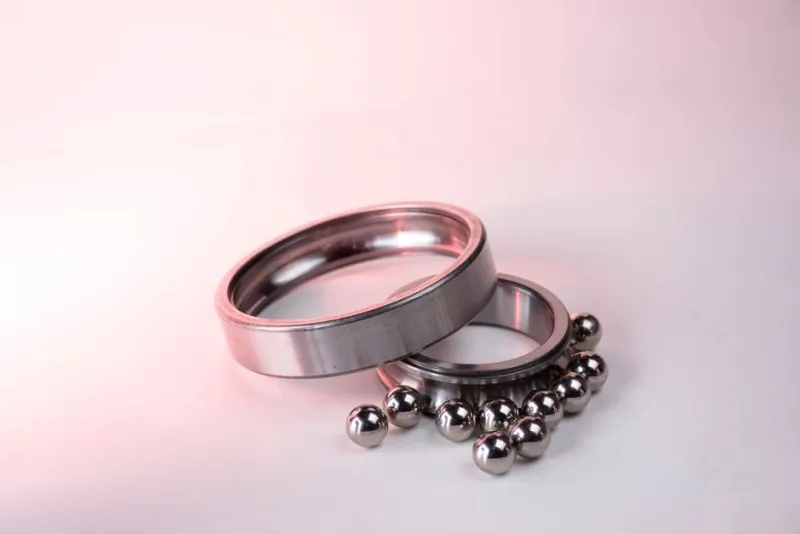
Bearing ang nasa litrato, pero hindi ang mismong bearing. Ang stock photo ng makintab na bearing na may nakatipang "6205" sa tabi ay walang sinasabi sa mamimili na hindi na niya nabasa sa part number. Ang nagbibigay ng tiwala ay isang dimensioned view — bore, OD, lapad at chamfer na nakaturo sa aktwal na parte, sa isang tunay na industrial spec diagram. Ganito rin ang disiplinang kailangan ng listing ng fastener at tubo; sakop ng metric vs imperial fastener threads at sukat ng tubo at fitting ang dalawang katabing pamilya kung saan may designation ding nagtatago ng tatlong sukat.
Isang praktikal na payo sa paggawa ng mga drawing na iyon: anumang tool ang gamitin mo, dapat kinukuha nito ang sukat mula sa sinukat na parte at naka-lock ito sa imahe — hindi mula sa arrow na iginuhit sa kamay na naiuurong tuwing may redesign ng katalogo. Maling instrumento rito ang mga tool na gumagawa ng product image gamit ang AI — kaya nilang mag-render ng kapani-paniwalang bearing at magpalabas ng bore value na walang sumukat, at sa isang bearing catalogue, ang isang maling numerong mukhang totoo ay katumbas ng isang container na ibinalik.
Ano ang Dapat Nasa Isang Bearing Listing
- Buong designation kasama ang prefix at lahat ng suffix (hal. 6205-2RS1/C3)
- Bore, OD at lapad sa mm, nakasulat nang hiwalay sa designation
- Uri ng bearing na naka-salita, hindi lang ang type digit
- Uri ng seal o shield, at kung contact o non-contact ito
- Klase ng internal clearance (C2 / Normal / C3 / C4)
- Tolerance class ayon sa ISO 492 (Normal / P6 / P5)
- Dynamic at static load rating, kasama ang pamantayang pinagbatayan nito
- Limiting speed para sa grease at para sa langis
- Materyal at uri ng cage (chrome steel, stainless, steel o polyamide cage)
- Isang dimensioned drawing na nagpapakita ng d, D, B at chamfer r
Sampung linya. Ang mamimiling nakabasa nito ay hindi na magpapadala ng teknikal na tanong, at ang mamimiling hindi na kailangang magtanong nang teknikal ay kadalasang umuulit ng order.
Mga Madalas Itanong
Ano ang ibig sabihin ng bearing numbers?
Naka-encode dito ang sukat at uri. Ang unang digit ay ang uri ng bearing, ang sumunod ay ang dimension series, at ang huling dalawa ay bore code — mula 04 pataas, bore code × 5 = bore sa milimetro. Kaya ang 6205 ay single-row deep groove ball bearing, light series, 25 mm bore.
Anong sukat ang 6205 bearing?
25 mm bore, 52 mm outside diameter, 15 mm lapad. Nakatakda ang mga boundary dimension na ito sa ISO 15, kaya ang 6205 mula sa kahit sinong sumusunod na manufacturer ay kasya sa parehong housing at shaft.
Ano ang pagkakaiba ng 6205 at 6305?
Pareho silang 25 mm ang bore. Ang 6305 ay nasa medium series: 62 mm OD at 17 mm ang lapad kumpara sa 52 mm at 15 mm ng 6205, kaya mas mataas ang load rating nito sa parehong shaft. Pumili batay sa espasyo ng housing at sa karga, hindi sa presyo lang.
Ano ang ibig sabihin ng 2RS sa bearing?
Contact rubber seals sa magkabilang gilid. Mas mahigpit itong nagse-seal kaysa sa shielded (ZZ) na bearing pero nagdaragdag ito ng friction at nagpapababa ng limiting speed. Hindi mapagpapalit ang 2RS at ZZ sa isang quotation kahit pareho sila ng prefix sa designation.
Ano ang ibig sabihin ng C3 clearance?
Radial internal clearance na mas malaki kaysa sa normal na klase, itinatakda para sa mga bearing na uminit sa operasyon o ikakabit nang may mabigat na interference fit, kung saan ang thermal expansion ang mag-pre-preload sa bearing. Ibang produkto ang C3 kaysa sa parehong numerong walang suffix — palaging isaad ito.