Dimensions / Industrial & logistics / Semi-truck trailers / Flatbed
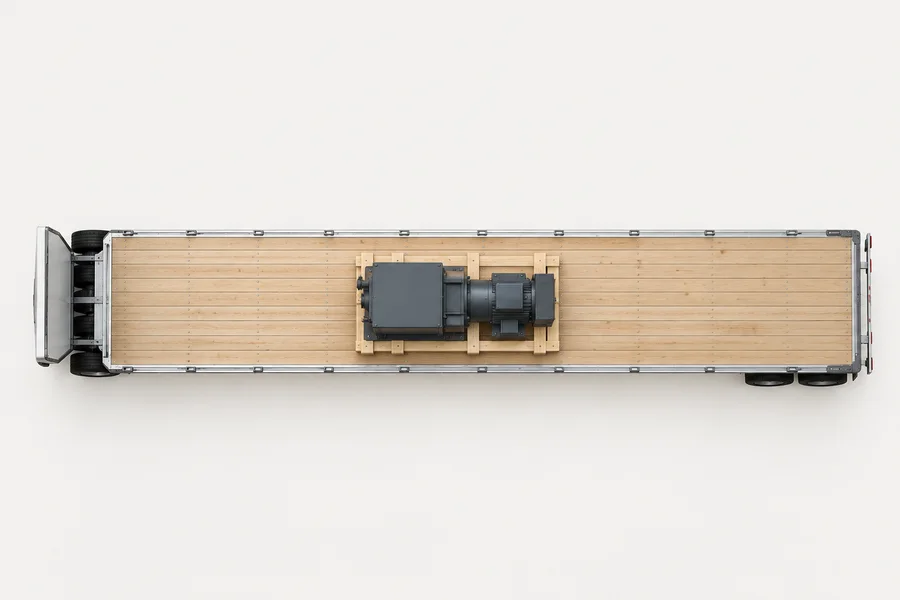
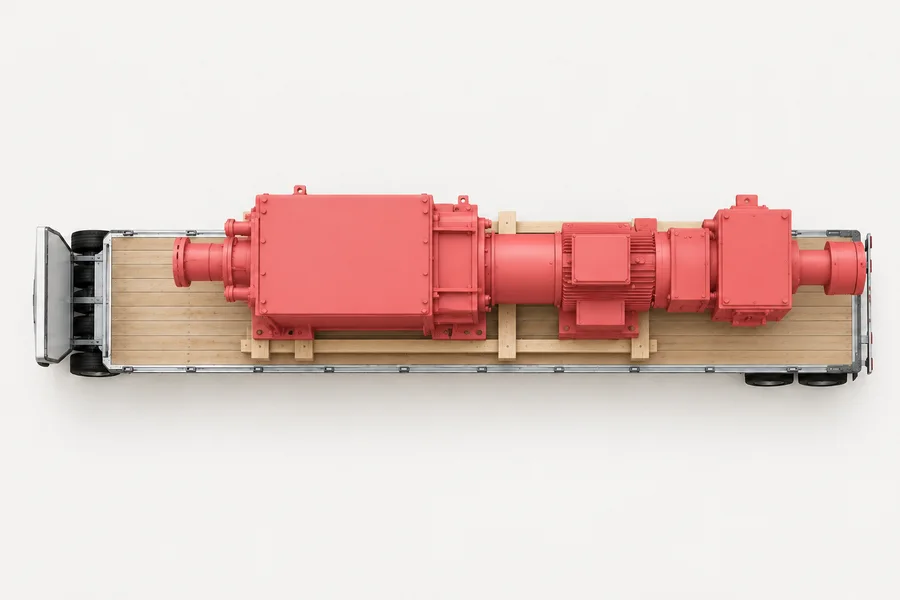
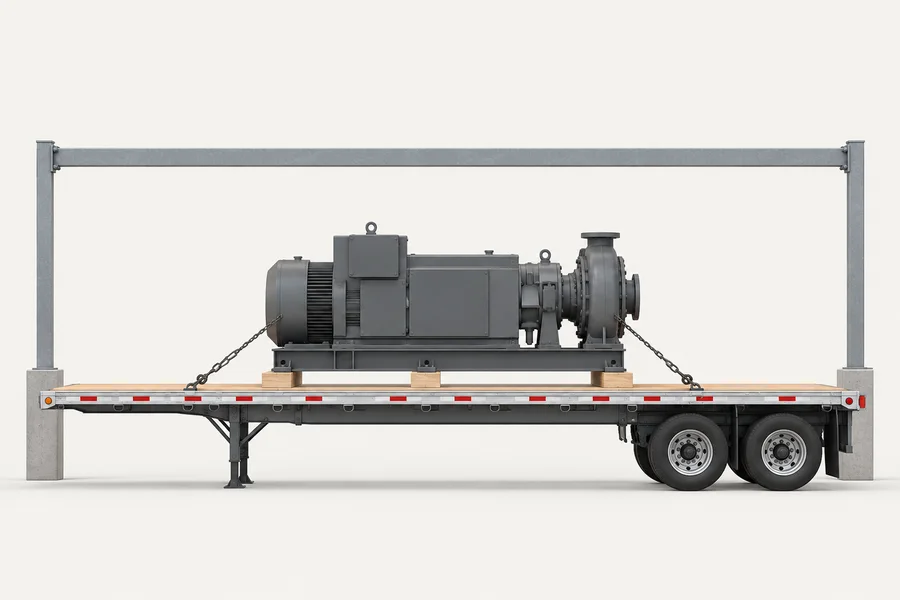
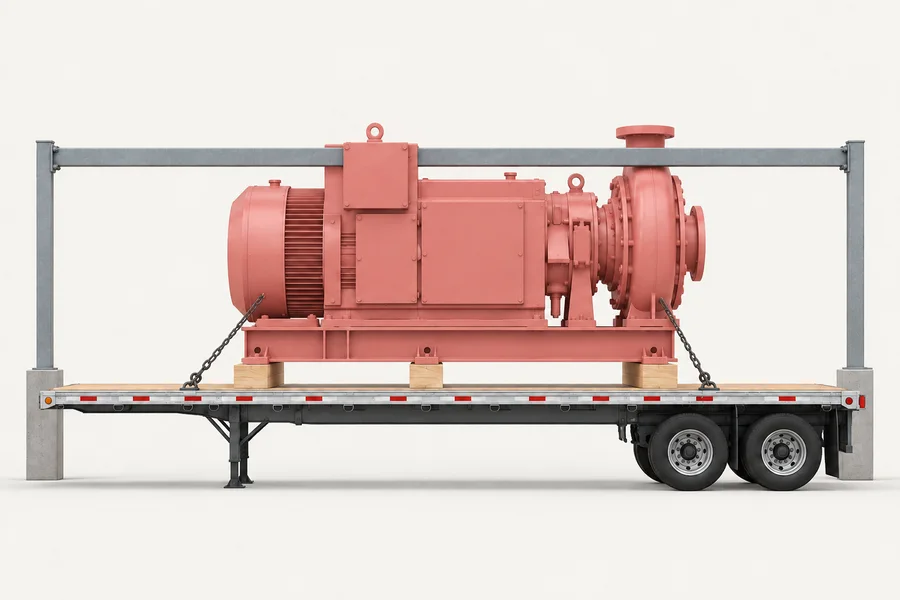
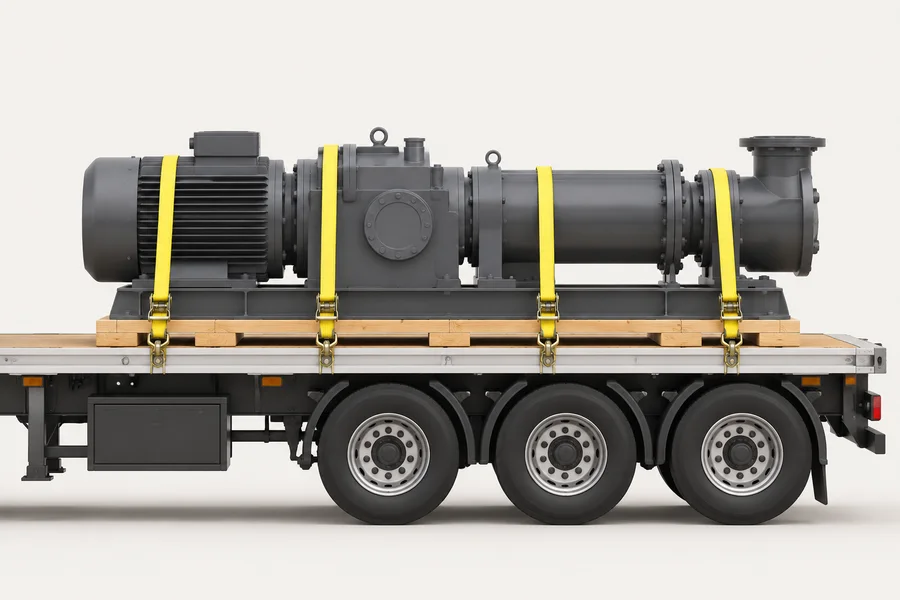
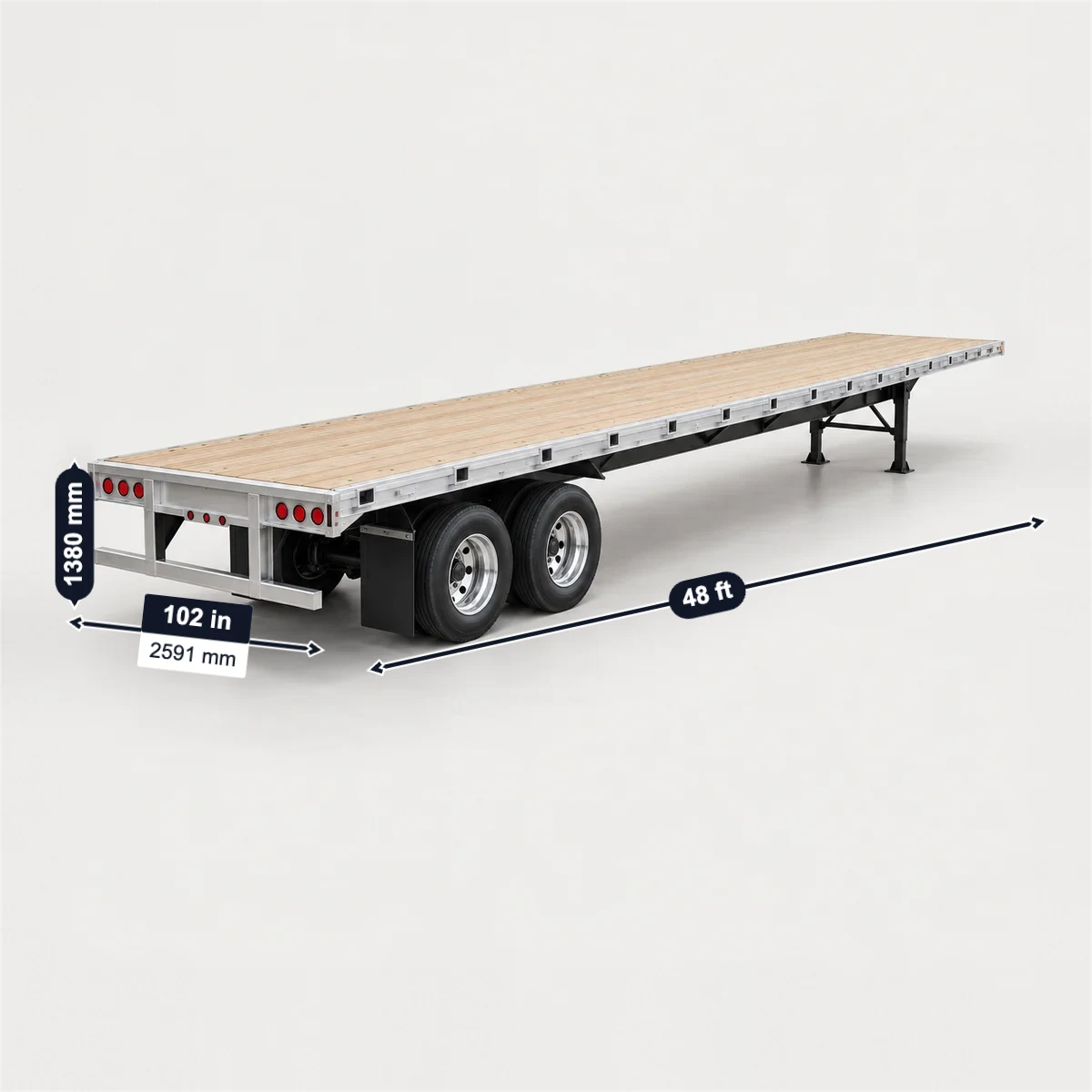
A flatbed deck runs 28′ to 53′ long and 96″ or 102″ wide (Wabash), and stands about 5 ft off the ground: Hyundai’s Latitude has a 54-5/16″ maximum rear deck height, so under a 13 ft 6 in limit a load can be about 8 ft 6 in tall (BlueGrace). With no walls, the deck’s rating and the tiedowns carry the load: Hyundai rates the Latitude at 60,000 lbs concentrated in 10′ and 55,000 lbs in 4′. 49 CFR 393.110 asks for two tiedowns for an article longer than 5 ft, plus one for every 10 ft beyond the first 10 ft, and their working load limits must add up to at least half its weight. Wider than 102 inches needs a state permit.
| Width limit, US federal (23 CFR 658.15) | Rear deck height, Hyundai Latitude (maximum) | Height a load can reach on a 5 ft deck under a 13 ft 6 in limit (BlueGrace) |
|---|---|---|
| 2,591mm102″ | 1,380mm54-5/16″ | 2,591mm8′ 6″ |
Sources: 23 CFR 658, Hyundai Translead, BlueGrace. Checked October 2026.
Hyundai’s 48′ Latitude and an example machine are filled in. Enter your load, deck and tiedowns; each check uses the numbers on this page.
Sizes in millimetres, weights in kilograms (1 in = 25.4 mm, 1 ft = 304.8 mm, 1 lb = 0.4536 kg). One article, not blocked at the front; the tiedowns go over it from side to side, so each counts at its full working load limit. Each state sets its own height limit.
A 6000 × 2400 mm load fits the 14630 mm deck within the 2591 mm width, and 12000 kg is within the 27216 kg the deck is rated for concentrated in 10 ft.
Hyundai’s Latitude deck is rated 55,000 lbs concentrated in 4′ and 60,000 lbs in 10′; a load shorter than 4 ft has no rating here.
A 2500 mm load on a 1380 mm deck stands 3880 mm, 235 mm under the 4115 mm limit.
Height limits are state law: FHWA says most run from 13 feet, 6 inches to 14 feet. The deck is Hyundai’s rear deck height, its highest point.
A 6000 mm, 12000 kg article needs at least 3 tiedowns; your 4 at 2268 kg give 9072 kg of working load, at least half its weight (6000 kg).
Utility rates its winch track at 5,000 lb working load limit; use your strap’s marked limit if it is lower. Straps over the load count in full.
Shipping machinery on a flatbed? Photograph the machine, mark its size, weight, centre of gravity and tie-down points in SizeMarker and send it to the carrier.
Mark a photoMakers’ own sheets. Concentrated ratings are for a load within the stated length of deck.
| Flatbed | Size and height | Load ratings; weight |
|---|---|---|
| Hyundai LatitudeAluminium; kingpin 24″ – 36″ | 32′ 0″ – 53′ 0″ × 102″; fifth wheel 47″ nominal; rear deck 54-5/16″ maximum | 60,000 lbs in 10′; 55,000 lbs in 4′ |
| Wabash aluminum, 524 / 624 / 724Stake pockets on 24″ centers | 28′- 53′ × 96″ and 102″ | 52,000 to 72,000 in 4′; 57,000 to 78,000 lb in 10′; 48′ base 8,712 to 8,952 lb |
| Wabash steel, 554 / 654 / 734 | 28′- 53′ × 96″ and 102″ | 55,000 to 73,000 lb in 4′; 60,000 to 80,000 lb in 10′; 48x102 base 10,796 to 11,596 lb |
| Great Dane Freedom, steel and combo | 28’, 45’, 48’, 53’ | 80,000 lb evenly distributed; 50,000 lb concentrated in 4’ |
| Great Dane Freedom Ultra | Stake pockets on 24” centers | 87,000 lb evenly distributed; 60,000 lb concentrated in 4’ |
| East Beast | Up to 53 feet | 52,000 lbs in 4 feet; 60,000 lbs in 10 feet; 90,000 lbs distributed on a 48-foot |
| East MMX | Heavy-haul flatbed | 80,000 lbs in 4 feet; 89,000 lbs in 10 feet; 145,000 lbs distributed |
| Utility 4000AE | 47,000 lb coil package | Pipe spools 6,500 lb and winch track 5,000 lb working load limit |
Sources: Hyundai Translead · Wabash · Wabash · Great Dane · East · Utility
| Rule | What it says |
|---|---|
| One tiedown49 CFR 393.110(b)(1) | Articles 5 feet (1.52 meters) or less long and 1,100 pounds (500 kg) or less |
| Two tiedowns393.110(b)(2) | 5 feet or less and more than 1,100 pounds; or longer than 5 feet up to 10 feet (3.04 meters), whatever the weight |
| Longer articles393.110(b)(3) | Two, plus one for every 10 feet of length, or fraction, beyond the first 10 feet |
| Blocked at the front393.110(c) | At least one tiedown for every 10 feet of article length, or fraction |
| Working load limit393.106(d) | Together at least one-half the weight; a tiedown over the cargo from side to side counts in full, one attached to the cargo counts half |
| Downward force393.102(b) | At least 20 percent of the weight for an article not fully contained within the vehicle |
| Design accelerations393.102(a)(2) | 0.435 g forward, 0.5 g rearward, 0.25 g lateral |
Sources: 49 CFR 393
| Point | What the source says |
|---|---|
| Height limitFHWA | Set by each state; most from 13 feet, 6 inches to 14 feet |
| Flatbed envelopeBlueGrace, broker | Main deck 48’–53’L x 102”W x 8’6”H of freight; deck height 5’ (dock height); 46–48,000 lbs |
| Step deckBlueGrace; East | Main deck 3’4”–3’6” high takes 10’2” of freight; East’s XLD drop deck sits at 36 inches |
| Wider loadsFHWA; 23 CFR 658.15(c) | States may grant permits beyond the federal 102 inch width; the federal government issues none |
| Concentrated against distributedGreat Dane | Concentrated loads are more stressful, so the concentrated rating is lower; many flatbeds have 52,000lb concentrated ratings |
| Tarping and tiedown hardware23 CFR 658 App. D | Tarping systems and tie-down assemblies on platform trailers are left out of the measured width, up to 3 inches |
Sources: FHWA · BlueGrace · East · FHWA · Great Dane · 23 CFR 658
Our conversion (1 in = 25.4 mm, 1 lb = 0.4536 kg), rounded to whole millimetres and kilograms.
| Figure | In mm or kg |
|---|---|
| Hyundai Latitude, 48′ deck; 102″; rear deck 54-5/16″ | 14,630 mm; 2,591 mm; 1,380 mm |
| Height limit 13′ 6″; most states up to 14′ | 4,115 mm; 4,267 mm |
| Load under 13′ 6″ on a 1,380 mm deck | 2,735 mm at most |
| Ratings 55,000 lbs; 60,000 lbs | 24,948 kg; 27,216 kg |
| Winch track 5,000 lb | 2,268 kg |
| A 6,000 mm, 12,000 kg machineOur calculation | 3 tiedowns under 393.110(b); working load limits adding up to 6,000 kg |
Sources: Hyundai Translead · Utility · 49 CFR 393
Decks run 28′ to 53′ long and 96″ or 102″ wide (Wabash); Hyundai builds its Latitude 32′ 0″ to 53′ 0″ long and 102″ wide, with a 47″ nominal fifth wheel height and a 54-5/16″ maximum rear deck height.
Height limits are state law, most from 13 feet, 6 inches to 14 feet. On a 5’ deck that leaves about 8’6” of freight (BlueGrace); a step deck’s 3’4”–3’6” main deck takes 10’2”.
Under 49 CFR 393.110, one for an article 5 feet or less and 1,100 pounds or less; two up to 10 feet; beyond that two plus one for every 10 feet or fraction. Their working load limits must add up to at least half the weight.
The weight the deck takes within a short length: Hyundai’s Latitude takes 60,000 lbs in 10′ and 55,000 lbs in 4′. Great Dane notes that concentrated ratings are lower than distributed ones, such as 50,000 lb in 4’ against 80,000 lb evenly distributed on its Freedom.
Not beyond 102 inches without a permit: states may grant permits for wider loads, and the federal government issues none (FHWA).
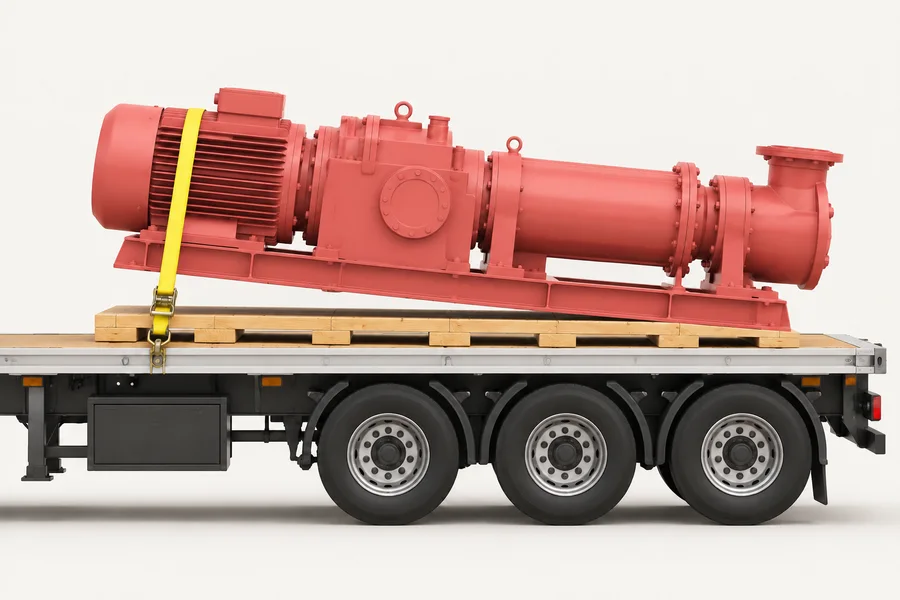
Carriers quoting a flatbed ask for the machine’s length, width, height and weight, where its centre of gravity and tie-down points are, and whether it needs a step deck or a permit. Mark the real machine and its tie-down points on your own photo in SizeMarker, as in the picture at the top, and send one product card for WhatsApp or WeChat.