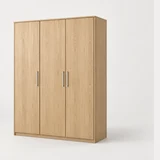
Dimensions / Furniture / Wardrobes / Single-door
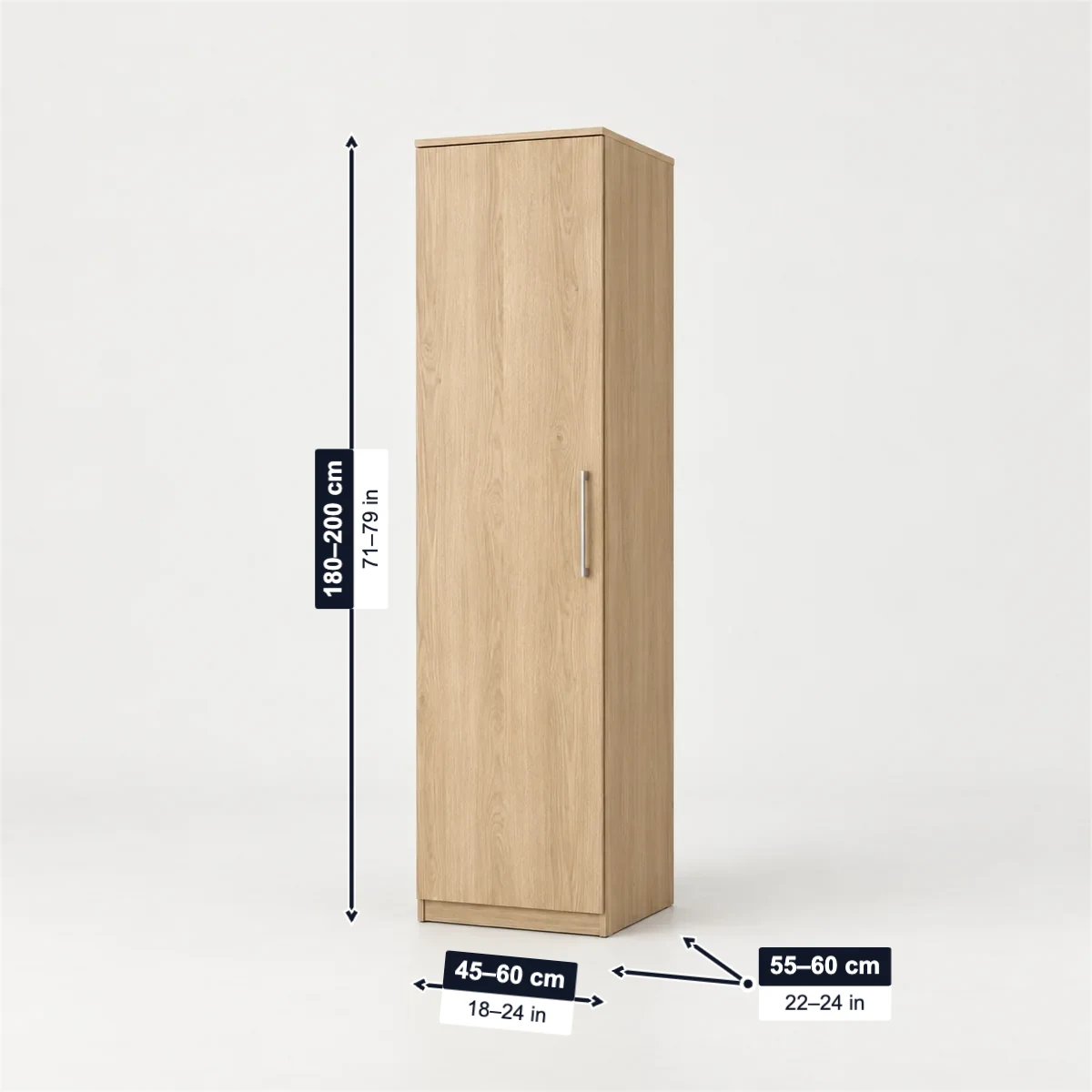
Most single-door wardrobes are 45–60 cm wide, 55–60 cm deep and 180–200 cm tall, with about 40–55 cm of hanging rail. The one door is as wide as the wardrobe, so the floor in front has to be clear for all of it.
| Width | Depth | Height |
|---|---|---|
| 45–60cm18–24 in | 55–60cm22–24 in | 180–200cm71–79 in |
Sources: TheSize.net. Checked October 2026.
Enter the wardrobe and your room. With one door the swing is the full width, so the third check is the one that usually catches people out.
All in centimetres. 1 in = 2.54 cm.
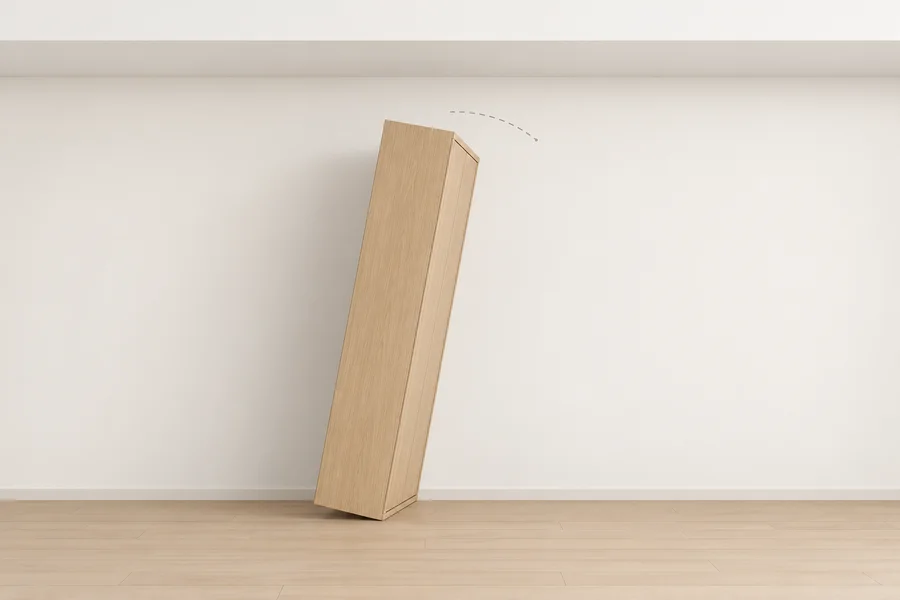
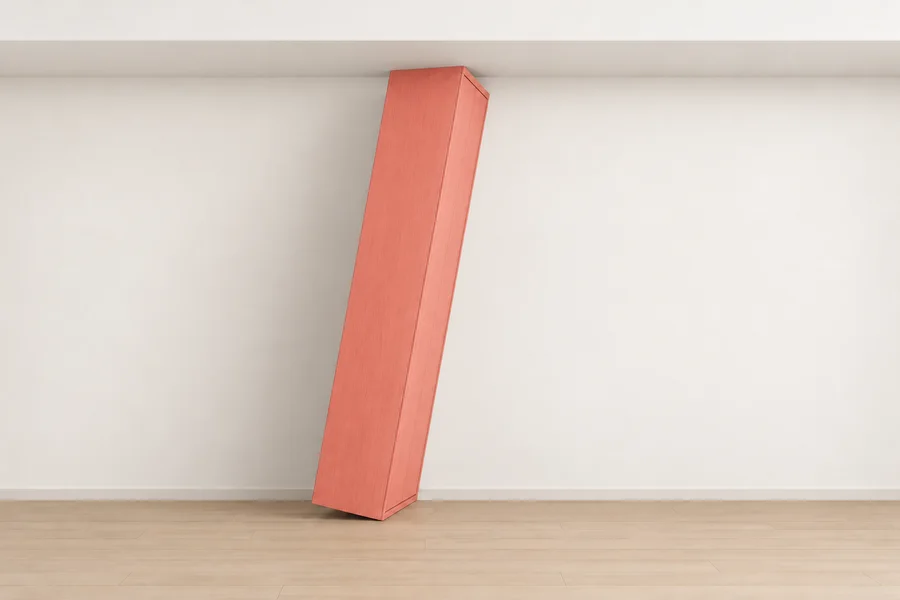
As you raise it from the floor, the top corner reaches 199.2 cm. Your ceiling is 240 cm, so there is 40.8 cm to spare.
Only matters if you build it lying on its back and then lift it upright.
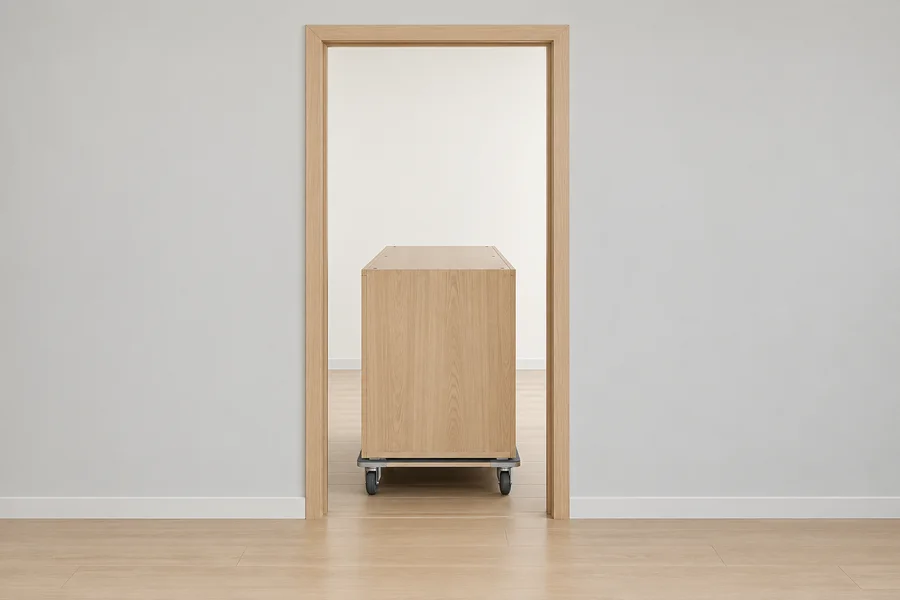
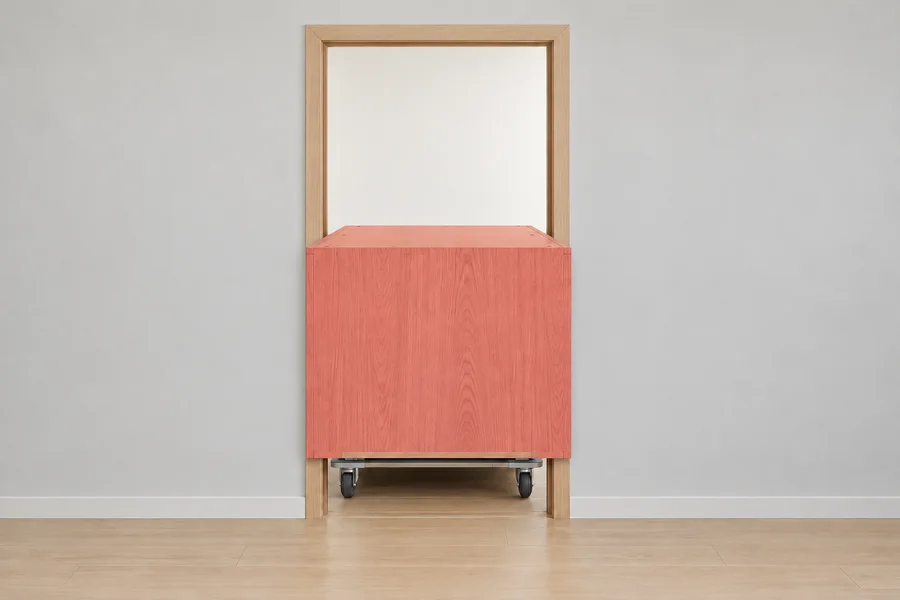
Carried long side first, it needs an opening of 50 × 60 cm. Your doorway is 76 × 198 cm.
Carried upright, long side first. Flat-pack boxes are as long as the tallest panel.
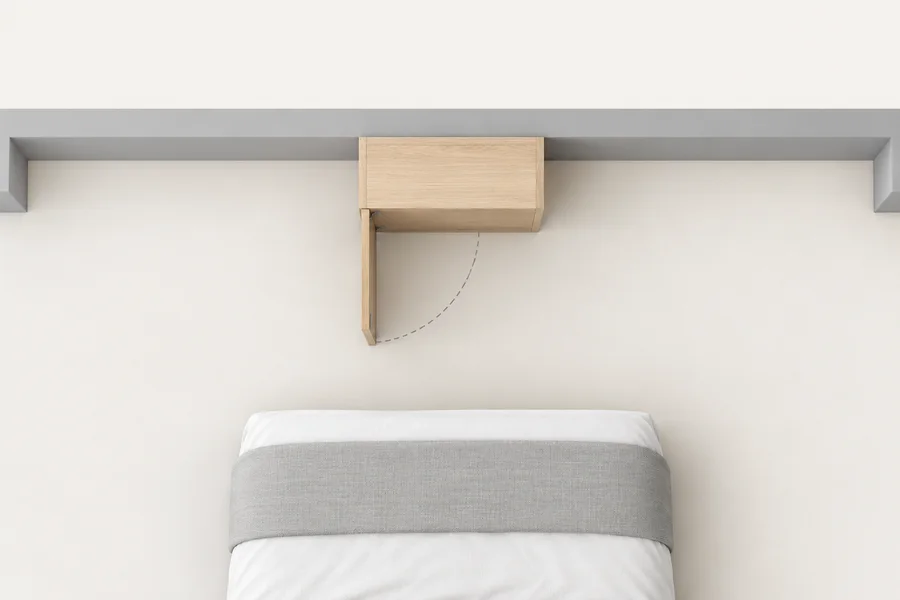
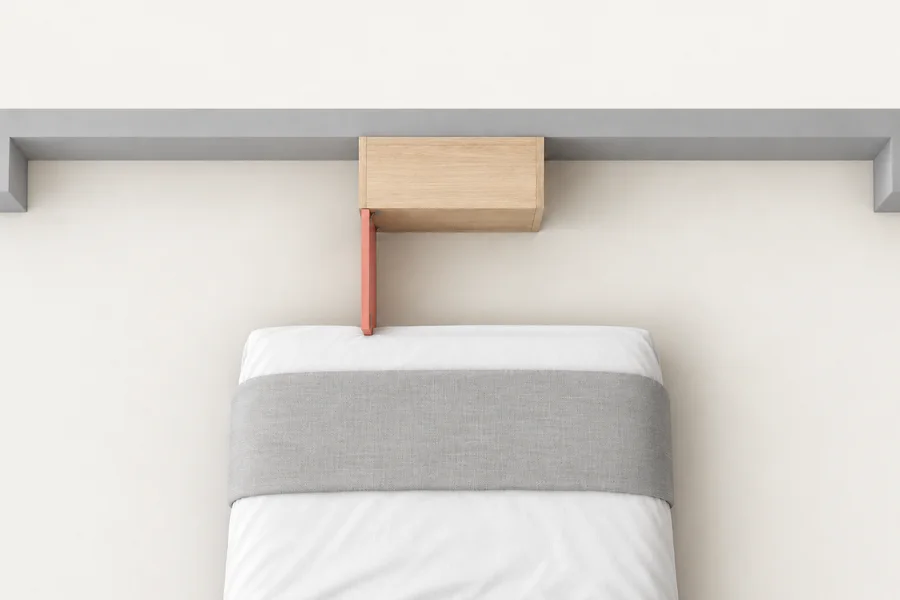
Each door swings out about 50 cm. You have 90 cm of clear floor in front.
A single hinged door is the full width of the wardrobe.
Fitting it into an alcove? Take a photo of the space, mark its width and height in SizeMarker and check them against the table before you order.
Mark a photoOutside dimensions. Brands differ, so check the listing for the exact model.
| Type | Width | Depth | Height |
|---|---|---|---|
| Single-door, freestandingThis page | 45–60 cm18–24 in | 55–60 cm22–24 in | 180–200 cm71–79 in |
| Single-door, UKCommon freestanding size | 50–60 cm20–24 in | 55–60 cm22–24 in | 180–200 cm71–79 in |
| IKEA PAX frame, 50 cmModular frame with one door | 50 cm19⅝ in | 58 cm22⅞ in | 201 or 236 cm79⅛ or 92⅞ in |
| Double-door | 90–120 cm35–47 in | 55–60 cm22–24 in | 180–200 cm71–79 in |
| Triple-door | 135–150 cm53–59 in | 55–60 cm22–24 in | 180–200 cm71–79 in |
Sources: TheSize.net
What decides how much a single holds and how much room its door takes.
| Measurement | Size |
|---|---|
| Hanging rail, side to sideIn a 45–60 cm single | about 40–55 cm16–22 in |
| Rail space per shirtTrousers take about 4 cm | about 2.5 cm1 in |
| End-on (pull-out) railHangers face the door | no longer than the depth |
| Shirts on a 40–55 cm railAt about 2.5 cm each | about 16–22 |
| Coats on a 40–55 cm railAt about 10 per metre | about 4–5 |
| Clear floor in front of a 60 cm doorOne hinged door, full width | 90–100 cm35–39 in |
| Clear floor in front of a 40–50 cm door | 75–90 cm30–35 in |
| Diagonal of a 190 × 60 cm side panelCeiling clearance to stand it up after building it on its back | about 199 cm78 in |
Sources: TheSize.net
Most single-door wardrobes are 45–60 cm (18–24 in) wide, 55–60 cm deep and 180–200 cm tall. In the UK they are often 50–60 cm wide.
About 40–55 cm (16–22 in) of rail when it runs side to side, and each shirt takes about 2.5 cm (1 in) of it. Measure what you want to hang against that before you buy.
A pull-out rail that runs from back to front, so the hangers face the door. Some singles use one instead of a side-to-side rail, and it holds far fewer clothes because it is no longer than the wardrobe is deep. Other singles have shelves only.
The one door is as wide as the wardrobe and swings out by its own width. A 60 cm door needs 90–100 cm (35–39 in) of clear floor in front; a 40–50 cm door needs 75–90 cm (30–35 in).
On a 40–55 cm side-to-side rail, about 16–22 shirts or 4–5 coats, counting about 2.5 cm a shirt and 10 coats per metre of rail. An end-on rail holds fewer.
With a single, buyers check two numbers before anything else: the width against their wall and the door swing against their floor. Mark both on your product photo in SizeMarker and send the picture with your quote.