
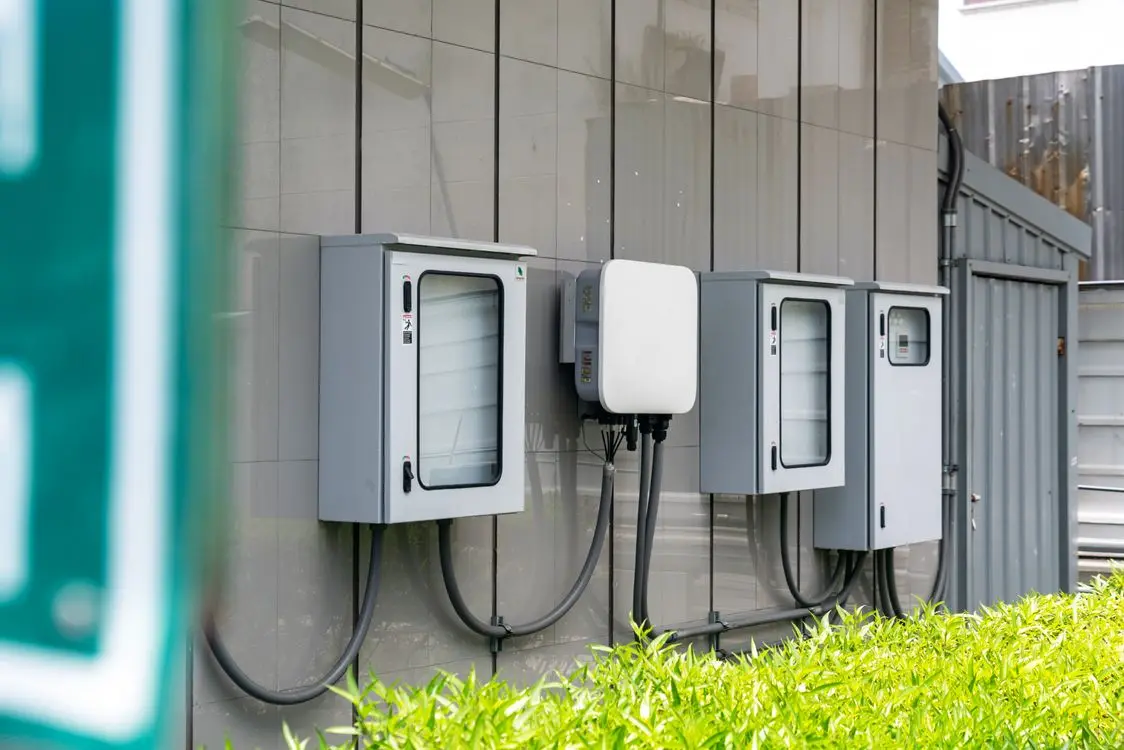
IP68 vs IP66 looks like a settled argument: 8 beats 6, so IP68 must be the safer thing to print on the label. It isn't. An enclosure rated IP68 can sit in a tank of water for half an hour and still leak the first time a customer hits it with a hose — because in IEC 60529 the water tests stop being cumulative after the digit 6.
That gap between what the code says and what buyers assume it says is where warranty claims, failed incoming inspections and overstated "waterproof" listing copy come from. Below are the five claims your IP rating is probably making on your behalf without your permission, what the standard actually says, and what belongs on the spec sheet instead.
What the Second Digit Actually Promises
The IP code defined in IEC 60529 is two characteristic numerals: the first is protection against solid objects and dust (0–6), the second is protection against water (0–9). Each numeral corresponds to one specific laboratory test, not to a general quality level.
The first numeral is cumulative. An enclosure that passes IP6X (dust-tight) automatically satisfies IP5X, IP4X and everything below it — the tests get monotonically harder.
The second numeral is cumulative only up to 6. Numerals 7, 8 and 9 are a different family of tests, and passing one of them says nothing about the ones below.
| 2nd digit | Test | What it does NOT cover |
|---|---|---|
| 3 | Spraying water, up to 60° from vertical | Jets, immersion |
| 4 | Splashing from any direction | Jets, immersion |
| 5 | Water jet, 6.3 mm nozzle, 12.5 L/min, 3 m | Powerful jets, immersion |
| 6 | Powerful jet, 12.5 mm nozzle, 100 L/min, ~2.5–3 m | Immersion |
| 7 | Immersion, 1 m, 30 min | Any jet or spray test (5, 6) |
| 8 | Immersion deeper/longer than 7, conditions agreed with the buyer | Any jet or spray test (5, 6) |
| 9 | High-pressure, high-temperature jet (~80 °C, 80–100 bar) | Immersion |
Read the right-hand column twice. An IP68 enclosure has never been tested against a water jet, and an IP66 enclosure has never been tested underwater. They are not two rungs on the same ladder; they are two different ladders.
Claim 1: "IP68 is better than IP66"
Only if the threat is standing water. If the threat is a pressure washer, a driving rainstorm hitting a wall-mounted box, or a dockside wash-down, IP66 is the rating that was actually tested for it and IP68 is silent.
This is not an edge case. Outdoor lighting, EV charging enclosures, marine hardware, food-processing equipment and outdoor cameras all get cleaned with a jet far more often than they get submerged. A supplier who "upgrades" a product from IP66 to IP68 to sound stronger has, on paper, downgraded the only test the customer cared about.
The fix is dual marking. Enclosures that pass both families are labelled IP66/IP68, with the two ratings separated by a slash. If a datasheet shows a single rating of IP67 or IP68 and the sales copy promises "withstands high-pressure cleaning," those two statements are in conflict, and the test report will side with the label.
Claim 2: "IP68 means waterproof to a known depth"
IP68 by itself specifies no depth and no duration. IEC 60529 fixes the numeral 7 test at 1 metre for 30 minutes, but for numeral 8 it says only that conditions must be more severe than numeral 7, with the actual depth and time agreed between the manufacturer and the user.
So IP68 can legitimately mean 1.5 m for 60 minutes, 3 m for 30 minutes, or 10 m for an hour. Three suppliers can all print IP68 and all be honest while offering wildly different products. A rating with no stated conditions is a claim, not a specification.
Write it the way the standard expects it to be read:
IP68 — tested to 2 m for 60 minutes per IEC 60529:2013, report no. XXXX, dated 2026-03-11.
Depth, duration, standard edition, report reference, date. Everything a buyer's QA team needs to accept the number without emailing you.
Claim 3: "IP67 covers rain and washdown"
Rain is numeral 3 or 4. Washdown is 5, 6 or 9. Immersion is 7 or 8. A product rated IP67 has passed a still-water immersion test in a controlled orientation — and nothing else on the water side.
In practice IP67 devices often do survive rain, because a housing sealed well enough to survive immersion is usually sealed well enough for spray. "Usually" is the operative word, and it evaporates in two situations that show up constantly in field returns:
- Pressure-driven ingress. Immersion applies uniform hydrostatic pressure, roughly 0.1 bar at 1 m. A jet applies a concentrated, directional load that can deform a gasket lip or drive water past a cable gland. A seal can pass one and fail the other.
- Orientation. Immersion tests are run in a defined position. A jet test comes from every direction, including up into drain paths and vent membranes that were never in the water's way in the tank.
Claim 4: "IP69K and IP69 are the same rating"
They come from different documents. IP69K originated in the German automotive standard DIN 40050-9, later absorbed into ISO 20653 for road vehicles. IEC 60529:2013 added its own numeral 9 for high-pressure, high-temperature jets, which is why you now see IP69 without the K.
The test itself is brutal in both: water at roughly 80 °C delivered at 80–100 bar from four angles while the part rotates on a turntable. If your buyer's spec says IP69K and your report says IP69 to IEC 60529, that is a document mismatch worth resolving before shipment, not after. For anyone exporting to China, note that the domestic equivalent standard, GB/T 4208-2017, adopts IEC 60529:2013 including numeral 9 — so the Chinese and IEC numbering line up, and neither of them is IP69K.
Claim 5: "The rating belongs to the product"
The rating belongs to an enclosure, in a stated configuration, at the moment it was tested. Four things change it and none of them are visible in the two-digit code:
- Mating state. A connector rated IP67 mated is often IP20 unmated. If the product ships with a dust cap, the cap is part of the rating.
- Mounting orientation. Drain holes, vent membranes and cable entries only work in the orientation the test assumed. Mount it upside-down and the rating is void.
- Cable gland size. A gland certified for 8–12 mm cable does not seal a 6 mm cable — and an out-of-range cable is one of the most common field failures on otherwise well-built industrial boxes.
- Service life. Elastomer gaskets take a compression set. The rating describes a new unit, not a unit after two years of thermal cycling.
What to Print on the Spec Sheet
Because the code compresses so much away, buyers reconstruct the missing detail by asking you — repeatedly, in every RFQ. The way to stop that is to put the sealing story on the drawing, not in a paragraph.
A spec diagram for a sealed enclosure should carry the rating and its test basis in a corner block, and then callouts on the geometry that make the claim believable:
- Gasket groove width and depth, in mm
- Cable gland thread designation and the cable OD range it accepts (M20 × 1.5, 6–12 mm)
- Drain and vent positions, with the mounting orientation they assume
- Fastener torque for the lid, because an under-torqued lid is an untested lid
- The mated-versus-unmated rating for every connector on the housing
Those are all dimensions, which means they have to be measured, not estimated. That is where a lot of catalogue artwork quietly falls apart: an image generator will happily render a plausible-looking gland callout, but it has no idea what your groove depth is, and a buyer who machines a mating part to your invented number will send the whole batch back. Locking real, measured values onto the photo or the render — snap the measurement to the actual edge, label it, export at the size the buyer's platform wants — is a different job from making the picture look good, and it is the one that survives an incoming inspection. The same principle applies across the board when you label metal product specifications or build any industrial spec diagram.
Pre-shipment IP claim checklist
- The label rating matches the test report exactly, including any slash-separated dual rating
- IP68 or IPX8 claims state depth and duration on the datasheet
- Standard edition is cited (IEC 60529:2013, or GB/T 4208-2017 for China)
- Marketing copy contains no water claim the second digit does not cover
- Connector ratings are stated mated and unmated
- Mounting orientation assumed by the test is shown on the drawing
- Cable gland cable-OD range is printed next to the thread size
- IP69K versus IP69 wording matches whichever document the buyer specified
If a claim on your listing cannot be traced to a line in a test report, delete it. An IP rating is one of the few marketing numbers a customs officer, a marketplace compliance bot and a returning customer can all check against the same document — which also makes it one of the easiest to be caught overstating. Related labelling traps show up the same way with plug type and voltage by export market.
FAQ
Is IP68 waterproof?
IP68 means the enclosure passed an immersion test more severe than 1 metre for 30 minutes, under conditions agreed between the manufacturer and the buyer. It is not a universal "waterproof" guarantee, it carries no fixed depth, and it does not certify resistance to water jets or pressure washing.
What is the difference between IP65 and IP67?
IP65 is dust-tight plus a 12.5 L/min water jet from a 6.3 mm nozzle. IP67 is dust-tight plus immersion at 1 metre for 30 minutes. Neither implies the other: an IP65 unit has never been submerged in testing, and an IP67 unit has never faced a jet. Products needing both are marked with two ratings, such as IP65/IP67.
Can I claim IP66 if my product passed IP68?
No. The second characteristic numeral is cumulative only up to 6, so passing the immersion test at numeral 8 does not demonstrate compliance with the jet tests at numerals 5 or 6. Claiming IP66 requires running the IPX6 test and holding the report, after which the product is marked IP66/IP68.
Does an IP rating cover salt spray or corrosion?
No. IEC 60529 covers solid objects, dust and water only. Corrosion resistance is a separate qualification, typically neutral salt spray to ISO 9227 or ASTM B117, and it must be stated separately on the datasheet. This is one of the differences that makes IP codes and NEMA enclosure types non-interchangeable, since NEMA types do include corrosion and ice criteria.
How should the IP rating appear on a product drawing?
Put it in the title block or a dedicated note with the standard edition, the test report reference and, for numeral 8, the depth and duration. Then annotate the physical features the rating depends on — gasket groove dimensions, gland thread and cable OD range, drain and vent locations, and lid torque — so the buyer can verify the claim geometrically rather than trusting a two-digit code.
Sources & References
- IEC 60529 — Degrees of protection provided by enclosures (IP Code)
- GB/T 4208-2017 — Degrees of protection provided by enclosure (IP code), full text
- IP code — second characteristic numeral test conditions and non-cumulative rule
- IP degrees of protection vs. NEMA enclosure types — white paper comparing the two rating systems
- ASTM B117 — Standard practice for operating salt spray (fog) apparatus