
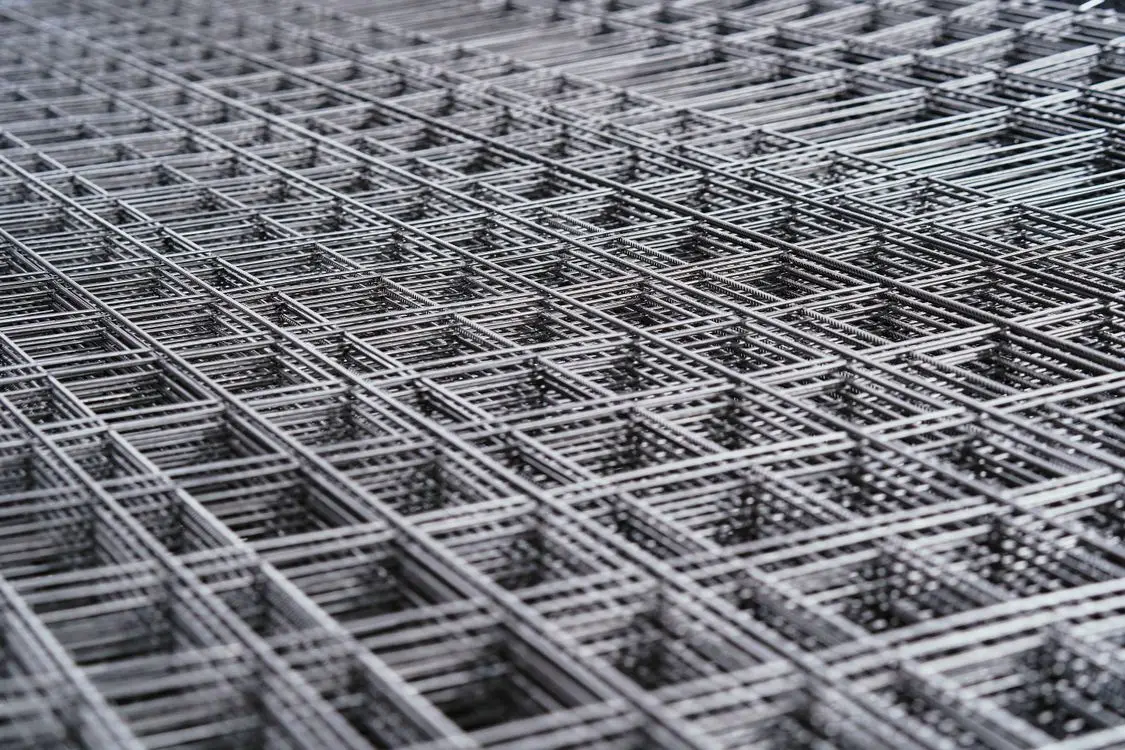
Mesh count vs micron is the spec argument that only surfaces after the goods land. Your PO says 100 mesh. Your customer's incoming lab measures the aperture and reports 114 µm against a chart that says 100 mesh is 150 µm. Nobody lied. The chart describes a test sieve; you shipped production cloth, and the two are woven with different wire.
A mesh count is a weave density, not an aperture. Two 100-mesh cloths can differ by 51 microns and both be honestly labelled.
Mesh to micron: the ASTM E11 table
This is the table everyone quotes. Read it as the test sieve values it actually is — the openings ASTM E11 specifies for standard woven wire test sieve cloth, at the wire diameters that standard assumes.
| US mesh (No.) | Nominal opening | US mesh (No.) | Nominal opening |
|---|---|---|---|
| 4 | 4.75 mm | 100 | 150 µm |
| 8 | 2.36 mm | 120 | 125 µm |
| 10 | 2.00 mm | 140 | 106 µm |
| 16 | 1.18 mm | 170 | 90 µm |
| 20 | 850 µm | 200 | 75 µm |
| 30 | 600 µm | 230 | 63 µm |
| 40 | 425 µm | 270 | 53 µm |
| 50 | 300 µm | 325 | 45 µm |
| 60 | 250 µm | 400 | 38 µm |
| 70 | 212 µm | 500 | 25 µm |
| 80 | 180 µm | 635 | 20 µm |
Note which column the standard treats as primary. In ASTM E11 the opening size is the designation and the mesh number is the alternative label. Gilson's breakdown of the standard puts it the same way: mesh numbers are the alternative sizing system, historically derived from counting apertures per linear inch, and they only apply usefully to the finer end of the range. Coarse sieves are called out in millimetres because nobody would recognise "No. 0.16."
So when a drawing says "200 mesh" and a lab says "75 µm," they are not two facts. They are one fact and one approximation of it — and the approximation is the one on your PO.
Why the table is a starting point, not a spec
The relationship is arithmetic, and it has two variables:
Opening = (1 ÷ mesh count) − wire diameter, all in inches.
The mesh count fixes the pitch — the centre-to-centre spacing of the wires. At 100 mesh the pitch is 0.010 in (254 µm), always. What the mesh count does not fix is how much of that pitch is wire.
Screener King's worked example makes the size of the problem concrete. Three cloths, all honestly sold as 100 mesh:
| Wire diameter | Opening | Opening (µm) | vs the chart's 150 µm |
|---|---|---|---|
| 0.0035 in | 0.0065 in | 165 µm | +15 µm coarser |
| 0.0045 in | 0.0055 in | 140 µm | −10 µm finer |
| 0.0055 in | 0.0045 in | 114 µm | −36 µm finer |
Same mesh count. A 51-micron spread between the coarsest and the finest — roughly a third of the nominal aperture. If the buyer's process cuts at 150 µm, one of those three cloths does the job and two produce an off-spec fraction, and none of them is mislabelled.
This is the mechanism behind almost every mesh dispute. The buyer reads a chart built on one wire diameter; the mill weaves to another; the number on the paperwork is identical throughout.
Test sieve cloth and production screen cloth are different products
They share a designation and nothing else. A test sieve is a measuring instrument, certified to a standard's wire diameter and aperture tolerance. Production screen cloth is a consumable, woven to survive an abrasive slurry and a tensioning frame — which means heavier wire, which means a smaller opening at the same mesh.
| Test sieve cloth | Production screen cloth | |
|---|---|---|
| Governed by | ASTM E11 / ISO 3310-1 | Mill's own weave spec |
| Wire diameter | Specified with tolerance | Chosen for wear life and tension |
| Opening at 100 mesh | 150 µm nominal | Commonly 114–140 µm |
| What it's for | Measuring a particle distribution | Making a cut in production |
| Aperture tolerance | Statistically controlled per standard | Whatever the weave delivers |
The practical rule: a chart micron value is only valid for cloth woven at the standard's wire diameter. For production cloth, the honest spec is the opening, plus the wire diameter it was achieved with. Quoting mesh alone transfers the entire risk to whoever measures last, and that is usually your customer's QC.
If this pattern feels familiar, it's the same failure as sheet metal gauge to mm, where one gauge number means four different thicknesses depending on the metal, and AWG vs mm² cable specifications, where a legacy count is treated as a dimension. In all three, a number that describes a manufacturing process gets read as a measurement.
Tyler, ASTM and ISO: three systems, one number on your PO
Three naming systems circulate, and buyers mix them freely.
| System | Designation basis | Watch out for |
|---|---|---|
| ASTM E11 (US) | Opening in mm/µm, with mesh No. as alternative | The mesh number is the label, not the spec |
| ISO 3310-1 (international) | Opening in mm/µm | Same nominal openings as ASTM in this series; wire diameters differ in some ranges |
| Tyler | Mesh count, historically referenced to a different wire schedule | A Tyler 325 and an ASTM No. 325 do not have identical openings |
Retsch's test sieve documentation and Certified MTP's ASTM sieve breakdown both carry the standard chart; the divergence lives in the wire schedules behind it, not in the headline numbers.
For an export order, the consequence is simple. If the buyer writes "325 mesh" and doesn't name the system, you have three defensible answers and no way to know which one their inspection will use. Ask which standard governs acceptance before you quote — not after the sample fails.
What a defensible mesh callout looks like
A callout that survives incoming inspection has four elements. Most POs carry one.
- Aperture in microns — the number acceptance will be judged on
- Wire diameter — without it the aperture isn't reproducible
- Mesh count — as a secondary, convenience label
- Governing standard — ASTM E11, ISO 3310-1, or "production cloth, mill spec"
- Tolerance and how it's verified — optical measurement, sieve analysis, certificate
Written out, a complete line looks like this: aperture 140 µm, wire 0.0045 in (0.114 mm), approx. 100 mesh, production cloth to mill weave spec, aperture verified by optical measurement. One line, no argument.
And put it on the image, not only in the datasheet. Filter and screen products are bought from catalogue photos and marketplace listings where the aperture is the entire value proposition, and a photo of woven wire carries no scale at all — 100 mesh and 325 mesh look identical on a phone. A callout pinned to the actual weave in the photo, showing aperture and wire diameter together, answers the question the buyer was going to email you.
FAQ
What is the difference between mesh count and micron?
Mesh count is the number of openings per linear inch of cloth — a weave density. Micron is the size of the opening itself. They are related by the wire diameter: opening = (1 ÷ mesh) − wire diameter. Because the wire diameter is a free variable, one mesh count corresponds to a range of micron ratings, not a single value.
What does 200 mesh mean in microns?
On the ASTM E11 test sieve chart, No. 200 is 75 µm. That value assumes the standard's wire diameter for that mesh. A 200-mesh production screen cloth woven with heavier wire will cut finer than 75 µm — the exact figure depends on the wire, so ask the mill for the aperture rather than converting from the chart.
Can I convert mesh to micron with a chart?
For certified test sieves, yes — the chart is the standard. For production cloth, no. The chart is built on one wire diameter per mesh; production cloth is woven to whatever wire survives the duty. A 100-mesh cloth can measure anywhere from about 114 µm to 165 µm depending on wire, which is why the conversion is a starting point and the mill's aperture figure is the spec.
Is ASTM E11 the same as ISO 3310-1?
For nominal openings in this series they align, but wire diameters differ in some ranges, and Tyler designations reference a different schedule again. The practical answer: name the governing standard on the PO. "325 mesh" without a system named is three different products.
How should mesh and micron appear on a product image or catalogue page?
Both numbers, plus the wire diameter, placed next to the weave they describe rather than floating in a caption — buyers who see only "325 mesh" convert it themselves from a chart that doesn't apply to your cloth. The reliable way to produce that is to pin the callouts to the measured geometry in the photo and export at whatever size the buyer's catalogue or marketplace requires, so the numbers stay attached to the feature they belong to. This is a measurement task, not a retouching one, and it's the specific thing image generators get wrong: a model will letter a confident "45 µm" onto a weave it never measured, and on a filter listing that reads exactly as authoritative as a verified figure until the goods are tested. Deterministic measurement is the difference between a spec image and a plausible picture. If you want the cost side first, the return cost calculator prices what one rejected lot takes out of the order.
Sources & References
- ASTM E11 — Standard Specification for Woven Wire Test Sieve Cloth and Test Sieves
- Gilson Co. — Sieve Sizes: In-Depth Guide to U.S. and Metric Sizes (mesh number as the alternative designation; No. 100 / 200 / 325 values)
- Screener King — Mesh Count vs Micron Rating (opening = 1/mesh − wire diameter; 100-mesh worked example across three wire diameters)
- Certified MTP — ASTM Sieve Sizes: A Complete Sizing Chart Breakdown
- Retsch — Test Sieves (ASTM E11 and ISO 3310-1 compliance, wire cloth specifications)