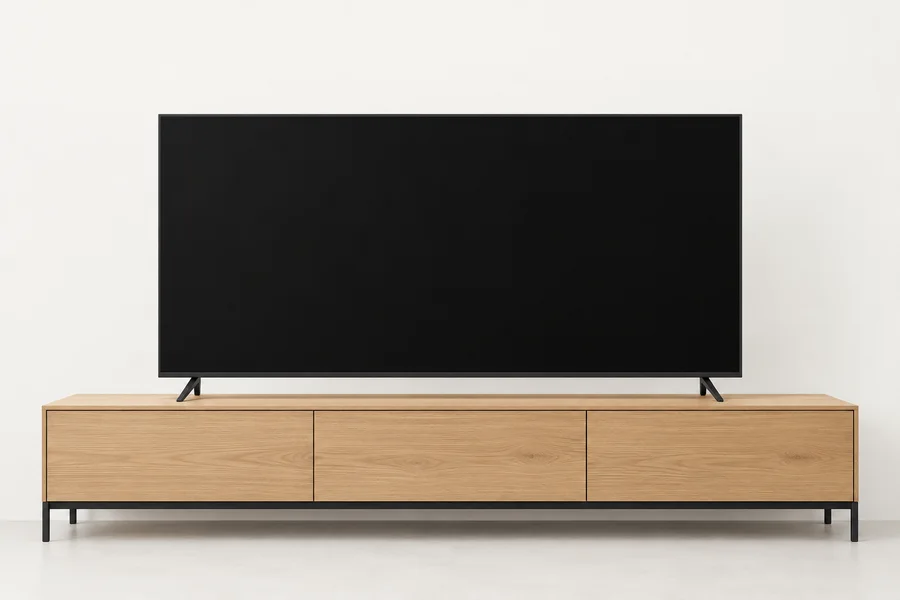
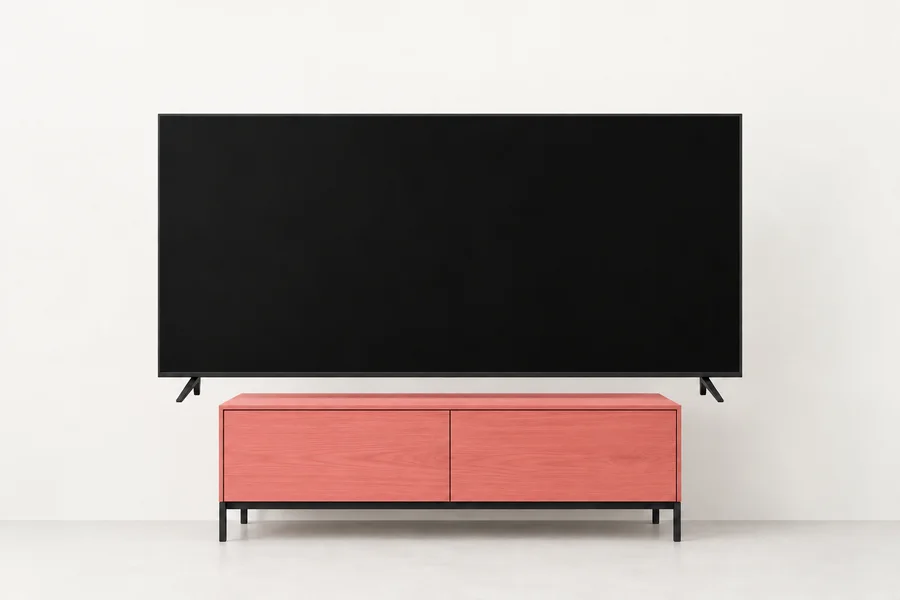
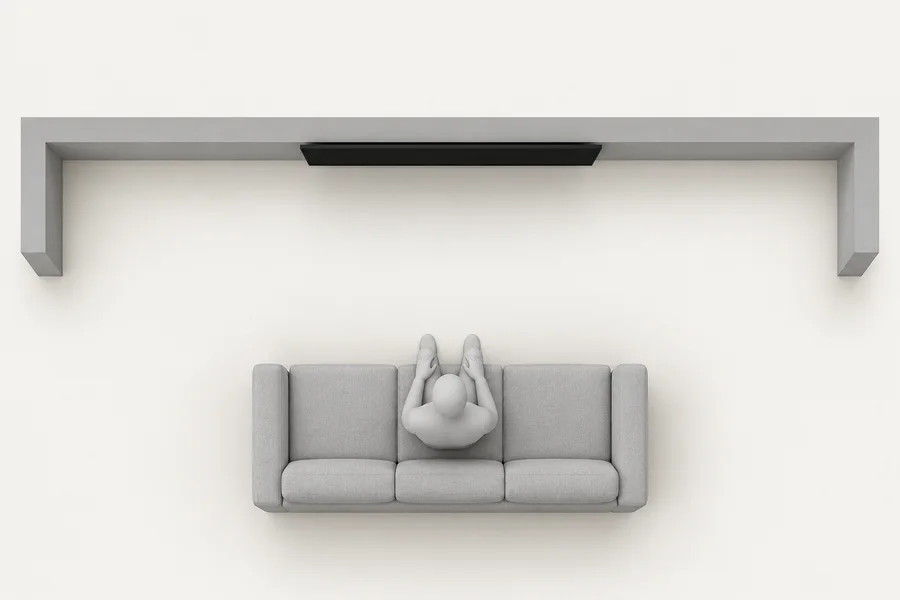
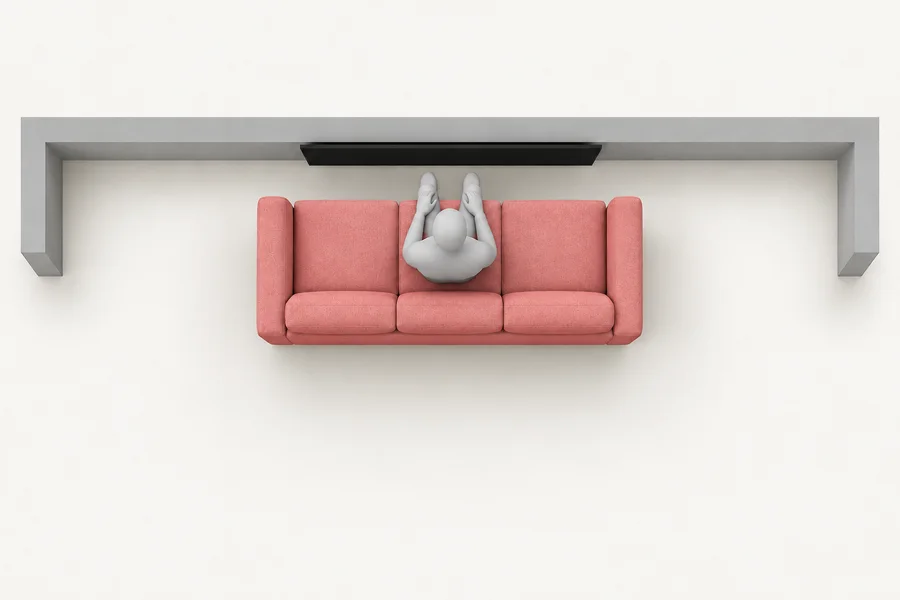
Dimensions / Furniture / TV sizes / 65 inch
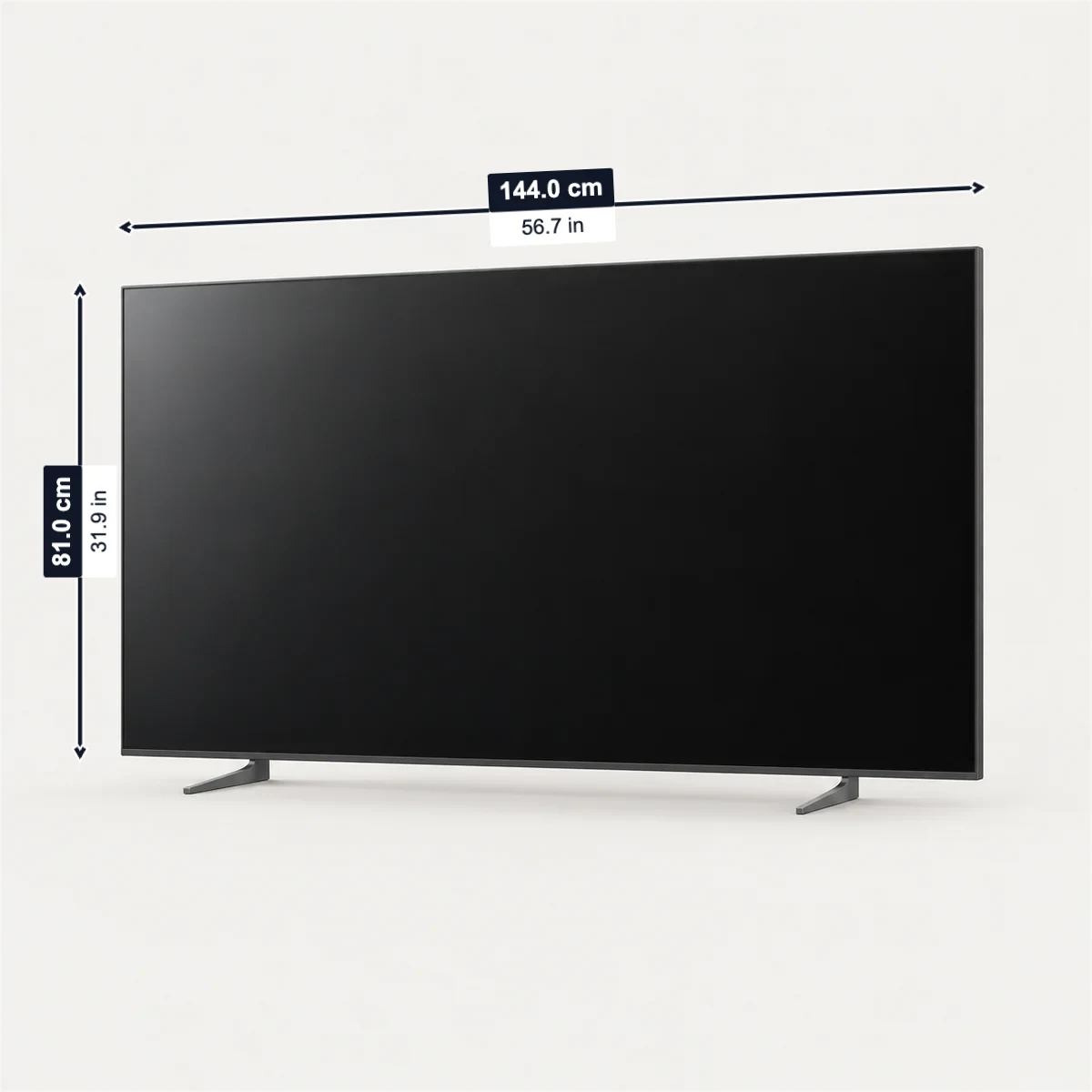
A 65-inch TV has a 16:9 screen about 144 × 81 cm (56.7 × 31.9 in) (RTINGS); Samsung’s 2026 QN80H is 144.29 × 83.12 × 5.2 cm without its stand and weighs 17.2 kg. Stands differ most at this size: Samsung’s S90F sits on a 36.6 cm blade, its QN80H on feet 120.95 cm apart, so measure the footprint before choosing furniture. For 30–40° of view, sit 1.98–2.69 m away (RTINGS).
| Screen, W × H | TV width, Samsung QN80H | Seat for 30–40° of view |
|---|---|---|
| 144 × 81cm56.7 × 31.9 in | 144.29cm | 198–269cm |
Sources: RTINGS, Samsung (QE65QN80H). Checked October 2026.
Enter the TV from its spec sheet, then the furniture it will stand on, your seat and the wall mount you have in mind. Each check uses the numbers in the tables on this page.
All in centimetres. 1 in = 2.54 cm.
Your 180 × 45 cm top is 35.7 cm wider than the 144.3 cm TV and deep enough for its 25.7 cm stand.
Measure the footprint, not only the width: Samsung’s S90F blade is 36.6 cm wide, its QN80H feet 120.95 cm apart.
At 240 cm the 143.9 cm wide screen fills 33.4° of your view, within 30–58° (between 130 and 269 cm away).
RTINGS puts the 30° seat for 65 in at 2.69 m and the 40° seat at 1.98 m; Samsung says 2.0 m.
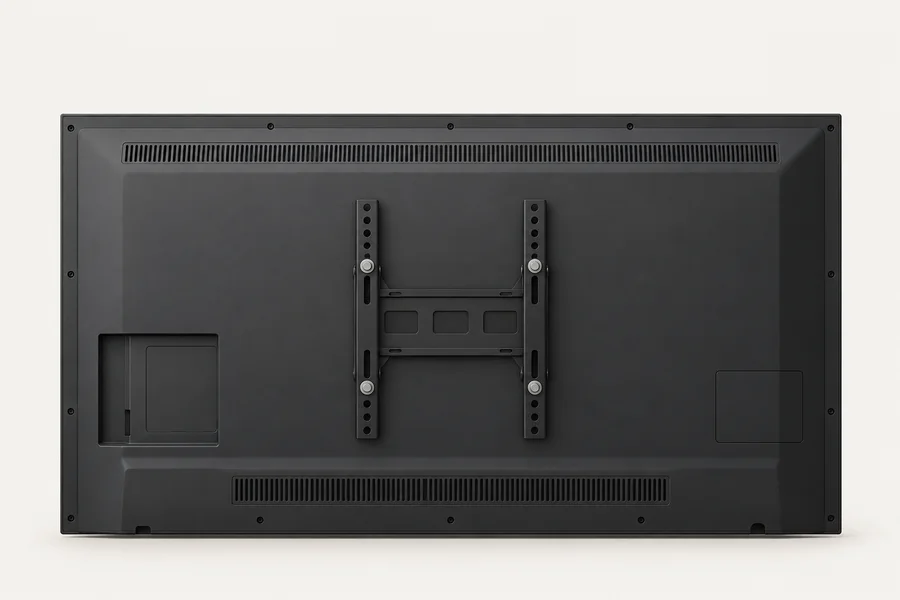
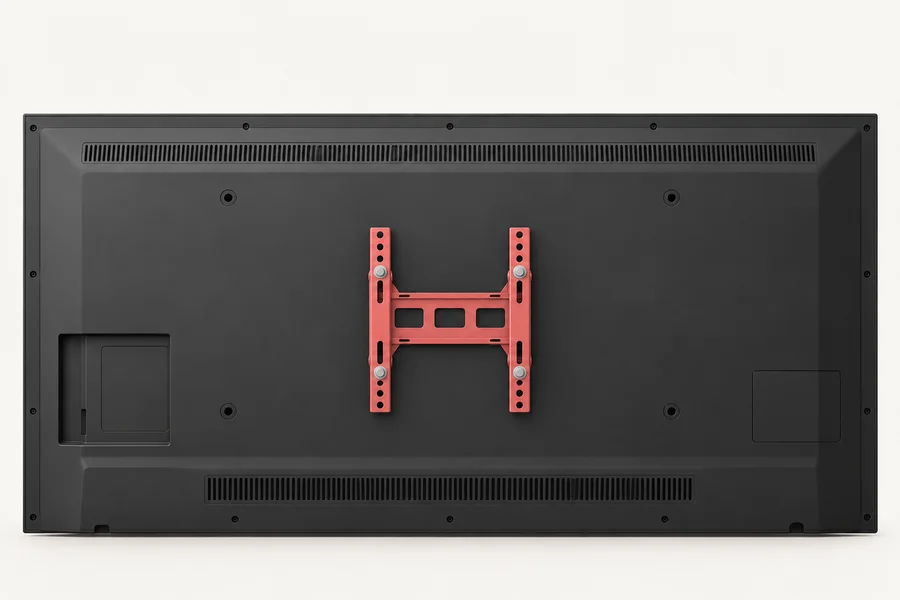
The TV’s 400 × 300 mm VESA pattern is within the mount’s 600 × 400 mm, and its 17.2 kg is within the 45 kg rating.
Peerless: a mount works if the TV falls within its VESA pattern and maximum weight. Lift it on with two people above 25 kg (Philips).
Placing a 65-inch screen in a client’s room or a meeting room? Photograph the wall, mark the furniture and the seating distance in SizeMarker and check the TV before you order.
Mark a photo| TV | Without stand, W × H × D | Stand, W × D |
|---|---|---|
| Samsung QN80H, 2026Round feet | 144.29 × 83.12 × 5.2 cm | 120.95 × 25.68 cm |
| Samsung S90F OLED, 2025Blade stand | 144.43 × 83.17 × 3.99 cm | 36.6 × 26.52 cm |
| LG OLED evo C6, 2026 | 144.1 × 82.6 × 4.51 cm | 47 × 23 cm |
| LG QNED80, 2026 | 145.5 × 84.1 × 6.79 cm | 121.7 × 26.9 cm |
| Sony BRAVIA 7 II, K-65XR70M2Centre pedestal 34.3 cm wide; 34.1 cm deep with the stand | 144.7 × 82.7 × 5.7 cm | 34.3 × 34.1 cm |
| TCL QM7LPedestal 38.6 cm wide; 36.9 cm deep with the stand | 144.4 × 83.2 × 5.6 cm | 38.6 × 36.9 cm |
| Hisense U78QG | 144.5 × 83.8 × 7.6 cm | 39.9 × 32.5 cm |
| Panasonic TV-65W70BPPedestal | 144.6 × 83.1 × 8.3 cm | 121.2 × 29.1 cm |
Sources: Samsung (QE65QN80H) · Samsung (QE65S90F) · LG (OLED65C6PSA) · LG (65QNED80BSA) · Sony (K-65XR70M2) · TCL (QM7L) · Hisense (65U78QG) · Panasonic (TV-65W70BP)
| TV | Weight without stand, VESA | Box, W × H × D |
|---|---|---|
| Samsung QN80HM8 screws | 17.2 kg; 400 × 300 mm | 157.8 × 93.3 × 14.2 cm, 23.6 kg |
| LG OLED evo C6 | 16.6 kg; 300 × 200 mm | 160 × 95 × 20 cm, 26.3 kg |
| LG QNED80 | 16.8 kg; 300 × 200 mm | 158 × 95 × 16.2 cm, 22.7 kg |
| Sony K-65XR70M2M6 screws | 26.6 kg; 300 × 300 mm | 157.6 × 103.1 × 19.6 cm, 39 kg |
| TCL QM7L | 18 kg; 300 × 300 mm | 160.8 × 100 × 16.5 cm, 28.3 kg |
| Panasonic TV-65W70BPM6 screws | 14 kg; 400 × 300 mm | 160 × 96 × 15.2 cm, 20 kg |
| Philips 65PUS9000M6 screws; 26.09 kg with its stand | 23.86 kg; 300 × 300 mm | 160 × 102 × 17 cm, 32.56 kg |
Sources: Samsung (QE65QN80H) · LG (OLED65C6PSA) · LG (65QNED80BSA) · Sony (K-65XR70M2) · TCL (QM7L) · Panasonic (TV-65W70BP) · Philips (65PUS9000)
| Guide | Size |
|---|---|
| Measured diagonal, Samsung QN80HSamsung install guide; TCL also gives 64.5 in | 163 cm64.5 in |
| The 65 in screen aloneRTINGS, W × H without the bezel | 144 × 81 cm56.7 × 31.9 in |
| Seats at 30° and 40°RTINGS | 2.69 / 1.98 m (269 / 198 cm) |
| Samsung’s 65 in distances, general / 4KSize guide | 2.0 / 1.7 m6.5 / 5.4 ft |
| TCLCan be wall mounted; hire a professional if needed | 8–13.5 ft |
| Two people to lift and carryPhilips | Over 25 kg (55 lb) |
| Nearest seat, 4KITU-R BT.1845-1, 3840 × 2160 at 16:9: 58° | 1.6 × the picture height |
| Putting it on the wallSamsung | Always two people |
Sources: Samsung (install guide) · RTINGS · Samsung (size guide) · TCL (65-inch) · Philips (user manual) · ITU-R BT.1845-1 · Samsung (user guide)
The screen is about 144 × 81 cm (56.7 × 31.9 in) (RTINGS); in its frame Samsung’s QN80H is 144.29 × 83.12 × 5.2 cm and LG’s QNED80 145.5 × 84.1 × 6.79 cm.
Wider than the TV, and deep enough for its stand. Footprints vary a lot: Samsung’s S90F blade is 36.6 × 26.52 cm, its QN80H feet 120.95 × 25.68 cm, and Panasonic’s pedestal 121.2 × 29.1 cm.
From 14 kg (Panasonic W70) to 26.6 kg (Sony BRAVIA 7 II) without the stand. Philips asks two people to lift and carry any TV over 25 kg (55 lb); its 65PUS9000 is 26.09 kg with the stand.
About 1.98–2.69 m for 30–40° of view (RTINGS); Samsung says 2.0 m, or 1.7 m for 4K, and TCL 8–13.5 ft.
TCL says its 65-inch TVs can be wall mounted and to hire a professional if needed; Samsung asks for two people for any wall mounting. Check the mount against the VESA pattern: 400 × 300 mm on Samsung’s QN80H, 300 × 200 mm on LG’s C6.
65 in is the class; Samsung measures its QN80H at 64.5 in (163 cm), and TCL gives 64.5 in too.
At 65 inches buyers compare stand footprints and weights as much as screen sizes, and ask the VESA pattern and carton size for each SKU. Mark the real sizes on your own product photo in SizeMarker, as in the picture at the top, and send one product card for WhatsApp or WeChat.