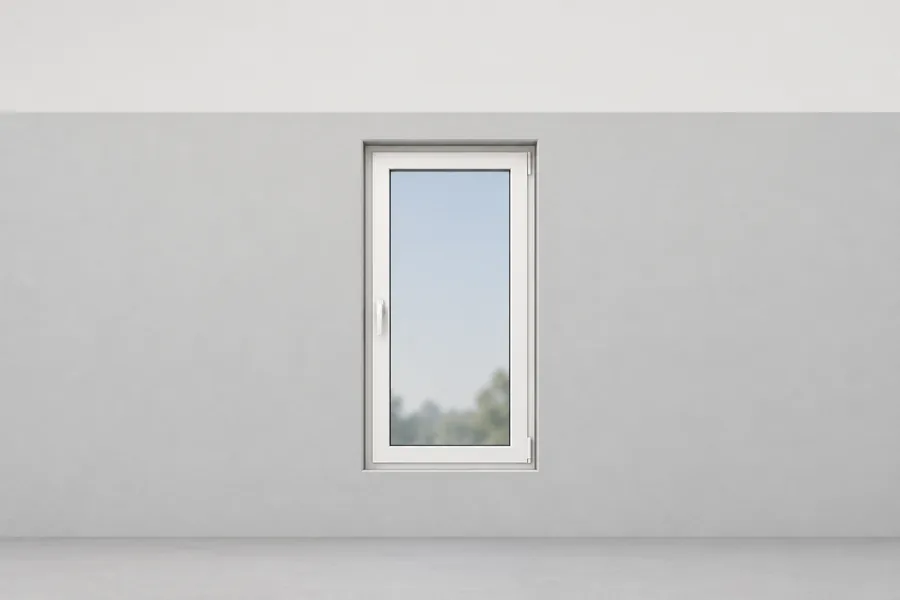
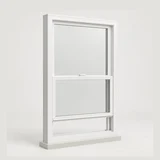
Dimensions / Building materials / Windows / Casement window
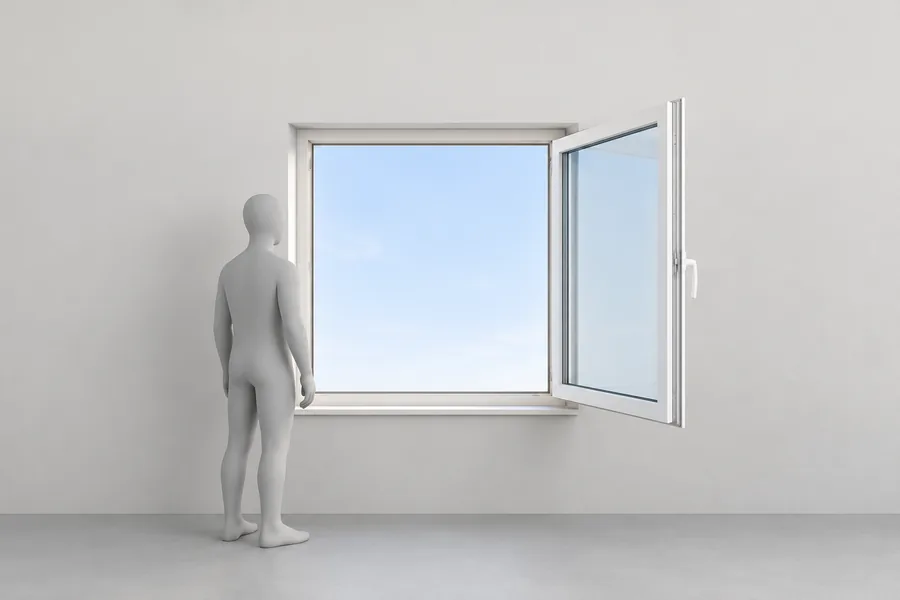
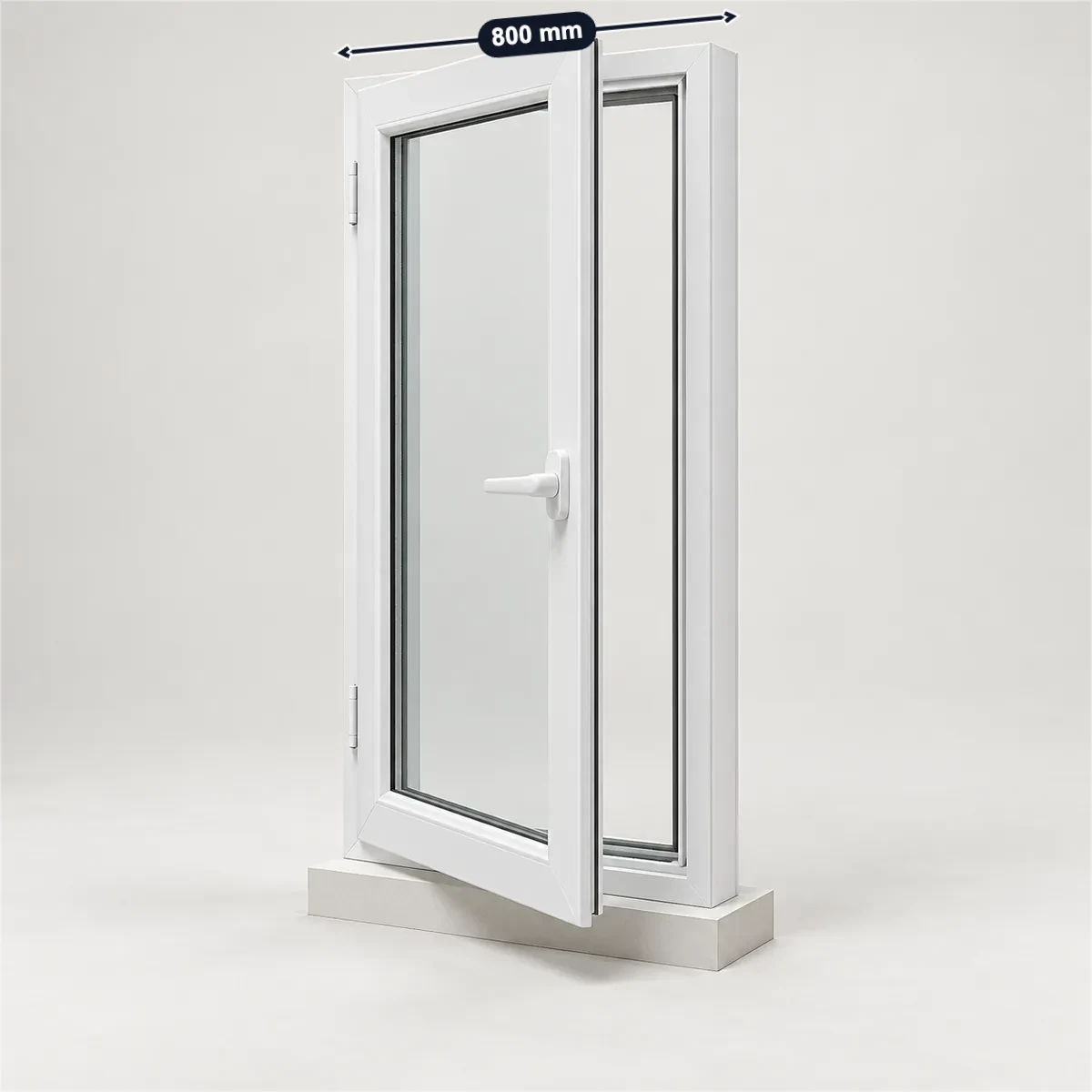
A casement swings out on side hinges, so nearly the whole sash opens: Andersen’s 400 Series clears the window width less 5.81 in with the widest-opening hinge. Andersen makes casements 17 to 35 15/16 in wide and 24 1/8 to 71 7/8 in high, and the minimum rough opening is the window plus 1/2 in each way, 1/4 in at each side. Width decides egress: the 2 ft 0 1/8 in wide C15 clears 7.0 ft², but only 18 5/16 in across, under the IRC’s 20 in, while the CW135 is the smallest that passes, at 5.7 ft². In the UK, JELD-WEN’s BS 644 casements are 483 to 2334 mm wide, and its side-hung sashes go up to 800 × 1600 mm; the stay or hinge sets the limit.
| Andersen 400 widths | Clear width (Andersen 400) | Side-hung sash, UK (JELD-WEN) |
|---|---|---|
| 432–913mm17–35 15/16 in | − 5.81in148 mm | 800 × 1600mm |
Sources: Andersen, JELD-WEN. Checked October 2026.
Andersen’s CX135 is filled in. Enter your window, opening, clear opening and glass, or switch to UK rules; each check follows a figure on this page.
Take the clear opening from the maker’s table; for an Andersen 400 casement it is the window width less 5.81 in with the widest-opening hinge.
Andersen asks for the 31-1/2 × 40-13/16 in window plus 1/2 in in width and 1/2 in in height: 32 × 41-5/16 in, within the 32 × 41-5/16 in opening.
Andersen’s CX135 is 2 ft 7 1/2 in × 3 ft 4 13/16 in; its minimum rough opening adds 1/2 in each way.
25-11/16 × 35-15/16 in clear is 6.41 ft²: at least 20 × 24 in and 5.7 ft², with the bottom 30 in up, within the 44 in the IRC allows.
The CX135 clears 25 11/16 × 35 15/16 in with the widest-opening hinge; the 30 in sill is an example.
The 27.1 × 35.86 in pane is 6.75 ft², not over 9 ft², so the IRC does not call it a hazardous location.
The pane is the window less 4.40 in and 4.95 in (Andersen), well under the IRC’s 9 ft² trigger.
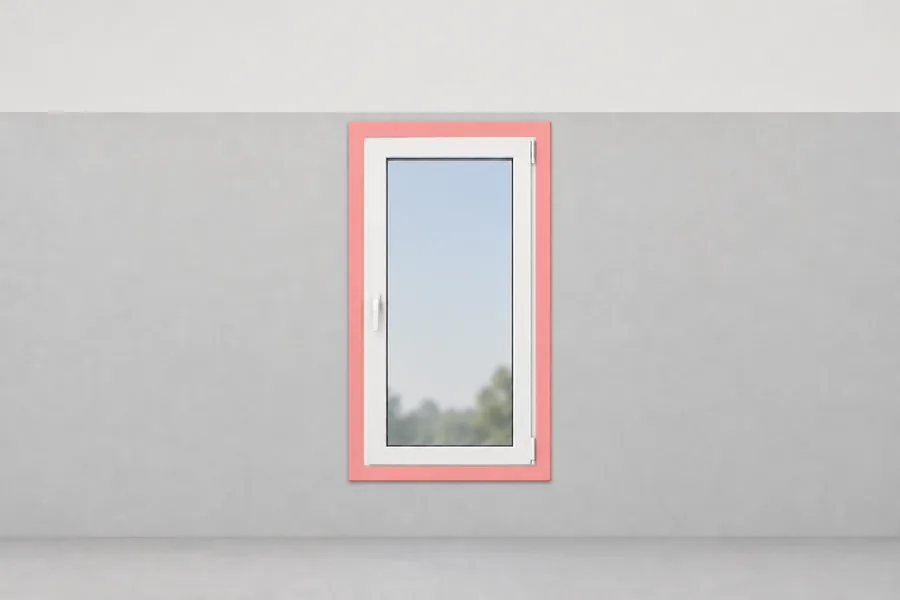
Selling casement windows? Photograph a window, mark the frame, rough opening, clear opening and hinge side in SizeMarker, and send it with your quote.
Mark a photoMaker tables; window, rough opening and clear opening as each prints them.
| Window | Size; rough opening | Clear opening | Egress |
|---|---|---|---|
| Andersen 400 CR13Narrowest | 1 ft 5 in × 2 ft 11 15/16 in (432 × 913 mm); 1 ft 5 1/2 in × 3 ft 0 1/2 in | 7 5/16 × 31 1/16 in, 1.6 ft² | No |
| Andersen 400 C15US | 2 ft 0 1/8 in × 4 ft 11 7/8 in; 2 ft 0 5/8 in × 5 ft 0 3/8 in | 18 5/16 × 55 in, 7.0 ft² | No: under 20 in wide |
| Andersen 400 CW135US | 2 ft 4 3/8 in × 3 ft 4 13/16 in | 22 9/16 × 36 3/8 in, 5.7 ft² | Yes, the smallest that passes |
| Andersen 400 CX135This page | 2 ft 7 1/2 in (800 mm) × 3 ft 4 13/16 in; 2 ft 8 in × 3 ft 5 5/16 in | 25 11/16 × 35 15/16 in, 6.4 ft² | Yes |
| Andersen 400 CXW13US | 2 ft 11 15/16 in square (913 mm); 3 ft 0 1/2 in square | 30 1/8 × 31 1/16 in, 6.5 ft² | Yes |
| Andersen 400 CXW16Largest | 2 ft 11 15/16 in × 5 ft 11 7/8 in; 3 ft 0 1/2 in × 6 ft 0 3/8 in | 30 1/8 × 67 in, 14.0 ft² | Yes, with a straight-arm operator only |
| Andersen 400 customUS | 17 to 35 15/16 in wide, 24 1/8 to 71 7/8 in high, in 1/8 in steps | — | — |
| Ply Gem Pro Classic CLCA30 30Call size 3-0 × 3-0 | — | 26.00 × 30.563 in, 5.52 ft²; 28.500 in wide with the expanded arm, 6.05 ft² | Yes with the expanded arm (our arithmetic) |
| JELD-WEN BS 644UK, timber | Frames 483, 625, 910, 1195, 1765, 2334 mm wide for openings of 493, 635, 920, 1205, 1775, 2344 mm; 745 to 1495 mm high in 150 mm steps | — | A narrow fire-escape range with egress hinges |
| VEKA M70UK, PVC | Side hung up to 800 × 1550 mm; top hung 1400 × 1400 mm; tilt and turn 1600 × 1600 mm | — | — |
| Jewson (Crystal) stockUK, PVC | 610, 905, 1190 or 1770 mm wide; 1190 × 1115 mm weighs 32 kg | — | — |
| HOPO hardwareChina | Hidden outward sashes 510–900 × 665–2000 mm, 80 kg; tilt and turn 475–1000 × 595–2600 mm, 100 kg | — | — |
Sources: Andersen · Andersen · Ply Gem · JELD-WEN · VEKA · VEKA · Jewson · Jewson · HOPO · HOPO
A side-hung stay sets the widest sash, a top-hung stay the tallest.
| Hardware | Limit |
|---|---|
| Amesbury Truth 4-bar hingesUS | Standard duty 8–20 in, 65 lb sash; heavy duty 10–24 in, 100 lb |
| Amesbury Truth MaximUS | A frame up to 40 × 84 in, about a 96 lb sash; Maxim HP up to 200 lb |
| ERA Horizon staysUK | Top hung 16 in: sash up to 780 mm high, 23 kg; side hung 12 in: 600 mm wide, 24 kg |
| Häfele egress stayUK | 16 in side hung: 700 mm wide, 1300 mm high, 26 kg, opening 90° |
| Nico Atlas heavy dutyUK | Up to 60 kg on a 24 in top-hung stay |
| JELD-WEN made to measureUK | Side hung 400–800 mm wide and 400–1600 mm high; top hung up to 1200 × 1480 mm |
| MACO MULTI-MATICTilt and turn | Sash rebate up to 1650 mm wide and 2600 mm high, 3 m² and 120 kg; height to width 1 : 1.5 at most |
| G-U UNI-JETTilt and turn | Up to 1600 × 2800 mm and 150 kg |
| Roto NXTilt and turn | 130 kg, up to 150 kg; up to 2800 mm high |
| Winkhaus activPilot Comfort PADTilt and turn | 2.5 m² and 100 kg |
| Glass weightMACO; our arithmetic | 2.5 kg/m² for each mm of glass: 4-16-4 double glazing is 20 kg/m² |
Sources: Amesbury Truth · Amesbury Truth · Amesbury Truth · ERA · Häfele · Nico · JELD-WEN · MACO · G-U · Roto · Winkhaus
| Rule | Figure |
|---|---|
| Rough openingAndersen 400 | Window + 1/2 in (13 mm) in width and height; 1/4 in (6 mm) at each side |
| UK openingJELD-WEN | Frame = brickwork opening − 12 mm: 1234 × 1456 mm gives 1222 × 1444 mm |
| Clear openingAndersen 400 | Width − 5.81 in (148 mm) with the widest-opening hinge, − 9.70 in with the wash-mode hinge; height − 4.85 in; glass width − 4.40 in, height − 4.95 in |
| Hinge choiceAndersen 400 | The wash-mode hinge loses about 4 in: the C13 clears 18 5/16 in, 14 7/16 in in wash mode |
| Opening angleAndersen; Amesbury Truth | Andersen sashes open to 95°; egress hinges open to 90° |
| Escape, USIRC 2021 R310 | 5.7 ft² clear (5.0 at grade), at least 20 in wide and 24 in high, bottom 44 in above the floor at most |
| Escape, UKApproved Document B | 0.33 m² clear, at least 450 × 450 mm, bottom 1100 mm above the floor at most |
| Safety glass, USIRC R308.4.3 | A pane over 9 ft², bottom under 18 in, top over 36 in, with a walking surface within 36 in |
| Safety glass, UKApproved Document K | Window glass below 800 mm from the floor: class 3 of EN 12600 |
| In the check aboveOur calculation | CX135: 31 1/2 + 1/2 = 32 in and 40 13/16 + 1/2 = 41 5/16 in; clear 25 11/16 × 35 15/16 in = 6.41 ft², sill 30 in; pane 27.1 × 35.86 in = 6.75 ft² from 32 in up. UK: 1222 + 12 = 1234 mm and 1444 + 12 = 1456 mm; clear 500 × 1000 mm = 0.5 m², sill 800 mm; glass from 850 mm |
Sources: Andersen · JELD-WEN · Andersen · Amesbury Truth · IRC · Approved Document B · Approved Document K
Andersen’s 400 Series makes casements 17 to 35 15/16 in wide and 24 1/8 to 71 7/8 in high, in 1/8 in steps; its standard widths run from the 1 ft 5 in CR to the 2 ft 11 15/16 in CXW. UK BS 644 casements are 483, 625, 910, 1195, 1765 and 2334 mm wide (JELD-WEN).
Yes, if its clear opening is at least 20 in wide, 24 in high and 5.7 ft² (IRC). Andersen’s CW135 is the smallest 400 Series casement that passes; the C15 clears 7.0 ft² but only 18 5/16 in across.
Andersen asks for the window plus 1/2 in in each direction, 1/4 in at each side. In the UK, JELD-WEN makes the frame 12 mm smaller than the brickwork opening.
The hinge or stay sets it: JELD-WEN side-hung sashes go to 800 mm wide and 1600 mm high, VEKA’s PVC to 800 × 1550 mm, and a 12 in ERA side-hung stay to 600 mm and 24 kg. Tilt-and-turn hardware takes far more: MACO 1650 mm and 120 kg.
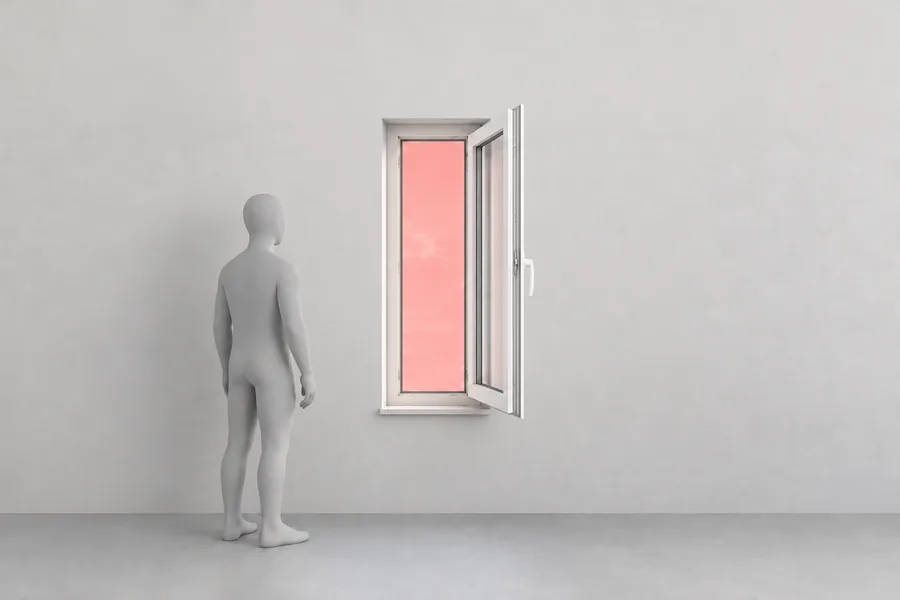
Nearly all of it: the clear width is the window less 5.81 in on an Andersen 400 with the widest-opening hinge, so the CXW13 clears 30 1/8 × 31 1/16 in. The wash-mode hinge gives up about 4 in of that.
Buyers ask for the frame size and the opening it needs, the clear opening and whether it meets egress, the hinge or stay and the sash weight it carries, the opening angle, left or right hand, the glass make-up, the profile depth, and the crate sizes. Mark them on a photo of your own window in SizeMarker, as in the picture at the top, and send one product card for WhatsApp or WeChat.