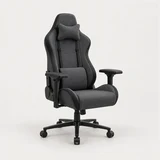
Dimensions / Furniture / Office chairs / Office chair
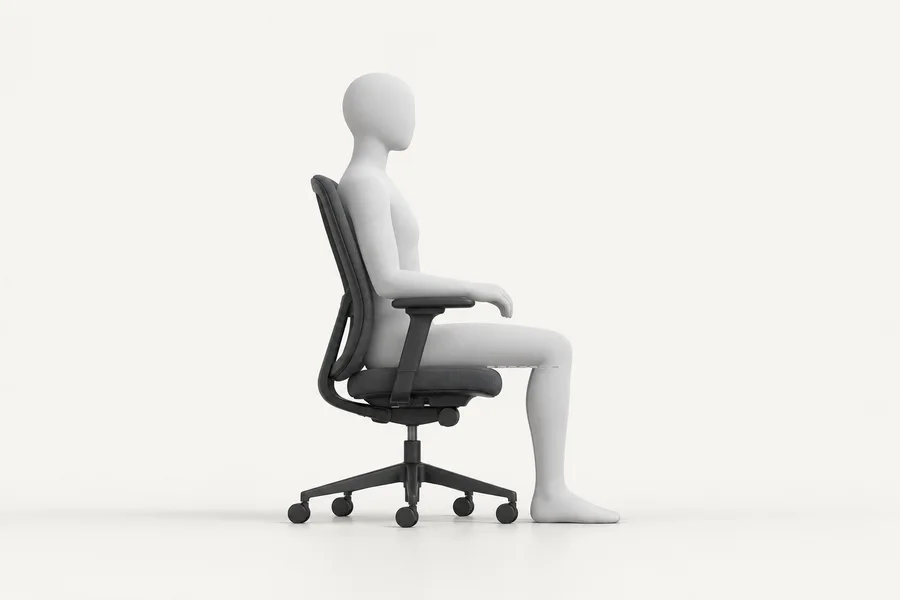
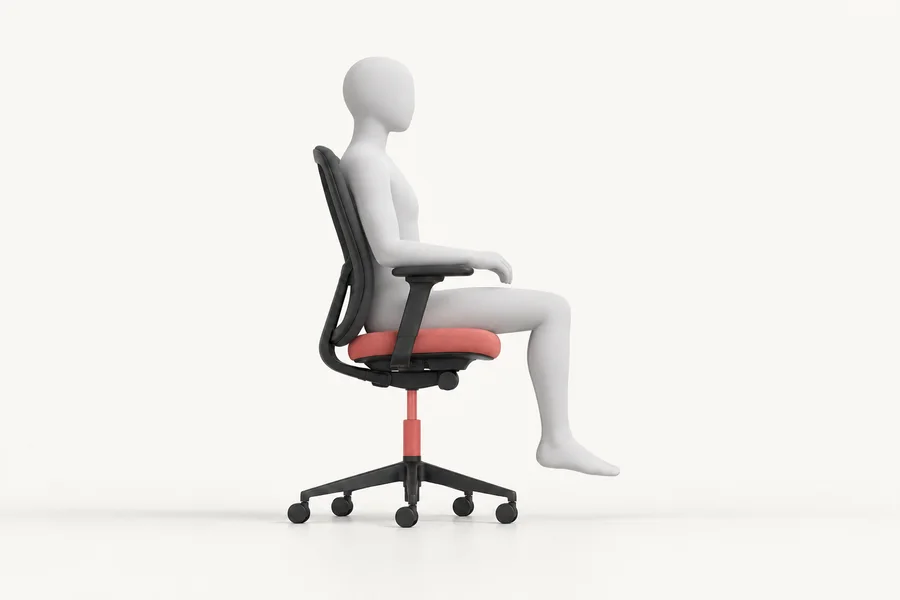
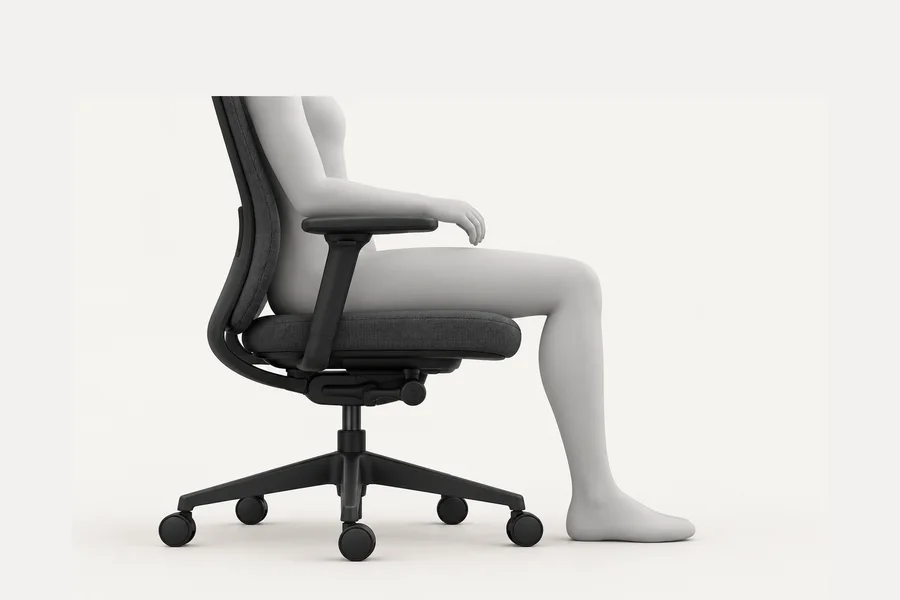
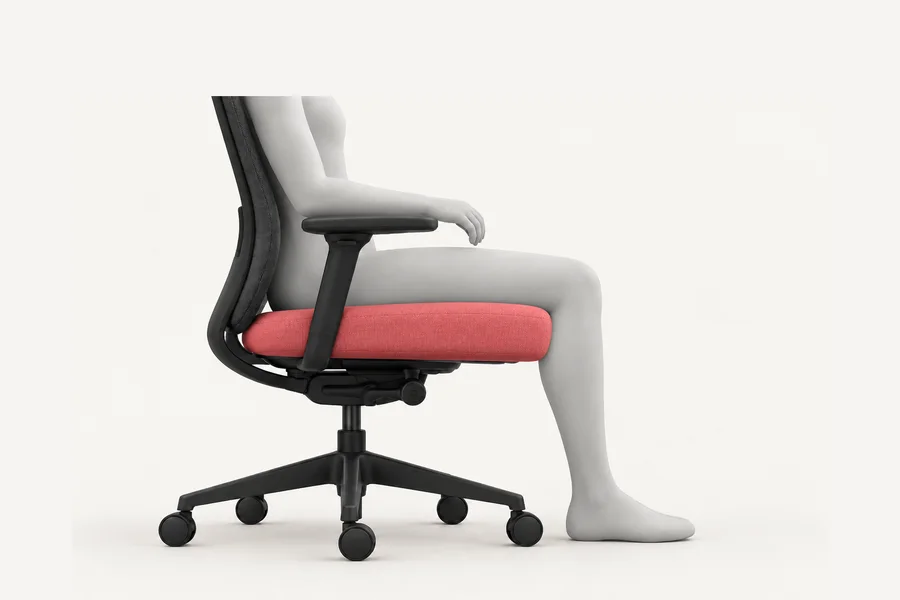
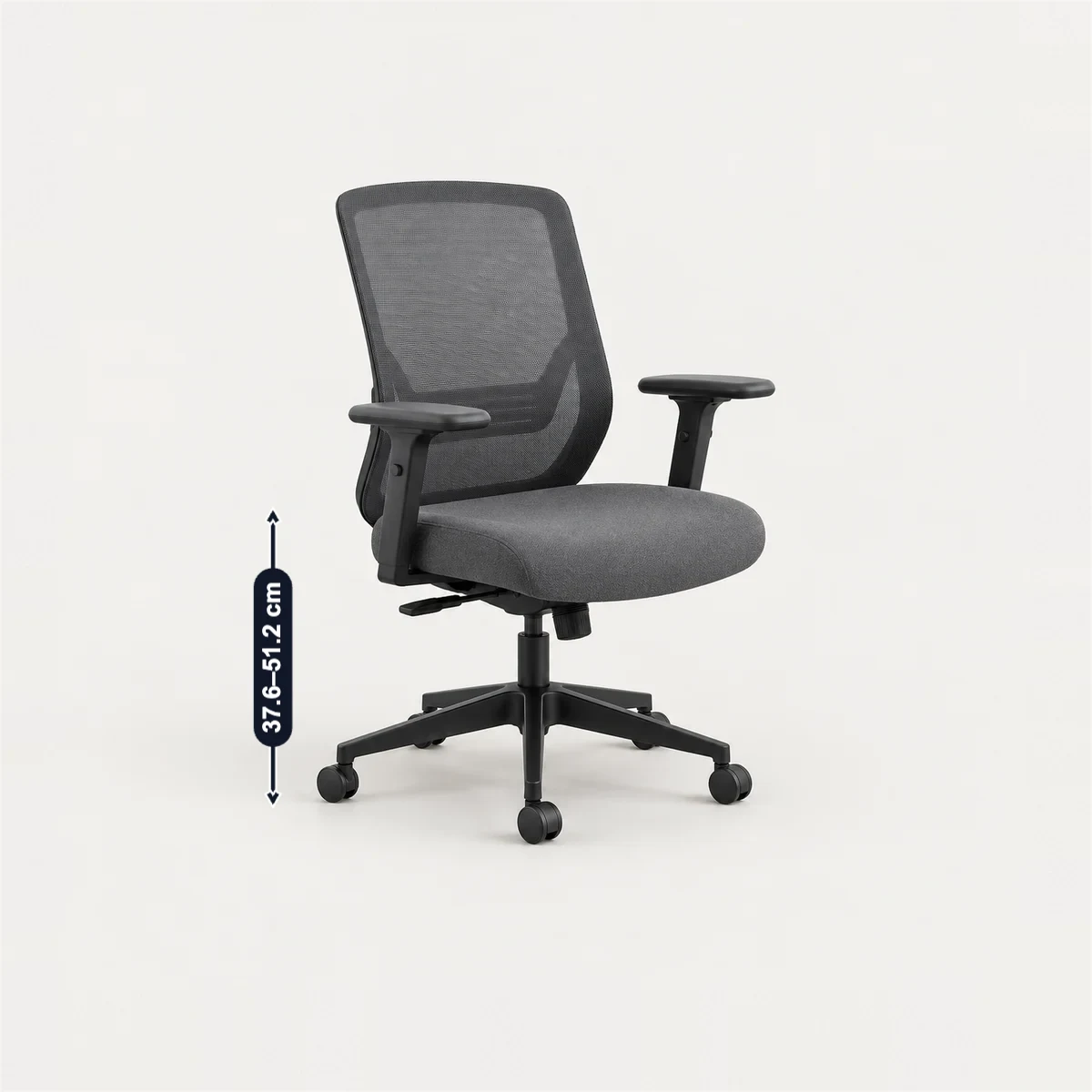
A standard office task chair adjusts its seat from about 37.6 to 51.2 cm (14.8–20.2 in) high under BIFMA G1-2013, with a seat at least 48.9 cm (19.2 in) wide and, if fixed, no deeper than 41.5 cm (16.3 in). Set it so your feet rest flat, and leave about a fist, 5 cm (2 in), between the seat edge and your calves.
| Seat height | Seat width | Seat depth, fixed |
|---|---|---|
| 37.6–51.2cm14.8–20.2 in | ≥ 48.9cm≥ 19.2 in | ≤ 41.5cm≤ 16.3 in |
Sources: EWI Works (BIFMA G1). Checked October 2026.
Enter the chair, your own measurements and your desk. Each check uses the numbers in the tables on this page.
All in centimetres. 1 in = 2.54 cm.
Your 46 cm from floor to knee is within its 38–51 cm seat height, so your feet can rest flat with your thighs level.
Measure from the floor to the crease behind your knee, in the shoes you work in.
It leaves 12 cm between the seat edge and the back of your knee, and 5 cm or more is enough.
Sit right back and measure from the backrest to the crease behind your knee.
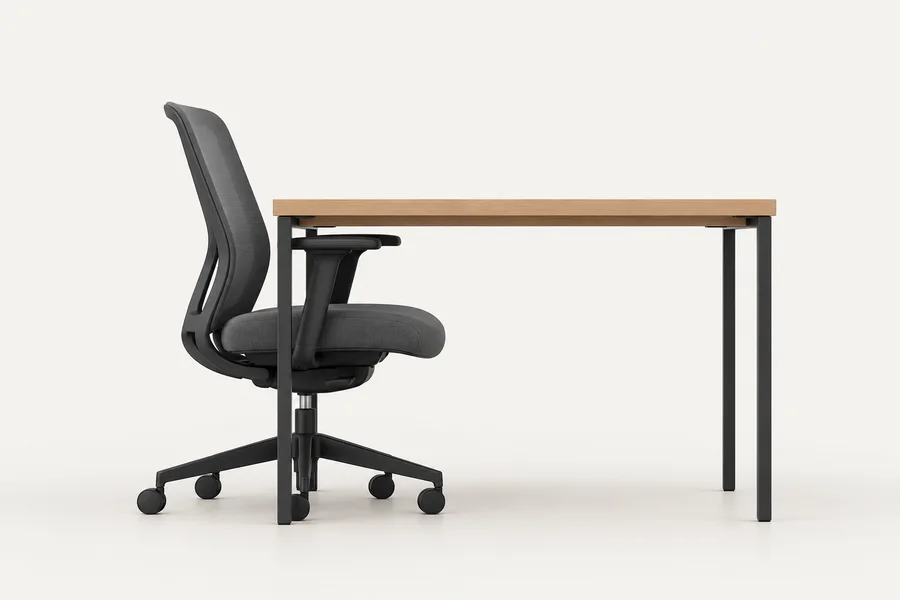
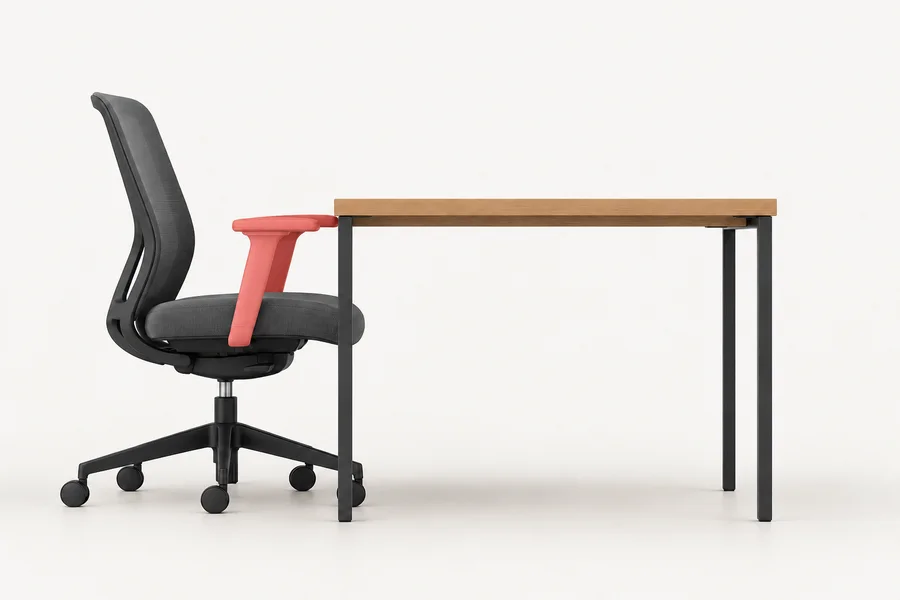
With the seat at 46 cm, the armrests at their lowest come to 66 cm, under your 68 cm desk.
Measure to the lowest edge under the desk top: the frame, a drawer or a keyboard tray.
Choosing chairs for an office? Photograph the desks, mark the clearance under them in SizeMarker and check the chairs before you order.
Mark a photoCovering the 5th-percentile woman to the 95th-percentile man.
| Measurement | BIFMA G1-2013 |
|---|---|
| Seat height, adjustable | 37.6–51.2 cm14.8–20.2 in |
| Seat depth, fixedAn adjustable seat should go down to this | ≤ 41.5 cm≤ 16.3 in |
| Seat width | ≥ 48.9 cm≥ 19.2 in |
Sources: EWI Works (BIFMA G1)
| Measurement | Size |
|---|---|
| Gap you can fit a fist intoFront of the seat to the back of the calves | about 5 cm2 in |
| Bare minimum clear behind the knee | 10 mm0.4 in |
| Armpads that let you pull in closeMeasured forward from the backrest | ≤ 25 cm≤ 10 in |
Sources: CCOHS · EWI Works (BIFMA G1)
| Test | Load or cycles |
|---|---|
| User weight the X5.1 tests are based onSince 2017; before, 115 kg (253 lb) | 125 kg275 lb |
| Seat cycles | 100,000 |
| Swivel cycles | 120,000 |
| Tilt cycles | 300,000 |
| Life the tests stand for | 10 years, one shift a day |
| Large-occupant chairs (X5.11)Seat at least 56 cm (22 in) wide | 181 kg400 lb |
Sources: Micom Laboratories · IISE (BIFMA standards)
CCOHS recommends a five-point base for stability, with casters that suit the floor: hard casters for carpet, soft casters for hard floors.
Measure from the floor to the crease behind your knee, in your shoes: that is the seat height you need, and it has to fall inside the chair’s range. With the seat there your feet rest flat and your thighs stay level.
Sit back and slide a clenched fist between the front of the seat and your calves: if it fits, about 5 cm (2 in), the seat depth is right, says CCOHS. EWI puts the bare minimum at 10 mm (0.4 in).
They can. CCOHS used to advise against armrests for that reason, but finds armpads reaching no more than 25 cm (10 in) forward from the backrest let you pull in close enough.
ANSI/BIFMA X5.1 tests stand for 10 years at one shift a day: 100,000 seat cycles, 120,000 swivels and 300,000 tilts, plus a caster run with obstacles.
ANSI/BIFMA X5.1 now bases its tests on a 125 kg (275 lb) user, up from 115 kg (253 lb). Chairs for heavier users are tested to X5.11, for 181 kg (400 lb).
Task chair buyers check the seat height range, seat width and depth, arm height and the BIFMA test it passed. Mark the real ranges on your own chair photo in SizeMarker, as in the picture at the top, and send one product card for WhatsApp or WeChat.