Dimensions / Building materials / Flat glass / Tempered glass
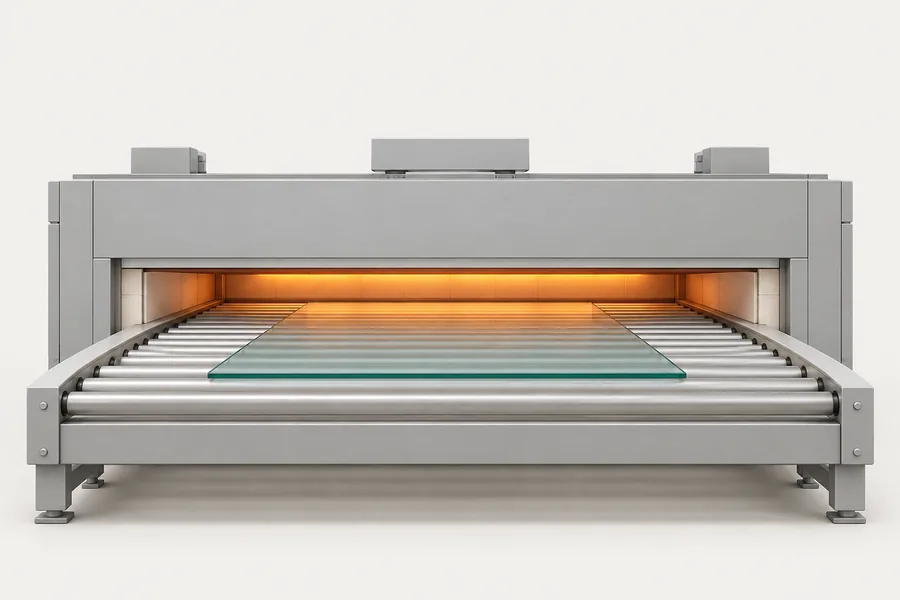
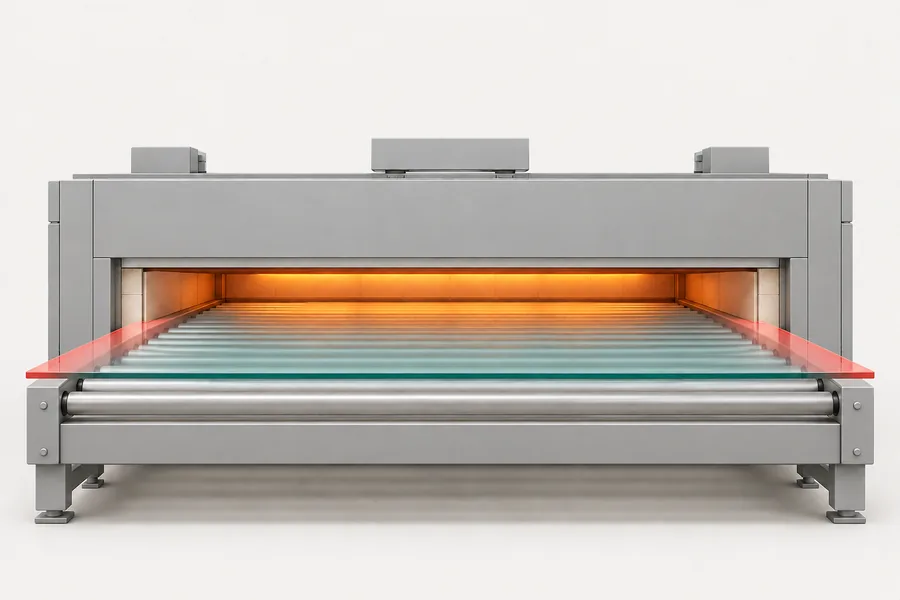
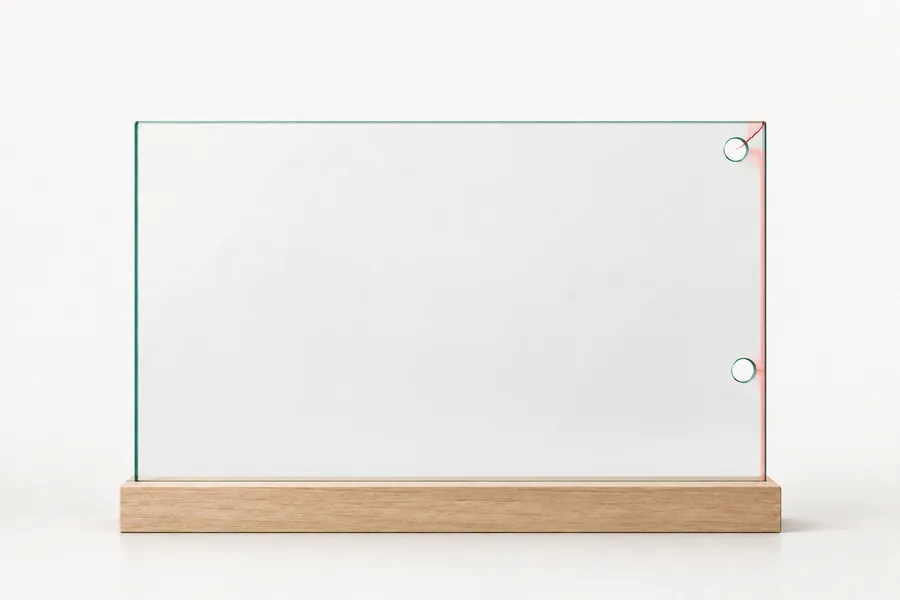
Tempered (toughened) glass is float glass heated and quenched after it has been cut, edged and drilled; it cannot be cut or drilled afterwards. Pilkington toughens 4 mm up to 1500 × 2200 mm and 5–12 mm up to 2000 × 4200 mm, from 300 × 500 mm; the US fabricator Syracuse Glass goes to 84 × 144 in. Its surface compression is over 69 MPa (heat-strengthened glass 24–52 MPa), and broken it gives at least 40 particles in a 50 × 50 mm square below 15 mm thick. Holes must be at least as wide as the glass is thick and twice the thickness from an edge; a heat soak of 2 hours at 260 ± 10 °C weeds out panes that would break on their own.
| Largest, 5–12 mm (Pilkington) | Surface compression | Heat soak |
|---|---|---|
| 2000 × 4200mm | > 69MPa | 260 ± 10°C |
Sources: Pilkington, Hong Kong Buildings Department. Checked October 2026.
Ten 900 × 2000 mm shower panels of 10 mm glass, with 12 mm holes, are filled in; change the thickness, the size, the hole positions or where the glass goes.
Weights at 2.5 kg/m² per mm of glass (Saint-Gobain) and 1.07 g/cm³ for PVB (Trosifol). No trim allowance, no wind-load or strength calculation.
Pilkington toughens 10 mm glass from 300 × 500 mm up to 2000 × 4200 mm, and 900 × 2000 mm is inside that. Each panel is 1.8 m² and weighs 45 kg; all 10 weigh 450 kg.
Pilkington’s 2008 data sheet: 5–12 mm toughened up to 2000 × 4200 mm.
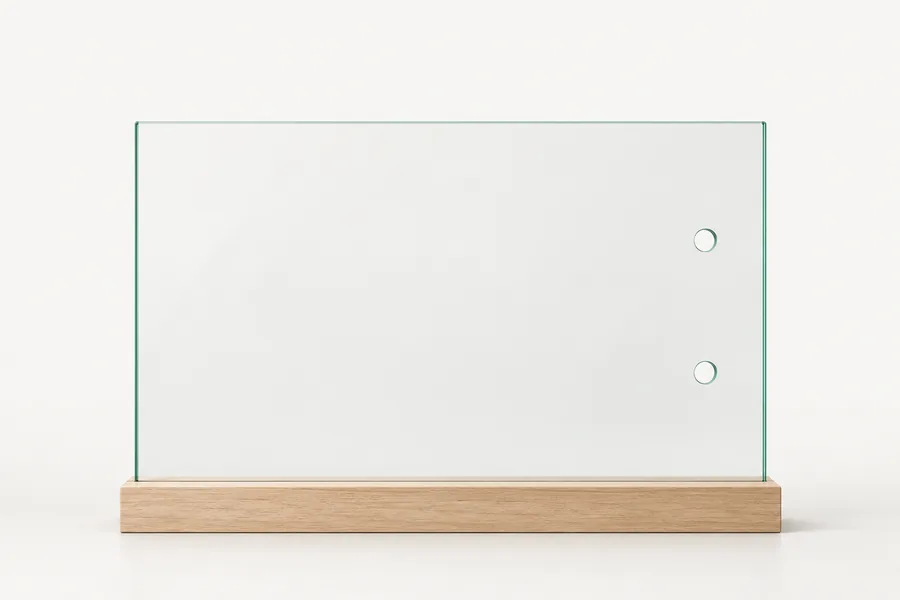
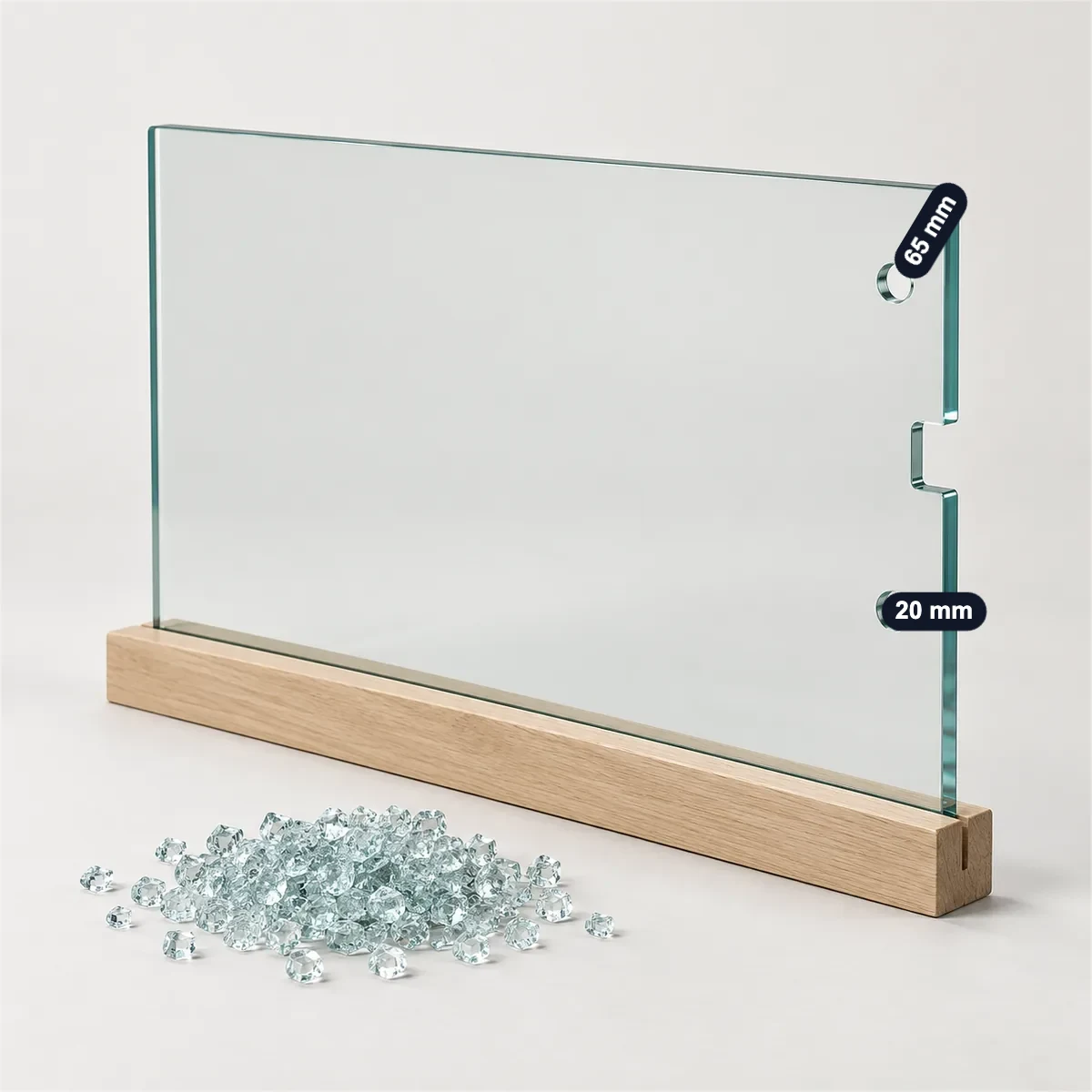
For 10 mm tempered glass the Hong Kong glass code (2018) asks for holes at least 10 mm across, 20 mm from an edge and 65 mm from a corner; yours are 12, 25 and 70 mm. Drill before tempering: afterwards the glass cannot be cut or drilled.
Hong Kong code: hole at least the thickness, rim 2 × the thickness from an edge and 6.5 × from a corner.
Glass at a tub or shower with its bottom edge below 1524 mm (60 in) is a hazardous location (IBC 2406.4.5); this one starts at 0 mm. Tempered glass is safety glazing, so it is allowed here.
IBC 2406.4.5: glass at a tub or shower below 1524 mm (60 in) is a hazardous location.
Making tempered panels? Photograph a finished panel on its rack, mark size, thickness, holes and the safety mark in SizeMarker, and send the picture with the order confirmation.
Mark a photoEvery plant has its own furnace; these are the limits the makers print. Syracuse Glass also caps a piece at its stock sheet size and 500 lb.
| Thickness | Smallest | Largest |
|---|---|---|
| 4 mmPilkington, 2008 | 300 × 500 mm | 1500 × 2200 mm |
| 5–12 mmThis page | 300 × 500 mm | 2000 × 4200 mm |
| 15 mmPilkington, 2008 | 300 × 500 mm | 1700 × 4200 mm |
| 19 mmPilkington, 2008 | 300 × 500 mm | 1500 × 4200 mm |
| 1/8 inSyracuse Glass | 4 × 10 in | 40 × 80 in |
| 3/16–3/4 inSyracuse Glass | 4 × 10 in | 84 × 144 in, 500 lb at most |
| 5–19 mmAGNORA | 400 mm diagonal | 7500 × 3300 mm |
| 4–19 mmCSG | 300 × 300 mm | 3500 × 12000 mm |
Sources: Pilkington · Syracuse Glass · AGNORA · CSG
| Item | Figure |
|---|---|
| Surface compressionHong Kong code, restating ASTM C1048 | Over 69 MPa; heat-strengthened glass 24–52 MPa |
| StrengthPilkington | Up to five times ordinary glass of the same thickness |
| FragmentsHong Kong code, restating EN 14179-1 | At least 40 in a 50 × 50 mm square below 15 mm thick, 30 from 15 mm; longest piece 100 mm or less |
| Heat soakHong Kong code | Held at least 2 hours at 260 ± 10 °C |
| What heat soak buysWutkowski | Cuts the risk of nickel-sulphide breakage by up to 99%, not to zero |
| Service temperaturePilkington, 2008 | Unchanged up to 250 °C; resists a 200 °C difference across the pane |
| After tempering16 CFR 1201 | Cannot be cut, drilled, ground or polished without breaking |
| Pendulum classPilkington | Class 1 to EN 12600, breakage type C |
Sources: Hong Kong Buildings Department · Pilkington · Wutkowski · Pilkington · eCFR
The Hong Kong code is the strictest of the sources; the check above uses it. All holes are drilled before tempering.
| Rule | Hong Kong code (2018) | Pilkington (2008) | Tuffvue (Syracuse Glass) |
|---|---|---|---|
| Hole diameter | At least the thickness and 6.4 mm | At least the thickness; ask above 30 mm | At least the thickness + 1/16 in and 1/4 in |
| Hole rim to edge | At least 2 × the thickness and 6 mm | At least 2 × the thickness | At least 2 × the thickness and 1/4 in |
| Between holes | At least 2 × the thickness and 10 mm | — | At least 2 × the thickness and 3/8 in |
| Hole rim to corner | At least 6.5 × the thickness | At least 6 × the thickness | At least 6.5 × the thickness |
| Hole size tolerance | — | ±1.0 mm for 4–20 mm holes, ±2.0 mm up to 100 mm | — |
| On 10 mm glassOur calculation | Hole 10 mm or more, 20 mm from an edge, 65 mm from a corner | 20 mm from an edge, 60 mm from a corner | — |
| Corners elsewhereAGNORA | — | — | AGNORA asks for 4 × the thickness |
Sources: Hong Kong Buildings Department · Pilkington · Syracuse Glass · AGNORA
| Item | Figure |
|---|---|
| Overall bow, PilkingtonFrom BS EN 12150-1:2000 | 0.003 mm per mm of edge for float, 3 mm over 1 m; local bow 0.5 mm over 300 mm |
| Overall bow, Wutkowski | 1.5 mm per m; roller wave 0.3 mm; edge lift 0.4 mm on 4–5 mm glass, 0.3 mm on 6–25 mm |
| US bow, 1/4 inTuffvue chart, ASTM C1048 | 11/32 in over a 72–83 in edge; local warp 1/16 in over 12 in |
| Width and lengthWutkowski | ±1.0 mm up to 1000 mm, ±2.0 mm to 2000 mm, ±3.0 mm above |
| US thicknessGGI | 1/4 in tempered is 5.5 mm; 3/16 in is 4.7 mm |
| StandardsASTM; Standard Norge; SAMR | ASTM C1048-25 current; EN 12150-1 now the 2015+A1:2019 edition; in China GB/T 15763.2-2025 replaces the mandatory GB 15763.2-2005 on 2026-08-01, and the mandatory rules move to GB 46030-2025 |
Sources: Pilkington · Wutkowski · Syracuse Glass · General Glass International · ASTM · Standard Norge · SAMR · SAMR
| Location | Rule |
|---|---|
| DoorsIBC 2406.4.1, IRC R308.4.1 | Safety glazing required: tempered is fine |
| Tub and showerIBC 2406.4.5 | Bottom edge below 1524 mm (60 in): safety glazing |
| GuardsIBC 2407.1 | Laminated of tempered or heat-strengthened glass; single tempered only with no walking surface below |
| Fire department access panelsIBC 2406.5 | Tempered glass, every pane of an insulating unit |
| MarkingIBC 2406.3 | Each tempered pane carries the maker’s designation |
| Largest pane in ChinaJGJ 113 table 7.1.1-1 | 4 and 5 mm 2.0 m², 6 mm 3.0, 8 mm 4.0, 10 mm 5.0, 12 mm 6.0 m² |
| Frameless doors in ChinaJGJ 113 7.2.1 | Tempered, at least 12 mm |
| Partitions and bathrooms in ChinaNDRC rule No. 2116 (2003), article 6 | Safety glass required, as for windows over 1.5 m² and full-height windows whose glass starts less than 500 mm above the floor |
Sources: City of Seattle · City of Seattle · JGJ 113-2015 · NDRC
No. All cutting, drilling and edge work is done before tempering; 16 CFR 1201 defines tempered glass as glass that cannot be cut, drilled, ground or polished afterwards without breaking.
At Pilkington, 5–12 mm up to 2000 × 4200 mm and 4 mm up to 1500 × 2200 mm, from 300 × 500 mm. Syracuse Glass goes to 84 × 144 in, CSG to 3500 × 12000 mm.
The Hong Kong glass code asks for the hole rim at least 2 × the glass thickness and 6 mm from an edge and 6.5 × the thickness from a corner, and holes at least the thickness and 6.4 mm across. Pilkington’s 2008 sheet uses 6 × for corners.
Its surface compression is over 69 MPa, against 24–52 MPa for heat-strengthened glass; Pilkington puts it at up to five times ordinary glass of the same thickness.
A second heating that holds the glass at 260 ± 10 °C for at least 2 hours, so panes with nickel-sulphide inclusions break in the oven instead of on site; Wutkowski says it cuts that risk by up to 99%.
About 5.5 mm at GGI, which lists 3/16 in tempered as 4.7 mm: US tempered glass is named by the inch but runs thinner than metric 6 mm.
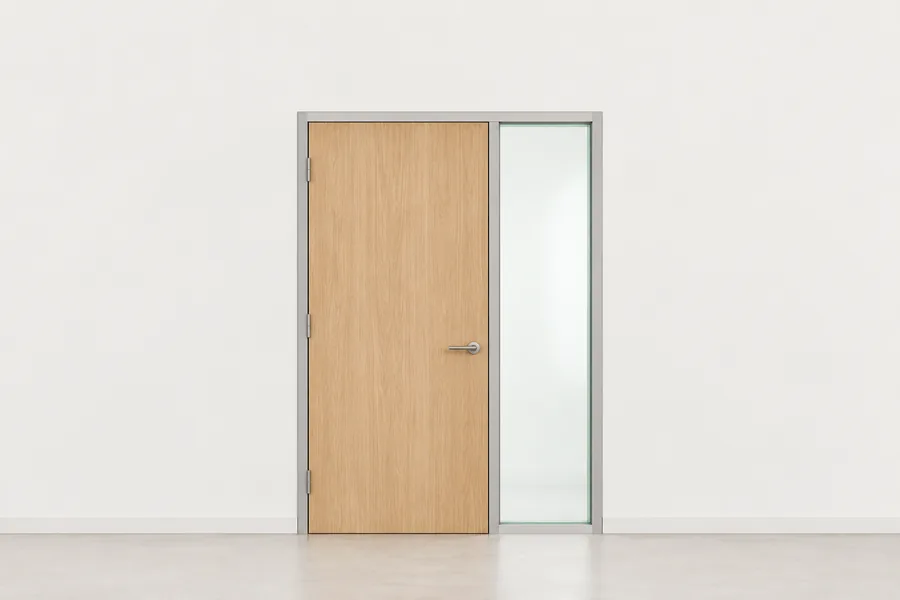
Buyers send drawings and expect back the finished size and its tolerance, the thickness, the edge work, the hole and notch positions, the standard (EN 12150, ASTM C1048, GB 15763.2), whether the panes are heat soaked, the safety mark and the packing. Mark those on a photo of your own panels with SizeMarker, like the picture at the top, and share one card in WhatsApp or WeChat.