Dimensions / Industrial & logistics / Shipping containers / 20 ft
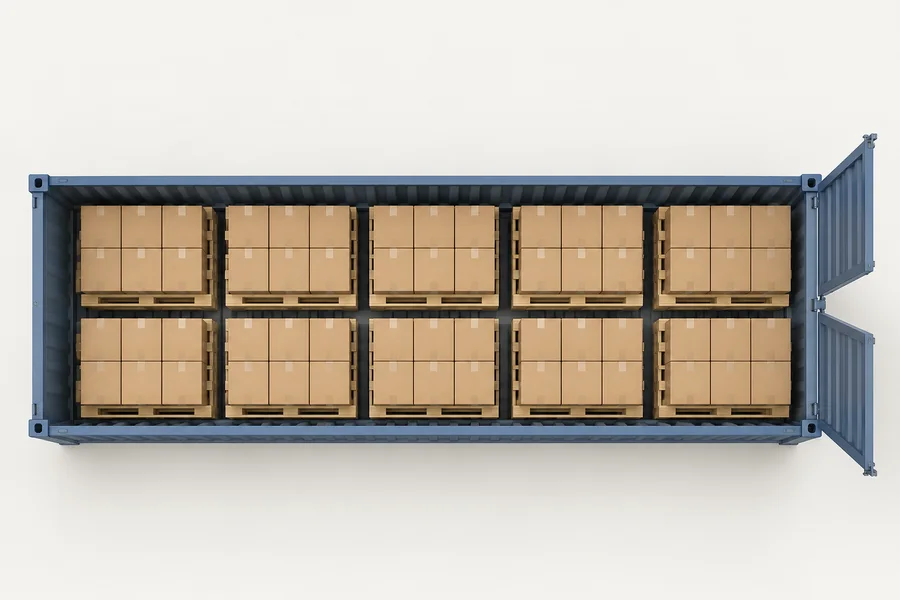
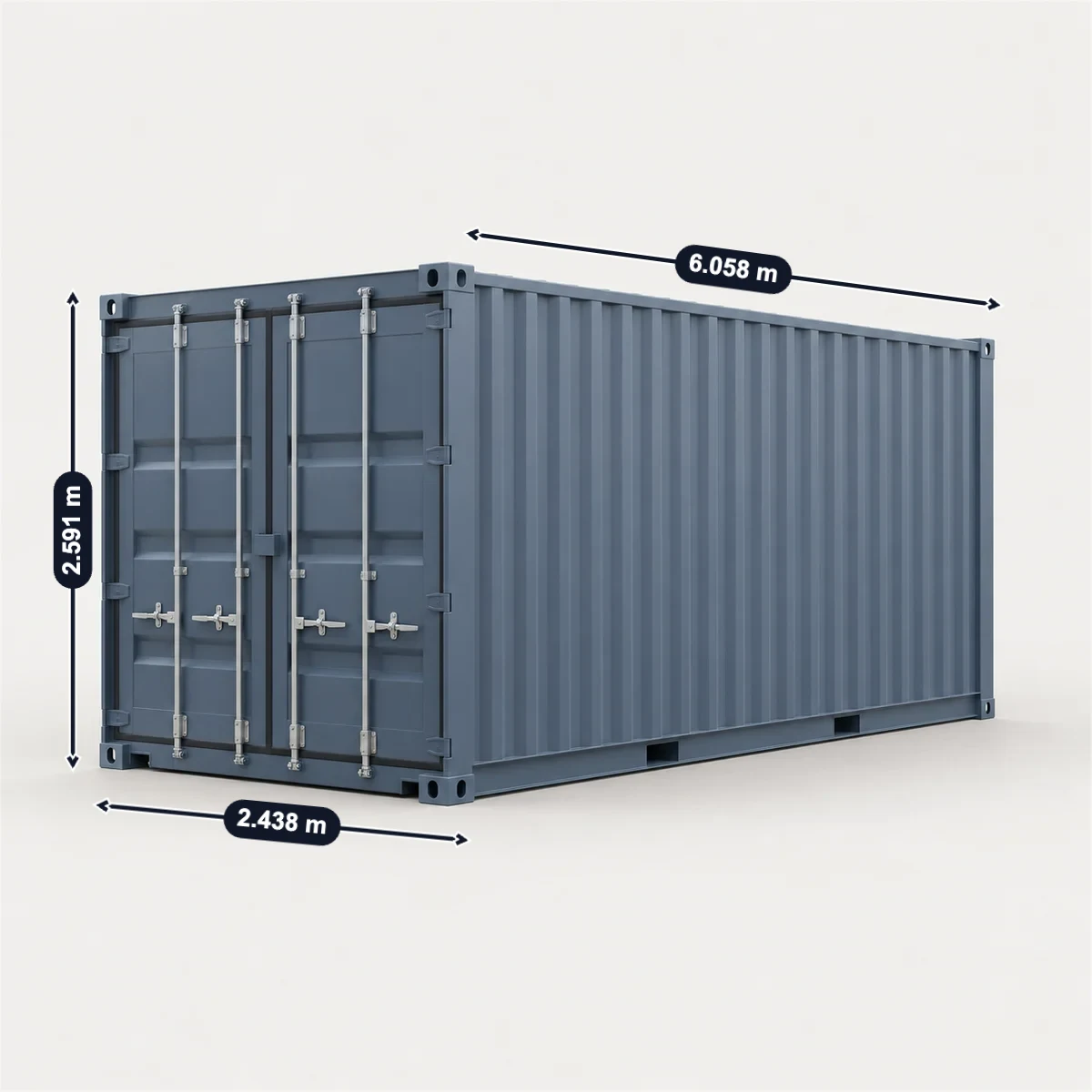
A 20 ft dry container is 6,058 × 2,438 × 2,591 mm outside (ISO 668) and usually 5,898 × 2,352 × 2,393 mm inside, with a 2,340 × 2,280 mm door and 33.2 m³ (Triton, Seaco, SeaCube). Empty it weighs 2,080–2,300 kg; most are rated 30,480 kg gross, which leaves about 28,400 kg of payload, but go by the box itself: the CSC plate gives its maximum gross mass and the door its tare and payload. One layer takes 11 Euro pallets (Seaco, Triton).
| Inside length | Inside width × height | Door, width × height |
|---|---|---|
| 5,898mm | 2,352 × 2,393mm | 2,340 × 2,280mm |
Sources: Triton (20ft). Checked October 2026.
Triton’s 20 ft figures are filled in. Put in the inside size and door of the box on your booking, then your pallets.
Sizes in millimetres, weights in kilograms. 1 in = 25.4 mm, 1 lb = 0.454 kg.
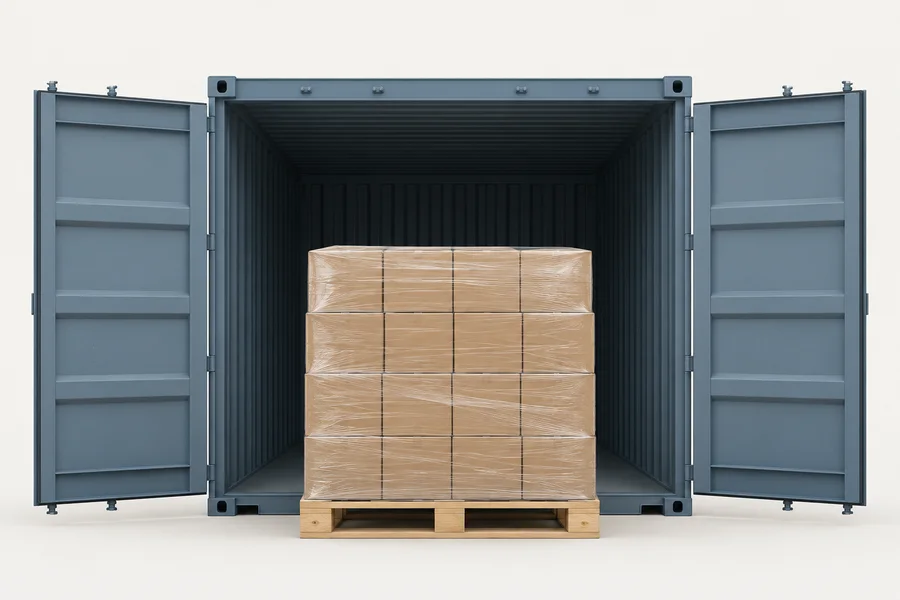
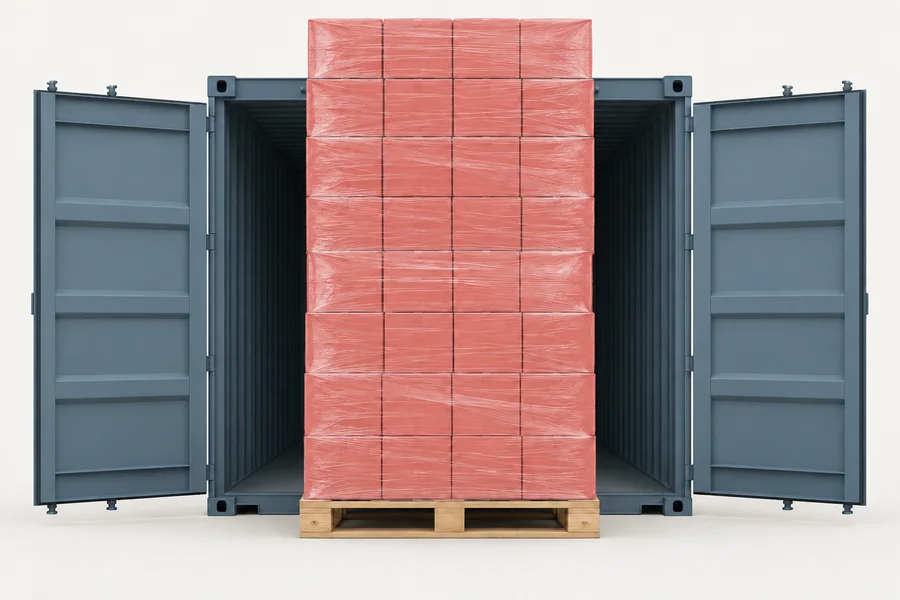
Its 800 mm side goes through the 2340 mm door with 1540 mm to spare, and its 1800 mm height clears the 2280 mm opening by 480 mm.
Most 20 ft doors open 2,340 × 2,280 mm (Triton, Seaco); Hapag-Lloyd’s are 2,292 mm high. Measure the loaded pallet, wrap and all.
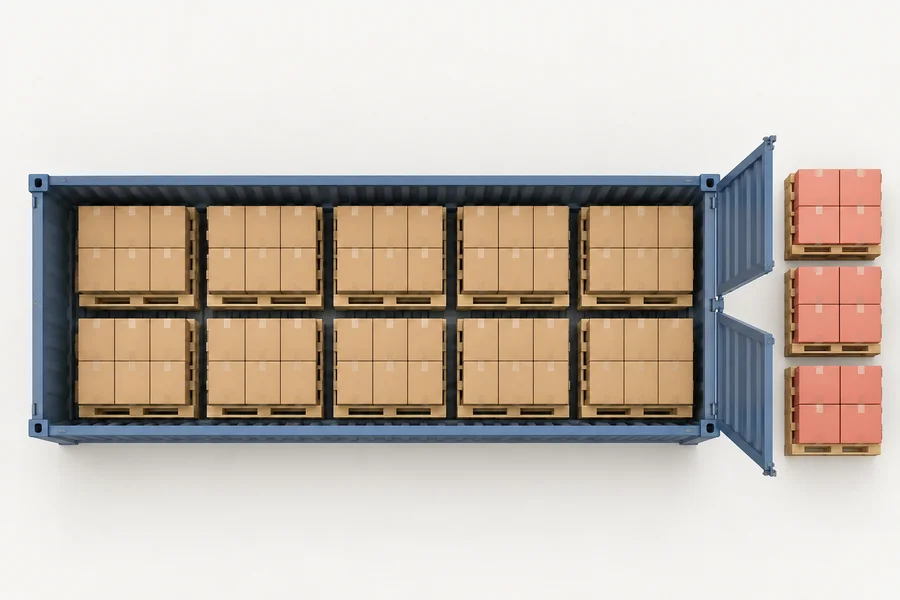
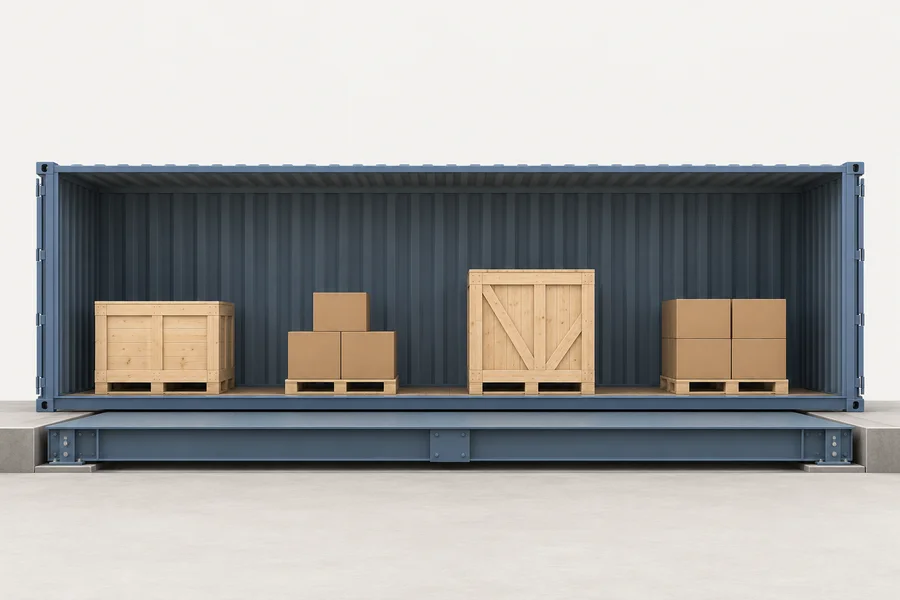
One layer takes 11 pallets of 1200 × 800 mm in straight rows; 1 high that is 11, enough for your 11.
Seaco and Triton both put 11 Euro pallets in one layer of a 20 ft.
11 pallets × 900 kg = 9900 kg, 18480 kg under the 28380 kg maximum payload.
Ratings differ: Hapag-Lloyd rates its 20 ft boxes at 32,500 kg, most others at 30,480 kg. Read the plate on the box.
Loading a 20 ft for a buyer? Photograph your carton or pallet, mark its size in SizeMarker and send it with the loading plan.
Mark a photo| Container | Inside, L × W × H | Door, W × H |
|---|---|---|
| Triton, 20 ft drySame figures at Seaco, SeaCube and DFIC | 5,898 × 2,352 × 2,393 mm | 2,340 × 2,280 mm |
| ONE, 20 ft dry | 5,898 × 2,350 × 2,390 mm | 2,340 × 2,280 mm |
| Hapag-Lloyd, 20 ftMain series | 5,900 × 2,352 × 2,393 mm | 2,340 × 2,292 mm |
| Textainer, 20 ft standard | 5,900 × 2,348 × 2,385 mm | 2,340 × 2,275 mm |
| Evergreen, 20 ft steel | 5.898 × 2.352 × 2.393 m | 2.340 × 2.280 m |
| COSCO SHIPPING Lines, 20 ft | 5,898 × 2,352 × 2,392 mm | 2,340 × 2,280 mm |
Sources: Triton (20ft) · Seaco (20ft) · SeaCube (20 foot dry) · DFIC (22G1) · ONE · Hapag-Lloyd · Textainer · Evergreen · COSCO SHIPPING Lines
| Container | Tare; max gross | Payload; volume |
|---|---|---|
| Triton | 2,100 kg; 30,480 kg | 28,380 kg; 33.2 m³ |
| Seaco | 2,080 kg; 30,480 kg | 28,400 kg; 33.2 m³ |
| SeaCube | 2,140 kg; 30,480 kg | 28,340 kg; 33.2 m³ |
| DFIC (COSCO SHIPPING group), 22G1 | 2,100 kg; 30,480 kg | 28,380 kg; 33.2 m³ |
| ONE | 2,150 kg; 30,480 kg | 28,330 kg; 33.1 m³ |
| Hapag-LloydIts boxes rated 30,480 kg carry 28,180 kg | 2,300 kg; 32,500 kg | 30,200 kg; 33.2 m³ |
| Evergreen | 2,120 kg; 30,480 kg | 28,360 kg; 33.2 m³ |
| Textainer | 2,200 kg; 30,480 kg | 28,280 kg; 33.04 m³ |
Sources: Triton (20ft) · Seaco (20ft) · SeaCube (20 foot dry) · DFIC (22G1) · ONE · Hapag-Lloyd · Evergreen · Textainer
| Guide | Size or rule |
|---|---|
| Outside, ISO 668 (1CC)IMO CTU Code guidance | 6,058 × 2,438 × 2,591 mm19 ft 10½ in × 8 ft × 8 ft 6 in |
| Size-type codeBIC | 22G1: 20 ft long, 8 ft 6 in high, general purpose |
| Counted asEurostat | 1 TEU, the unit for ship and terminal capacity |
| Share of all containersIMO CTU Code guidance | About 40%, the largest single type |
| Fork-lift pocketsIMO; centres 2,050 mm ±50 mm | May be used to lift a full container |
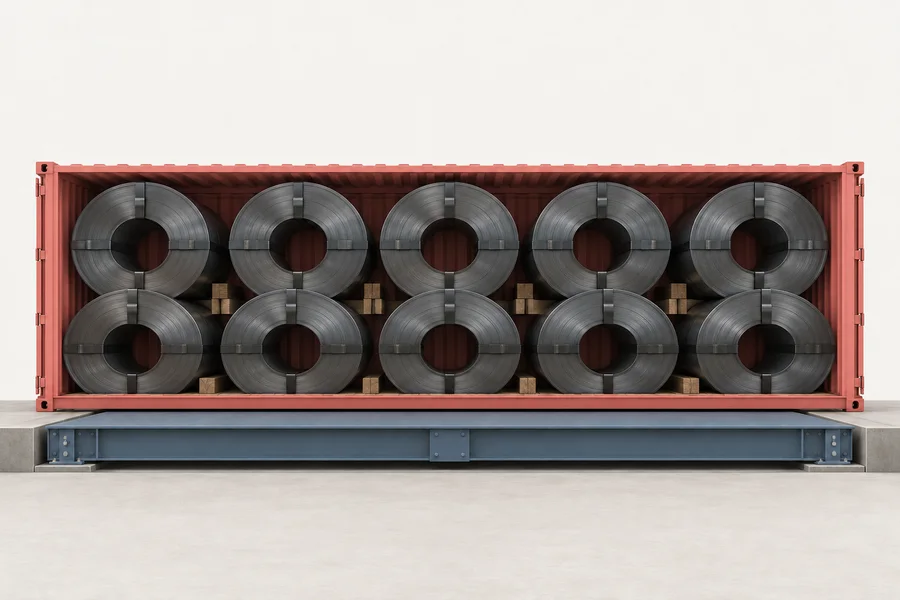
| Floor load per running metreHapag-Lloyd | 4.8 t (40 ft: 3 t) |
| Forklift working insideHapag-Lloyd, per ISO 1496 | 5,460 kg axle load, 142 cm² per wheel |
| MarkingsCTU Code | CSC plate: maximum gross mass; door: tare and payload |
| Weight spreadCTU Code, rule of thumb | No more than 60% of the cargo’s weight in one half |
| US rail, maximum grossEvergreen | 52,900 lbs (40 ft: 67,200 lbs) |
| Euro pallets, 1.2 × 0.8 m, one layerSeaco: approximately; Triton: up to | 11 |
Sources: IMO (CTU Code guidance) · BIC · Eurostat (TEU) · Hapag-Lloyd · CTU Code · Evergreen (US rail) · Seaco (20ft) · Triton (20ft)
Usually 5,898 × 2,352 × 2,393 mm, with a 2,340 × 2,280 mm door and 33.2 m³ (Triton, Seaco, SeaCube, DFIC). Owners differ by a few millimetres: Hapag-Lloyd lists 5,900 × 2,352 × 2,393 mm and ONE 5,898 × 2,350 × 2,390 mm.
6,058 × 2,438 × 2,591 mm, or 19 ft 10½ in × 8 ft × 8 ft 6 in (ISO 668). Its size-type code is 22G1 (BIC).
Most are rated 30,480 kg gross and weigh 2,080–2,300 kg empty, leaving 28,180–28,400 kg; Hapag-Lloyd rates its main series at 32,500 kg, so 30,200 kg. Spread heavy cargo out: Hapag-Lloyd allows 4.8 t per running metre of floor.
11 Euro pallets (1.2 × 0.8 m) in one layer, say Seaco and Triton. Check the loaded height against the 2,280 mm door opening before you plan a second layer.
Yes, by its fork-lift pockets, which are generally 2,050 mm ±50 mm apart and may be used to lift full containers (IMO). On 30 ft and longer boxes the pockets are for empty containers only.
Not quite: ISO 668 makes it 6,058 mm, or 19 ft 10½ in. It still counts as 1 TEU, the unit ship and terminal capacity is measured in (Eurostat).
A 20 ft is often a new buyer’s first order, so they want the exact count of your cartons or pallets per box, the carton size and gross weight, and what the full box will weigh. Put those sizes on a photo of your own product in SizeMarker, like the picture above, and send it as a card that opens on WhatsApp or WeChat.