Dimensions / Industrial & logistics / Shipping containers / 40 ft high cube
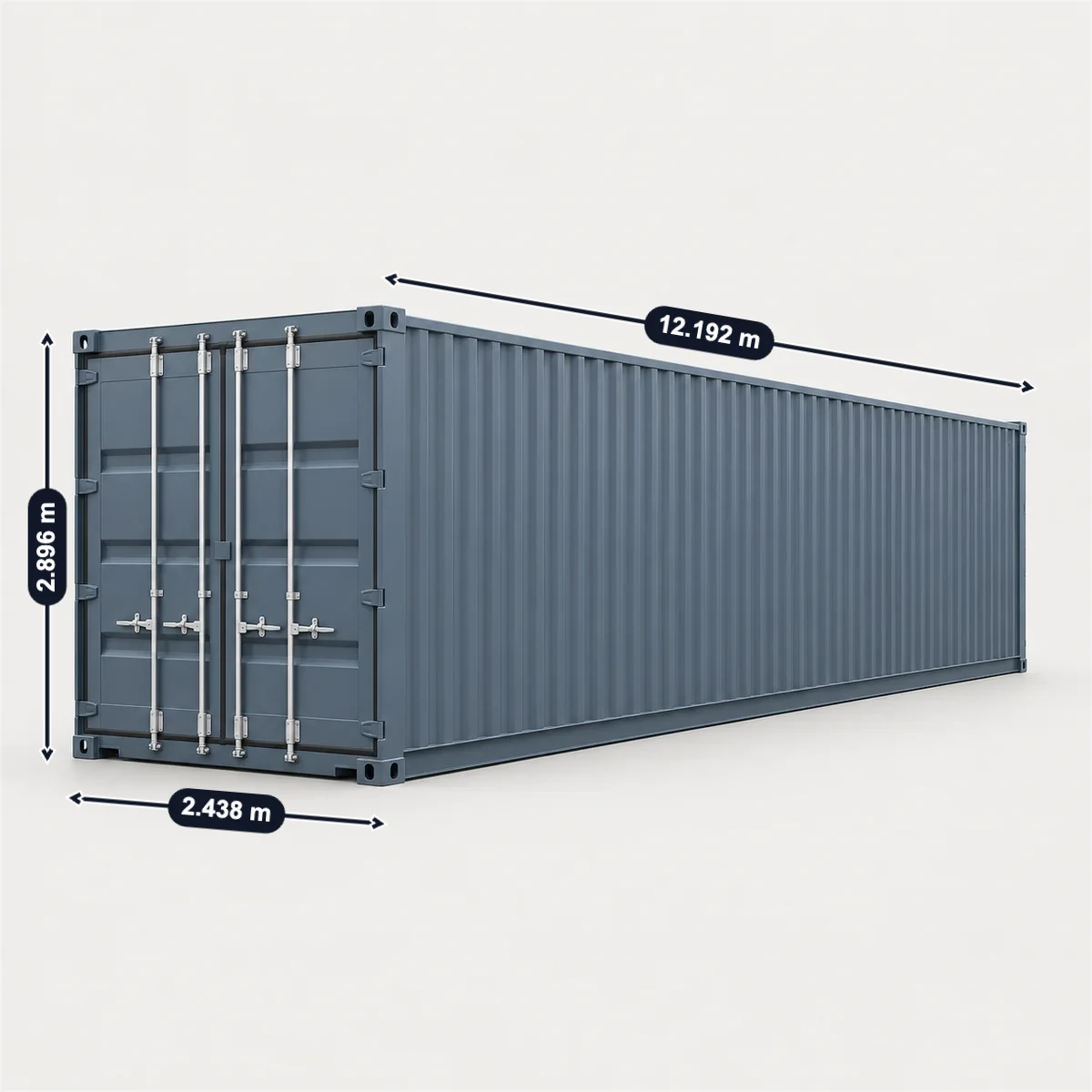
A 40 ft high cube is 12,192 × 2,438 × 2,896 mm outside (ISO 668), one foot taller than a standard 40 ft on the same footprint. Inside it is usually 12,032 × 2,352 × 2,698 mm with a 2,340 × 2,585 mm door and 76.4 m³ (Triton, Seaco, SeaCube), and Hapag-Lloyd takes cargo up to 2.70 m high. Most are rated 32,500 kg and carry 28,610–28,800 kg. On the road the extra height counts: in the EU no vehicle may be taller than 4.00 m.
| Inside length | Inside width × height | Door, width × height |
|---|---|---|
| 12,032mm | 2,352 × 2,698mm | 2,340 × 2,585mm |
Sources: Triton (40ft high cube). Checked October 2026.
Triton’s high cube is filled in; change it to your booked box, then enter your pallets, their loaded height and how many you stack. Each check uses the numbers in the tables on this page.
Sizes in millimetres, weights in kilograms. 1 in = 25.4 mm, 1 lb = 0.454 kg.
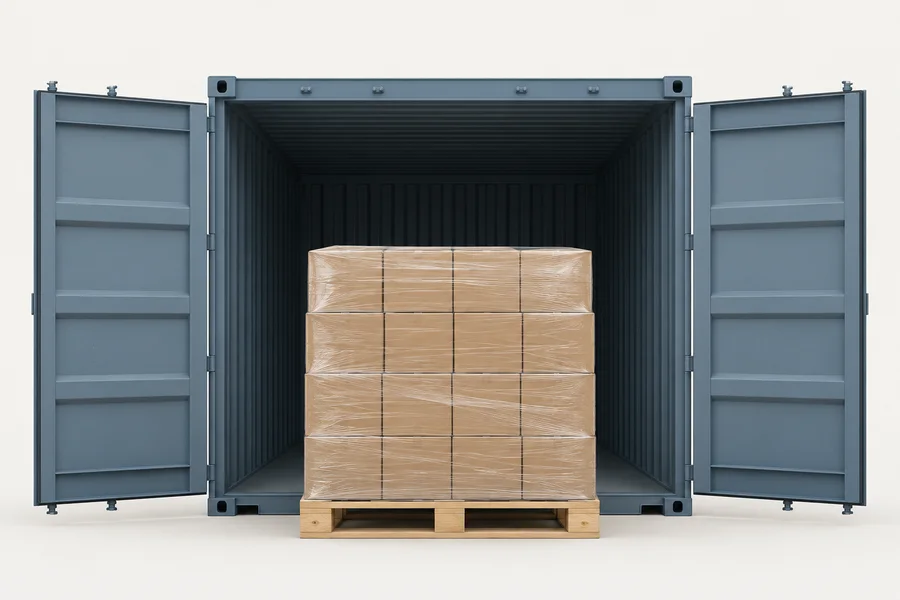
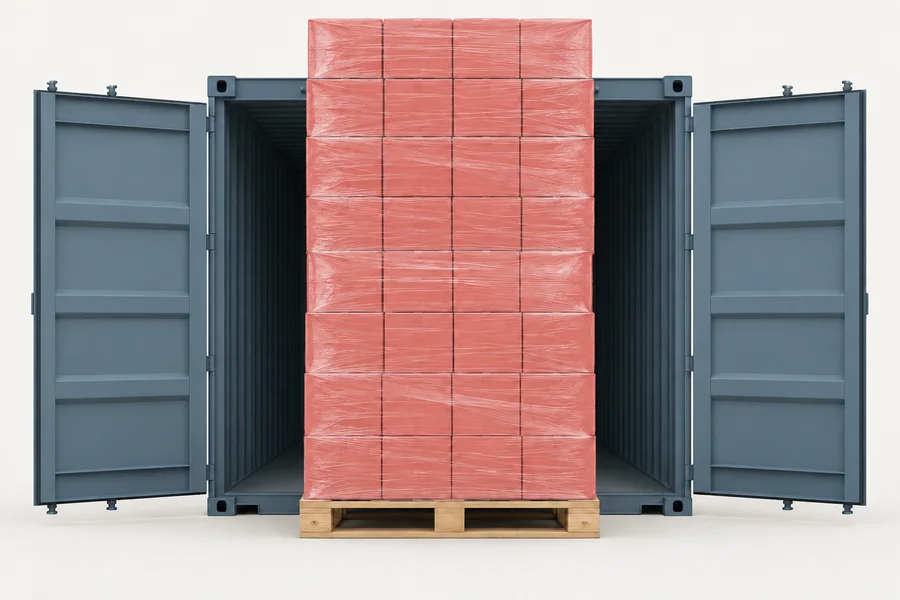
Its 1000 mm side goes through the 2340 mm door with 1340 mm to spare, and its 1250 mm height clears the 2585 mm opening by 1335 mm.
The high cube door is 2,585 mm high at Triton, Seaco and SeaCube, against 2,280 mm on a standard 40 ft.
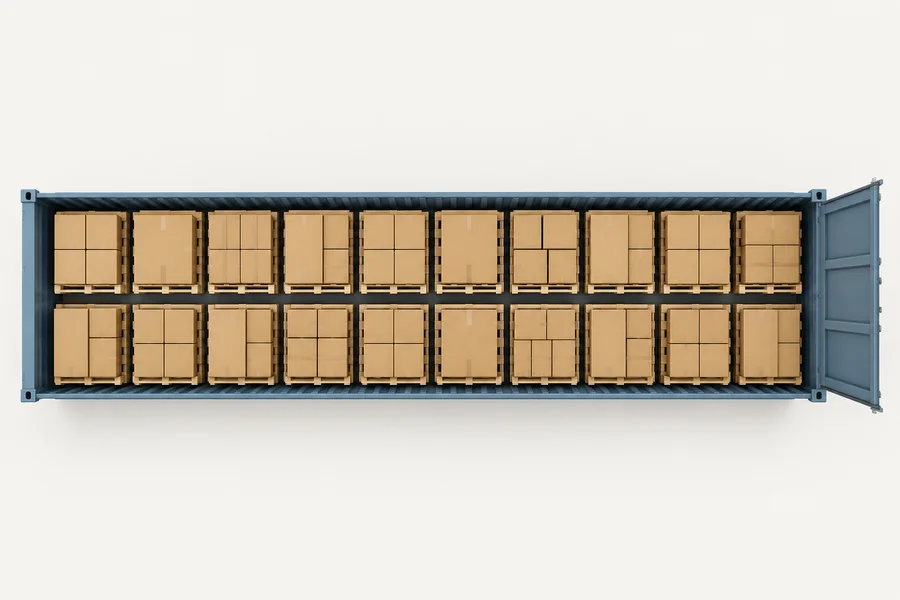
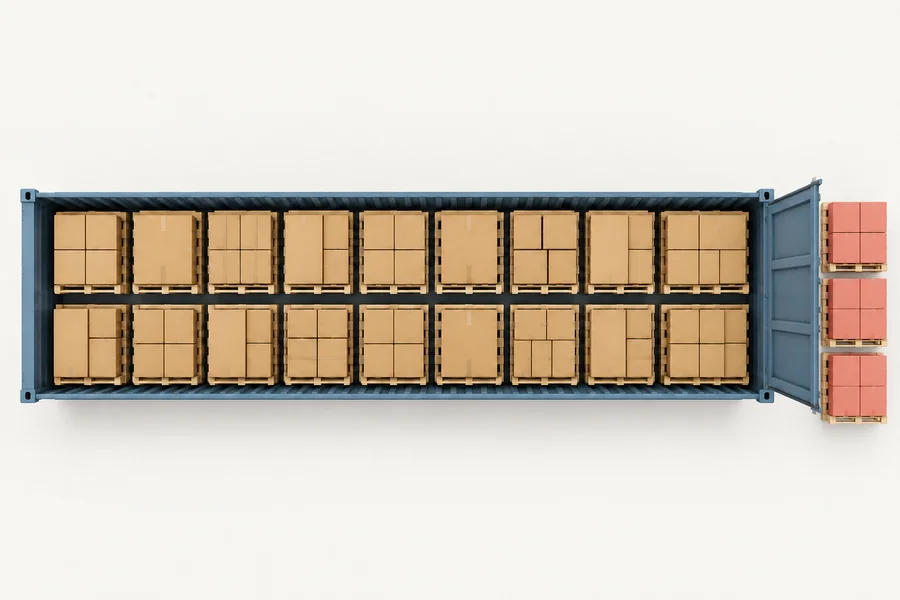
One layer takes 22 pallets of 1200 × 1000 mm in straight rows; 2 high that is 44, enough for your 40.
The floor is the same as a standard 40 ft; Hapag-Lloyd takes cargo up to 2.70 m high.
40 pallets × 600 kg = 24000 kg, 4800 kg under the 28800 kg maximum payload.
Evergreen lists high cubes rated 30,480 kg as well as 32,500 kg: check which one you are booked on.
Shipping tall or light goods in a high cube? Photograph a loaded pallet, mark its height in SizeMarker and send it with the stacking plan.
Mark a photo| Container | Inside, L × W × H | Door, W × H |
|---|---|---|
| Triton, 40 ft high cubeSeaco, SeaCube and DFIC list the same | 12,032 × 2,352 × 2,698 mm | 2,340 × 2,585 mm |
| ONE, 40 ft high cube | 12,032 × 2,350 × 2,695 mm | 2,340 × 2,585 mm |
| Hapag-Lloyd, 40 ft high cubeMain series | 12,032 × 2,352 × 2,700 mm | 2,340 × 2,597 mm |
| Textainer, 40 ft high cube | 12,025 × 2,348 × 2,690 mm | 2,340 × 2,578 mm |
| Evergreen, 40 ft hi-cube steel | 12.032 × 2.352 × 2.69 m | 2.343 × 2.585 m |
| COSCO SHIPPING Lines, 40 ft high cube | 12,031 × 2,352 × 2,697 mm | 2,340 × 2,585 mm |
Sources: Triton (40ft high cube) · Seaco (40ft high cube) · SeaCube (40 foot high cube dry) · DFIC (45G1) · ONE · Hapag-Lloyd · Textainer · Evergreen · COSCO SHIPPING Lines
| Container | Tare; max gross | Payload; volume |
|---|---|---|
| Triton | 3,700 kg; 32,500 kg | 28,800 kg; 76.4 m³ |
| Seaco | 3,700 kg; 32,500 kg | 28,800 kg; 76.4 m³ |
| SeaCube | 3,750 kg; 32,500 kg | 28,750 kg; 76.4 m³ |
| DFIC (COSCO SHIPPING group), 45G1 | 3,700 kg; 32,500 kg | 28,800 kg; 76.4 m³ |
| ONE | 3,700 kg; 32,500 kg | 28,800 kg; 76.2 m³ |
| Hapag-Lloyd | 3,850 kg; 32,500 kg | 28,650 kg; 76.3 m³ |
| EvergreenAlso listed at 30,480 kg: tare 4,200 kg, payload 26,280 kg | 3,750 kg; 32,500 kg | 28,750 kg; 76.4 m³ |
| Textainer | 3,890 kg; 32,500 kg | 28,610 kg; 75.95 m³ |
| Triton’s standard 40 ft, for comparisonInside height 2,393 mm | 3,540 kg; 32,500 kg | 28,960 kg; 67.7 m³ |
Sources: Triton (40ft high cube) · Seaco (40ft high cube) · SeaCube (40 foot high cube dry) · DFIC (45G1) · ONE · Hapag-Lloyd · Evergreen · Textainer · Triton (40ft)
| Guide | Size or rule |
|---|---|
| Outside, ISO 668 (1AAA)IMO CTU Code guidance; feet from BIC | 12,192 × 2,438 × 2,896 mm40 ft × 8 ft × 9 ft 6 in |
| A standard 40 ft, ISO 668 (1AA)For comparison | 12,192 × 2,438 × 2,591 mm8 ft 6 in high |
| Size-type codeBIC | 45G1: 40 ft long, 9 ft 6 in “high cube”, general purpose |
| Over a standard 40 ftSeaco | 1 ft higher outside; handled the same way |
| FootprintTriton | The same as a standard 40 ft |
| Tallest cargoHapag-Lloyd | Up to 2.70 m8 ft 10¼ in |
| Inland movesHapag-Lloyd | Consider over-height for bridges, clearances and tunnels |
| EU road, maximum height of any vehicleDirective 96/53/EC | 4.00 m |
| Cargo weight along the lengthCTU Code | Not more than 60% of it in half the length |
Sources: IMO (CTU Code guidance) · BIC · Seaco (40ft high cube) · Triton (40ft high cube) · Hapag-Lloyd · Directive 96/53/EC · CTU Code
Usually 12,032 × 2,352 × 2,698 mm, with a 2,340 × 2,585 mm door and 76.4 m³ (Triton, Seaco, SeaCube, DFIC). Hapag-Lloyd lists 2,700 mm of inside height and a 2,597 mm door.
Height only: the high cube is 2,896 mm (9 ft 6 in) tall outside against 2,591 mm (8 ft 6 in), on the same footprint. Inside that is 2,698 against 2,393 mm, and 76.4 against 67.7 m³ (Triton).
Hapag-Lloyd says up to 2.70 m (8 ft 10¼ in). Anything loaded through the door must also clear the opening, 2,585 mm high on most boxes.
Most are rated 32,500 kg gross and weigh 3,700–3,890 kg empty, leaving 28,610–28,800 kg; Evergreen also lists units rated 30,480 kg that carry 26,280 kg. The extra height adds volume, not weight: Triton’s standard 40 ft carries a little more, 28,960 kg.
Hapag-Lloyd asks you to consider over-height for bridges, clearances and tunnels on inland routes; in the EU no road vehicle may be taller than 4.00 m.
The first digit gives the length, 40 ft; the second the height, 9 ft 6 in “high cube”; G1 means a general purpose container (BIC).
High cubes suit tall and light goods, so buyers ask the carton height and how many layers fit, as well as the carton size and weight. Mark the real carton and pallet sizes on your product photo in SizeMarker, as in the picture at the top, and send buyers one product card.