Dimensions / Building materials / Concrete blocks / Standard hollow block
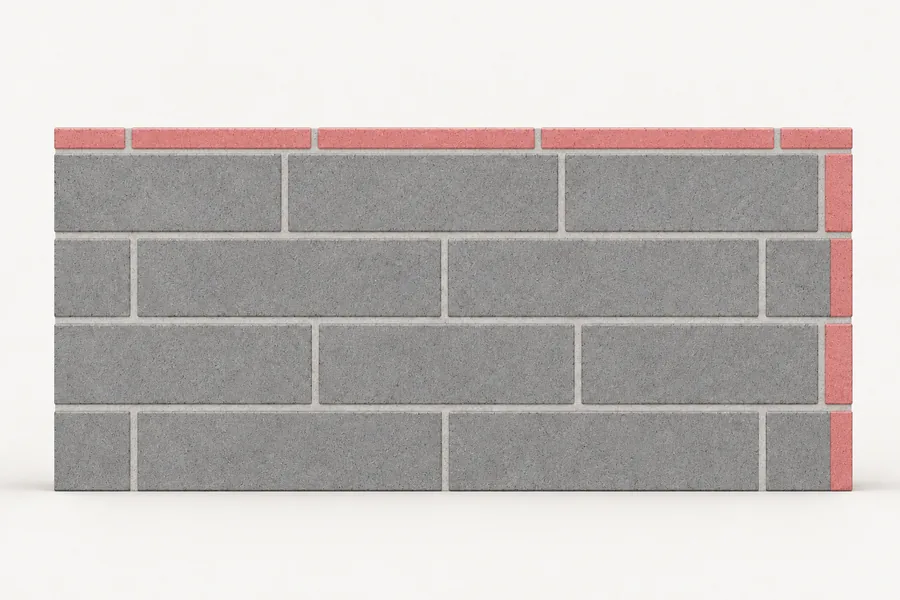
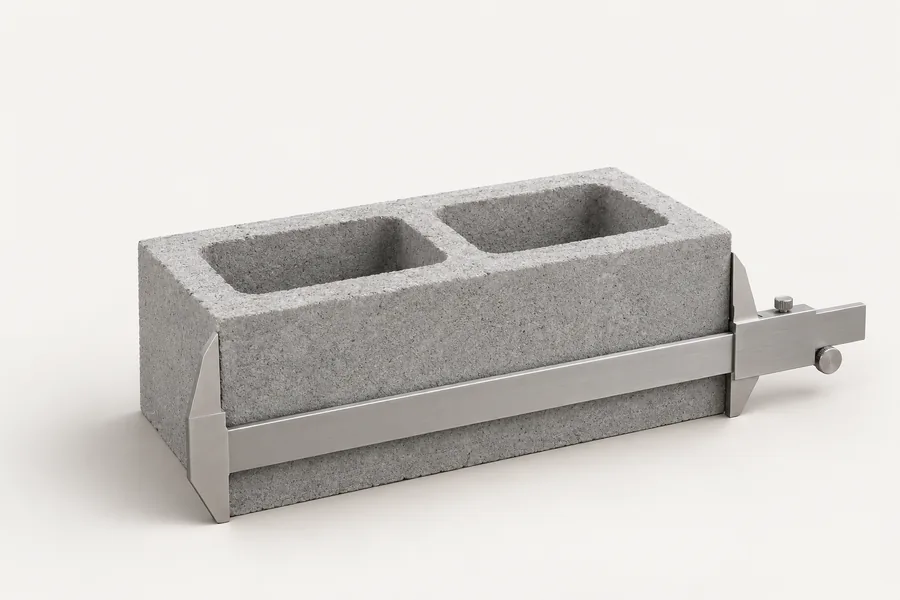
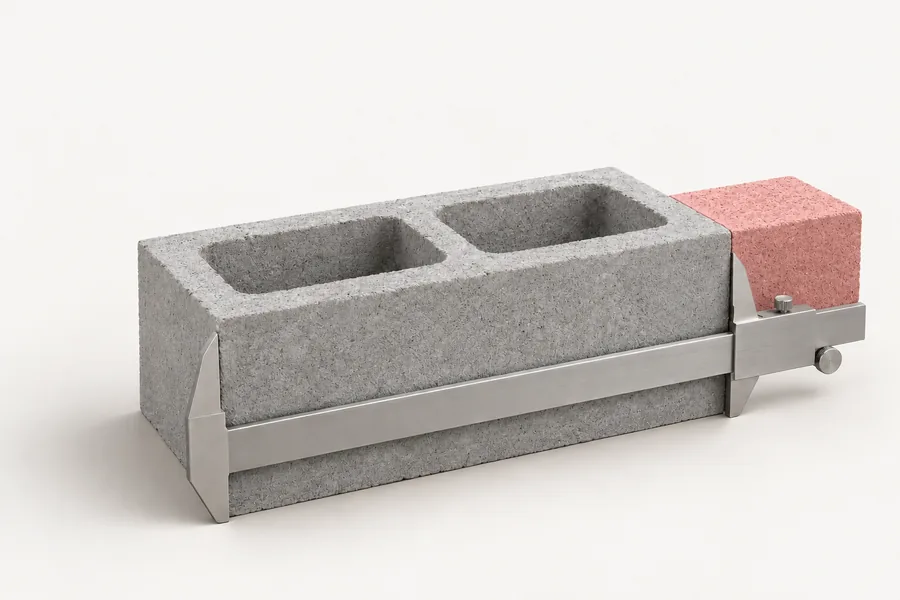
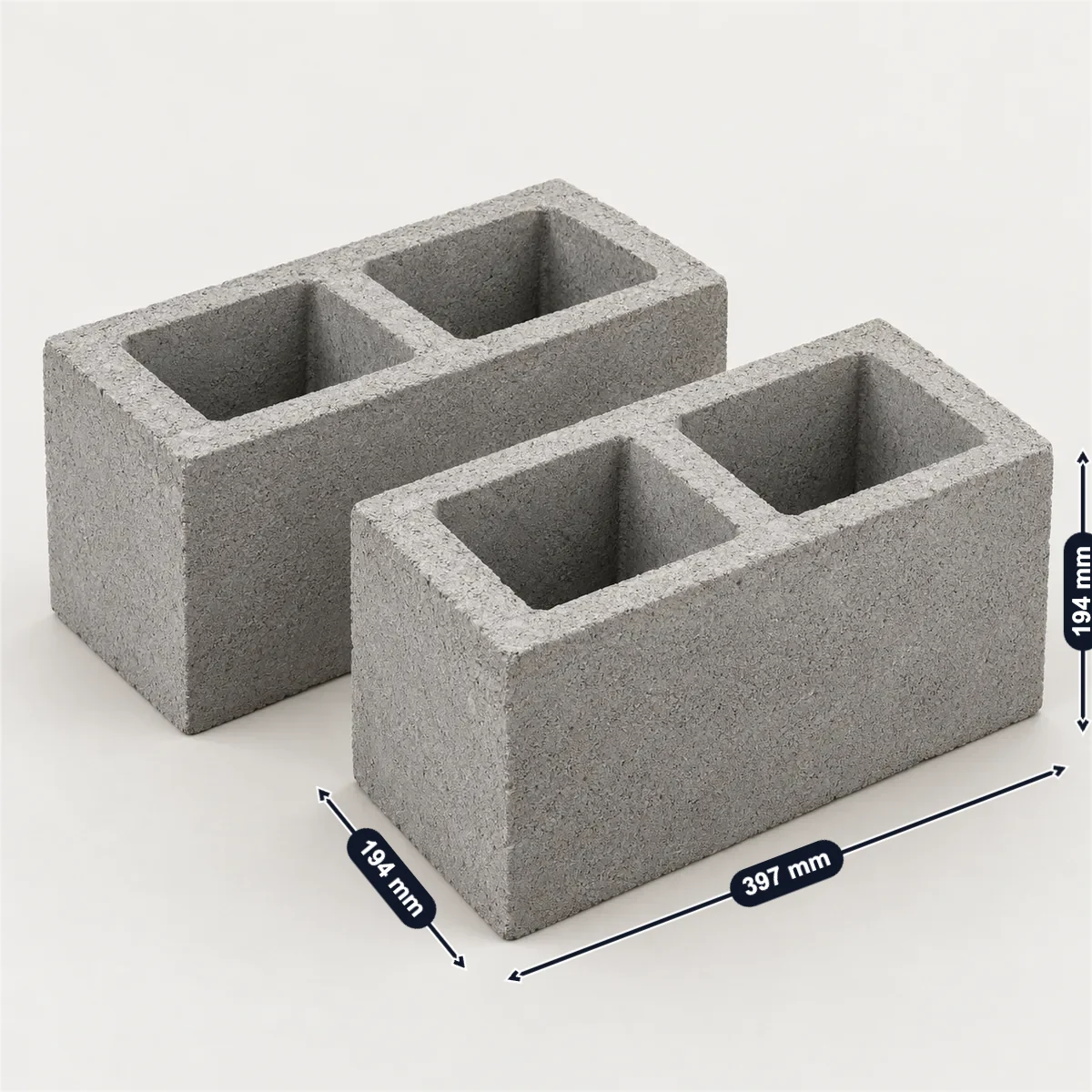
The standard hollow concrete block is the two-core stretcher, 8 × 8 × 16 in nominal, made 3/8 in (9.5 mm) smaller for the mortar joint: 7-5/8 × 7-5/8 × 15-5/8 in (194 × 194 × 397 mm). Standard widths are 4, 6, 8, 10 and 12 in nominal, 3-5/8 to 11-5/8 in actual (CMHA). ASTM C90 holds each dimension to ±1/8 in and asks face shells of at least 3/4, 1 or 1-1/4 in by width, with 3/4 in webs; the unit is 73.8% solid at 4 in and 44.0% at 12 in. Weight follows the density class more than the width: an 8 in unit is 25.3 lb lightweight and 34.3 lb heavyweight in an NCMA study, 40 lb in Basalite’s sheet. China’s main block, 390 × 190 × 190 mm, sits on a different module.
| Nominal width | Actual (CMHA) | Heavyweight 8 in unit (NCMA study) |
|---|---|---|
| 8in | 7-5/8 × 7-5/8 × 15-5/8in194 × 194 × 397 mm | 34.3lb |
Sources: CMHA, NCMA, Norlite. Checked October 2026.
An 8 in block, a 400 sq ft wall with its order, a 20 × 8 ft wall on the module and one block you measured are filled in; change any of them, or switch to Chinese GB sizes in millimetres.
Counts, modules and tolerances follow CMHA notes and the makers’ printed rules; nominal sizes include one mortar joint. No bar sizes or structural design here.
Each 8 × 16 in block face takes 8/9 sq ft with its joint, so a wall takes 1.125 blocks a sq ft (County Materials, CMHA). 400 sq ft with 5% for waste needs 473; you ordered 480, 7 spare.
CMHA counts 119 blocks per 100 sq ft with 5% waste; County prints 1.125 a sq ft without.
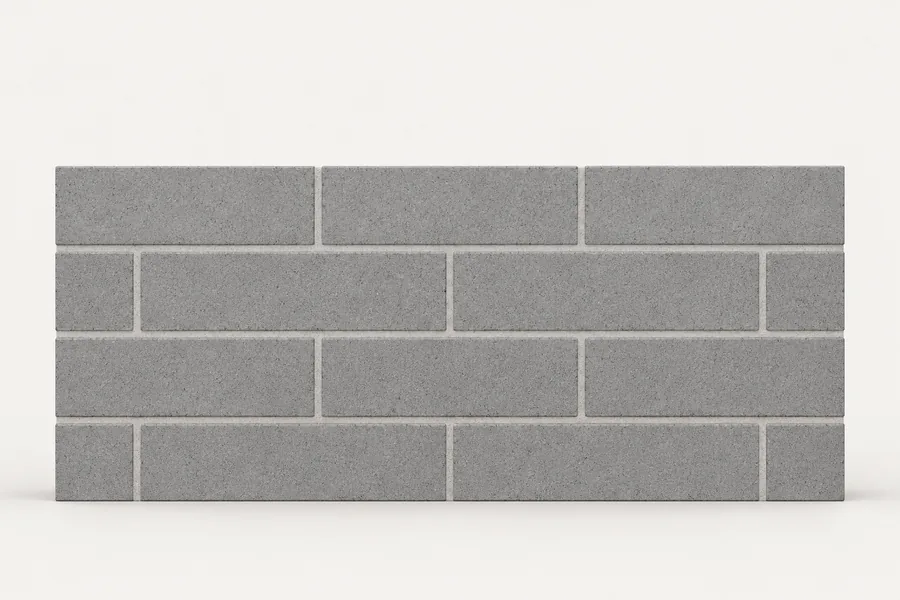
CMHA lays out block walls on an 8 in module, so a wall that keeps to it needs only whole and half blocks: 240 in long is 15 block lengths a course; 96 in high is 12 courses.
CMHA: masonry openings 4 in wider than the door or window keep the wall on the module.
ASTM C90 holds width, height and length to 1/8 in either way of the specified 7-5/8 × 7-5/8 × 15-5/8 in (CMHA). You measured 7.6 × 7.65 × 15.6 in: all within.
CMHA: up to 5% of a shipment may fall outside the tolerance.
Selling hollow blocks? Photograph a block from the top and the end, mark width, height, length, face shell and web thickness in SizeMarker, and send the picture with your offer.
Mark a photoActual (specified) sizes are typically 3/8 in under nominal, so the joint brings them back to the module. Percent solid is CMHA’s figure for a typical two-core unit.
| Nominal (W × H × L) | Actual | Metric |
|---|---|---|
| 4 × 8 × 16 in73.8% solid | 3-5/8 × 7-5/8 × 15-5/8 in | 92 × 194 × 397 mm |
| 6 × 8 × 16 in55.0% solid | 5-5/8 × 7-5/8 × 15-5/8 in | 143 × 194 × 397 mm |
| 8 × 8 × 16 inThis page | 7-5/8 × 7-5/8 × 15-5/8 in | 194 × 194 × 397 mm |
| 10 × 8 × 16 in46.3% solid | 9-5/8 × 7-5/8 × 15-5/8 in | 244 × 194 × 397 mm |
| 12 × 8 × 16 in44.0% solid | 11-5/8 × 7-5/8 × 15-5/8 in | 295 × 194 × 397 mm |
| 14 and 16 inSpecialty widths | 40.2% and 38.4% solid | 356 and 406 mm nominal |
| 8 × 8 × 8 in halfBasalite | 7-5/8 × 7-5/8 × 7-5/8 in | 194 × 194 × 194 mm |
| Other heightsCMHA TEK 02-02B | Half-high 4 in and 12 in high units | 102 and 305 mm |
Sources: CMHA · CMHA · CMHA · CMHA · Basalite · Angelus Block
ASTM C90 itself is sold, not published free; these are CMHA’s and NCMA’s restatements.
| Item | Figure |
|---|---|
| ToleranceC90, via CMHA CMU-TEC-001-23 | Width, height and length within ±1/8 in (3.2 mm) of specified; up to 5% of a shipment may fall outside |
| Face shellsNCMA TEK 02-01B table | 3/4 in (19 mm) for 3 and 4 in units, 1 in (25 mm) for 6 in, 1-1/4 in (32 mm) for 8 in and up |
| WebsNCMA TEK 02-01B table | 3/4 in (19 mm); normalized web area 6.5 in²/ft² |
| StrengthCMHA | At least 2,000 psi (13.8 MPa) on the net area |
| Density classesCMHA | Lightweight under 105 lb/ft³ (1,680 kg/m³); medium 105 to 125; normal weight 125 lb/ft³ (2,000 kg/m³) and over |
| AbsorptionCMHA | At most 18, 15 and 13 lb/ft³ for lightweight, medium and normal weight |
| Hollow or solidCMHA TEK 01-04 | Hollow: net area under 75% of the gross area; solid: 75% or more |
Weight depends more on the concrete’s density than on the width.
| Width | Lightweight | Normal or heavyweight | Who prints it |
|---|---|---|---|
| 4 in | 17.0 lb (88.9 pcf) | 24.3 lb (130.1 pcf) | NCMA study, reprinted by Norlite |
| 6 in | 19.1 lb | 32.6 lb | NCMA study |
| 6 in, Basalite | — | 27 lb | Basalite (Washington) |
| 8 inThis page | 25.3 lb (90.5 pcf) | 34.3 lb (128.1 pcf) | NCMA study |
| 8 in, Basalite | — | 40 lb | Basalite (Washington) |
| 12 in | 35.6 lb | 48.4 lb | NCMA study |
| 12 in, Ernest Maier | 35 lb under 105 pcf; 43 lb at 105–125 pcf | 52 lb over 125 pcf | Ernest Maier |
| 20 cm (Canada) | 13.4 kg (semi-light) | 17.5 kg (normal) | Basalite (British Columbia) |
Sources: Norlite · Basalite · Ernest Maier · Basalite · CMHA
| Item | Figure |
|---|---|
| Two cores, three websCMHA | The most commonly produced hollow loadbearing unit is a two-cell, three-web unit; stretchers have flanged ends, corner units square ends |
| Lighter can be biggerCMHA; Ernest Maier; Basalite | A lightweight 12 in unit can weigh less than a normal-weight 8 in one: 35 lb against Basalite’s 40 lb |
| No grout at 4 inCMHA TEK 04-02A | Conventional 4 in units are not recommended for grouting: the cells are too small |
| Thicker side upCMHA TEK 03-08A | Webs and face shells are thicker on top than on the bottom; lay the thicker part up |
| FireCounty Materials; UFGS | Lighter units rate longer: County’s 8 in medium weight 2 h, 12 in lightweight 4 h; solid-grouted units of 6 in and up count as 4 h (UFGS) |
Sources: CMHA · CMHA · Ernest Maier · Basalite · CMHA · CMHA · County Materials · UFGS
| Item | Figure |
|---|---|
| Face areaCMHA TEK 04-02A | One 8 × 16 in face with its joint covers 8/9 sq ft (0.083 m²) |
| Blocks per sq ftCounty Materials; CMHA | 1.125, or 112.5 per 100 sq ft; CMHA counts 119 per 100 sq ft with 5% waste |
| ModuleCMHA TEK 05-12 | Plan lengths in multiples of 8 in use only whole and half units; courses are 8 in |
| OpeningsCMHA TEK 05-12 | Masonry openings 4 in wider than the door or window; window openings 8 in taller |
| JointUFGS; CMHA | 3/8 in (10 mm) bed and head joints; CMHA writes 3/8 in as 9.5 mm |
| Metric in North AmericaCMHA TEK 05-12 | 190 × 190 × 390 mm net for a 200 × 200 × 400 mm unit; the inch unit is about 2% larger |
| ChinaGB/T 8239 draft; Shenzhen SJG 13-2004 | 390 × 190 × 190 mm main block; with a 10 mm joint a 400 × 200 × 200 mm module, 12.5 blocks a m² (our calculation); the US module is 406.4 × 203.2 mm (our conversion) |
| China, toleranceGB/T 8239 draft | Length ±2, width ±2, height −2 to +3 mm |
Sources: CMHA · County Materials · CMHA · UFGS · SAMR · Shenzhen government
7-5/8 × 7-5/8 × 15-5/8 in (194 × 194 × 397 mm): CMHA makes the specified size 3/8 in (9.5 mm) less than nominal, so a 3/8 in mortar joint brings it back to the 8 in module.
4, 6, 8, 10 and 12 in nominal, 3-5/8 to 11-5/8 in actual (92 to 295 mm); 14 and 16 in are specialty widths (CMHA).
It depends on the density class: 25.3 lb lightweight and 34.3 lb heavyweight in the NCMA study, 40 lb in Basalite’s sheet. A lightweight 12 in unit can weigh less than a normal-weight 8 in one.
1.125 for 8 × 16 in faces, or 112.5 per 100 sq ft (County); CMHA allows 119 per 100 sq ft with 5% for waste and breakage. The width does not change the count.
C90 asks face shells of at least 3/4 in on 4 in units, 1 in on 6 in and 1-1/4 in from 8 in up, and webs of 3/4 in (NCMA, CMHA).
No. It is 390 × 190 × 190 mm on a 400 × 200 mm module with a 10 mm joint, against 194 × 194 × 397 mm on a 16 × 8 in module (406.4 × 203.2 mm, our conversion), so the two do not mix in one wall.
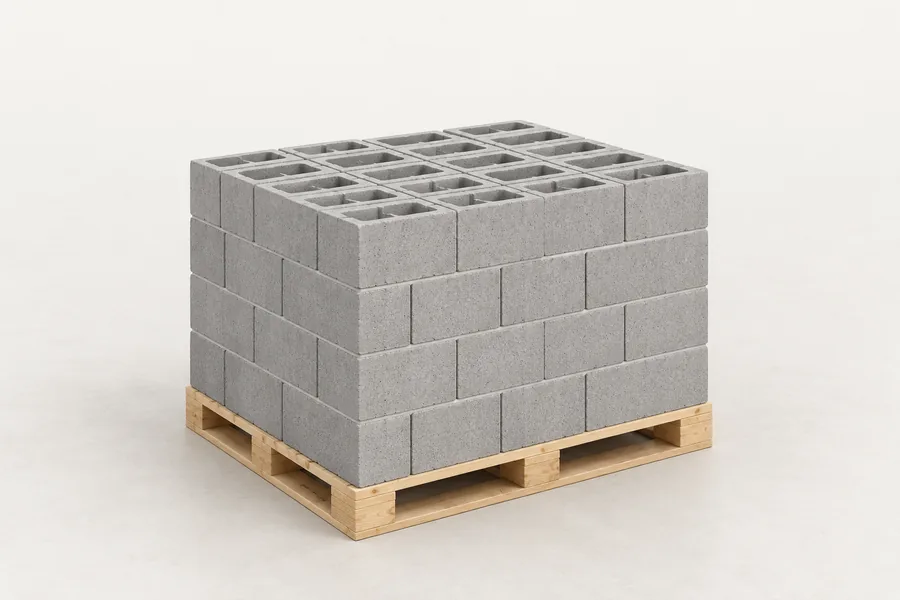
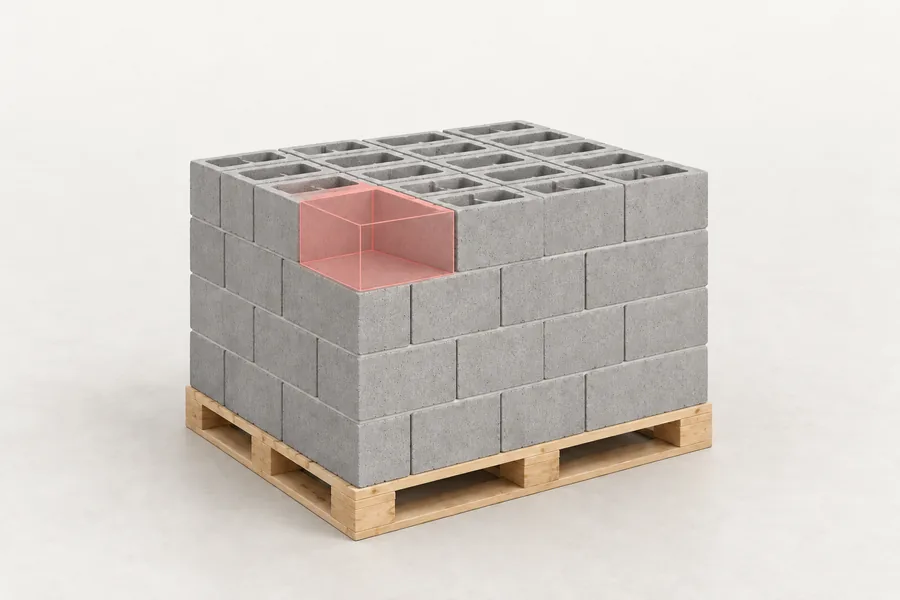
A buyer of hollow blocks asks for the nominal and actual size, the standard (ASTM C90 for the US), the density class and unit weight, face shell and web thickness, percent solid, strength and absorption, and how many blocks go on a pallet and what it weighs. Mark those on a photo of your own block with SizeMarker, like the picture at the top, and share one card in WhatsApp or WeChat.