
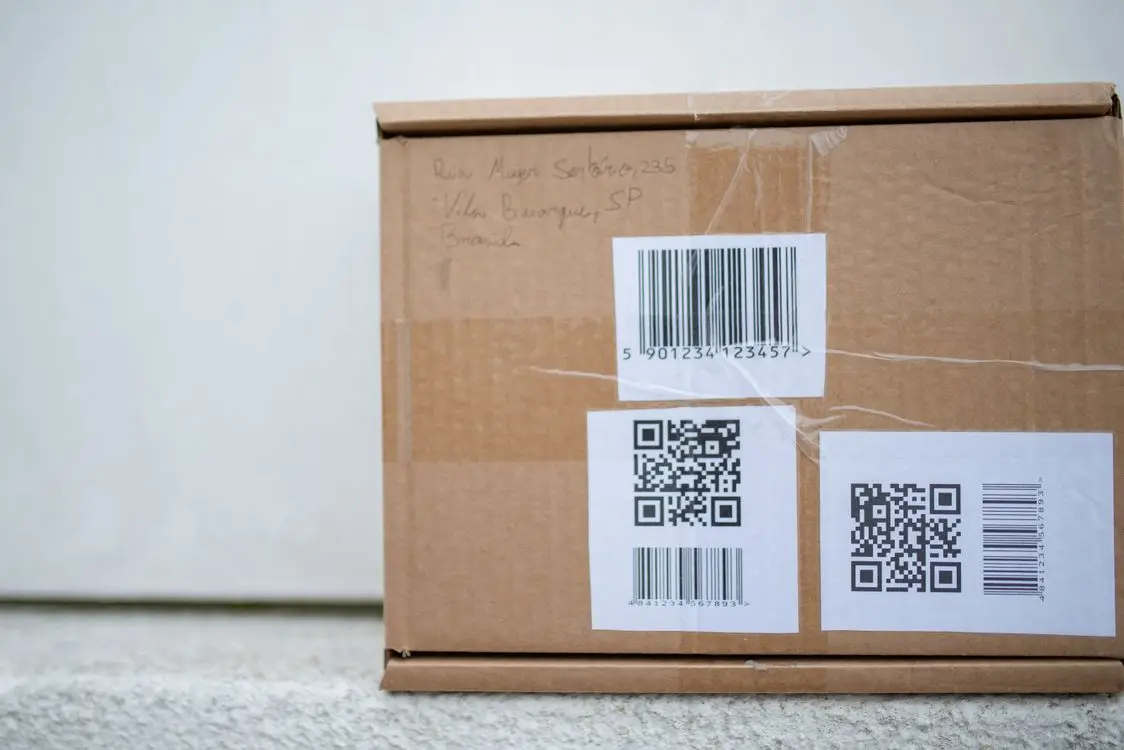
Pertanyaan soal label pengiriman 100x150 vs A6 terlihat seperti hal sepele — sampai satu pallet ditolak di pusat distribusi karena barcode-nya berada 30 mm terlalu rendah. A6 berukuran 105 × 148 mm. Empat kali enam inci sama dengan 101.6 × 152.4 mm. Di seluruh industri, keduanya diperlakukan sebagai satu kelas ukuran yang sama, padahal bukan lembar kertas yang identik — dan celah di antara dua fakta inilah tempat label-label yang ditolak itu berasal.
Ada lima anggapan keliru soal ukuran label yang membuat eksportir rugi uang. Masing-masing dijawab di bawah ini berdasarkan apa yang benar-benar dipublikasikan GS1, bukan berdasarkan blog vendor label.
Ukuran label pengiriman 100x150 vs A6, berdampingan
| Nama | Lebar | Tinggi | Rasio aspek | Asal ukuran |
|---|---|---|---|---|
| ISO A6 | 105 mm | 148 mm | 1.41 | Seri kertas ISO, standar di Eropa |
| 4 × 6 inci | 101.6 mm | 152.4 mm | 1.50 | Stok roll thermal Amerika Utara |
| 100 × 150 mm | 100 mm | 150 mm | 1.50 | Stok roll thermal metrik |
A6 3.4 mm lebih lebar dan 4.4 mm lebih pendek dibanding label 4 × 6 inci. Luasnya hanya berbeda kurang dari setengah persen — persis alasan kenapa keduanya sering dianggap bisa saling menggantikan, dan kenapa substitusi itu justru gagal di bagian tepi, bukan di tengah.
A6 dan 4 × 6 adalah satu kelas ukuran, tapi tiga lembar kertas yang berbeda — dan ketiganya sama-sama disebut "four by six" di suatu titik dalam rantai pasok. GS1 Logistic Label Guideline sendiri menunjukkan ambiguitas ini dalam satu dokumen: bagian 7 menyebut label kompak sebagai "A6 (105 mm x 148 mm) or 4 x 6 inch", sedangkan Appendix B memberi judul tata letak yang sama sebagai "A6 / 4.1 x 5.8 inch" — konversi yang jujur dari 105 × 148 mm.
Mitos 1: "A6 dan 4 × 6 adalah label yang sama"
Keduanya adalah pilihan yang sama, bukan media fisik yang sama.
GS1 merekomendasikan tepat dua ukuran untuk logistic label. Label kompak adalah A6 (105 mm × 148 mm) atau 4 × 6 inci, cocok saat yang di-encode hanya SSCC, atau SSCC plus data tambahan terbatas. Label besar adalah A5 (148 mm × 210 mm) atau 6 × 8 inci, cocok saat dibutuhkan data trade item tambahan — kasus label pallet.
Jadi pada level "layout mana yang saya pakai", keputusan label pengiriman 100x150 vs A6 punya satu jawaban yang sama untuk keduanya. Pada level "roll mana yang saya muat ke printer", keduanya bukan hal yang sama — printer yang dikonfigurasi untuk salah satu ukuran akan memotong atau bergeser saat mencetak ukuran lainnya. Kalau template 4 × 6 dicetak di atas stok A6, kelebihan lebar 3.4 mm menggeser konten ke samping, dan kekurangan tinggi 4.4 mm memakan bagian bawah label — persis di tempat barcode SSCC seharusnya berada.
Mitos 2: "Ukuran berapa pun boleh, asal bisa dipindai"
Setengah benar, dan setengah yang salah itu yang mahal.
GS1 memang menyatakan label boleh berukuran apa saja, dan menyebutkan faktor-faktor yang menentukan pilihan tersebut: jumlah data yang dibutuhkan, X-dimension dari barcode yang dipakai, dan dimensi unit logistik yang diberi label. Yang tidak fleksibel adalah simbol barcode itu sendiri:
| Ketentuan | Nilai | Status |
|---|---|---|
| Tinggi minimum barcode GS1-128 | 31.75 mm (1.250 in), hanya tinggi bar, tidak termasuk teks human-readable | Normatif |
| Rentang X-dimension | 0.495 mm (0.0195 in) sampai 0.94 mm (0.0370 in) | Normatif |
| Target X-dimension | 0.495 mm (0.0195 in) | Direkomendasikan |
| Quiet zone | lebar minimal 10 X-dimension | Wajib |
Label bisa mengecil. Barcode tidak bisa ikut mengecil. Tinggi bar 31.75 mm ditambah teks human-readable ditambah quiet zone adalah anggaran ruang yang tetap, dan begitu data melebihi apa yang muat pada X-dimension minimum, jawabannya adalah label yang lebih besar, bukan simbol yang lebih kecil. GS1 juga mencatat bahwa X-dimension di ujung atas dari rentang yang diizinkan mendukung pemindaian yang konsisten dalam kondisi sulit — suhu beku, misalnya, menurunkan kualitas cetak — jadi menekan ukuran sampai 0.495 mm demi menghemat ruang adalah sebuah trade-off, bukan keuntungan cuma-cuma.
Mitos 3: "Tempel label di mana saja asal permukaannya rata"
Penempatan label bersifat normatif, dan ini justru aturan yang paling sering dilanggar oleh eksportir yang label cetaknya sendiri sudah sempurna.
| Jenis unit | Aturan | Klausul sumber |
|---|---|---|
| Pallet dan roll cage | Barcode harus ditempatkan antara 400 mm (16 in) dan 800 mm (32 in) dari dasar pallet | 8-1 |
| Pallet dengan tinggi di bawah 400 mm | Barcode harus ditempatkan setinggi mungkin sambil tetap melindunginya | 8-1 |
| Pallet — jarak dari tepi | Simbol termasuk quiet zone harus berjarak minimal 50 mm (2.0 in) dari tepi vertikal mana pun | 8-2 |
| Karton dan outer case | Target penempatan untuk bagian bawah barcode adalah 32 mm (1.25 in) dari dasar alami item | 8-4 |
| Karton — jarak dari tepi | Simbol termasuk quiet zone sebaiknya berjarak minimal 19 mm (0.75 in) dari tepi vertikal mana pun | 8-5 |
Ada dua catatan praktis dari GS1 yang jarang masuk ke SOP supplier. Pertama, setiap pallet sebaiknya membawa minimal satu label, dan dua sisi sebaiknya diberi label dengan data yang identik agar salah satu selalu terlihat, terlepas dari apakah pallet disimpan dengan sisi panjang atau sisi pendek menghadap keluar. Kedua, tidak ada aturan soal kiri, tengah, atau kanan — tapi karena sebagian besar operator forklift menggunakan tangan kanan, menempatkan label di sisi kanan pada setiap permukaan adalah posisi paling ergonomis untuk dipindai.
Jika karton Anda juga membawa shipping mark tercetak, interaksi antara keduanya adalah disiplin tersendiri; konvensinya dibahas di shipping mark karton ekspor.
Mitos 4: "Gabungkan data untuk menghemat ruang di label kecil"
Yang satu ini secara eksplisit dilarang, justru pada kasus di mana orang paling tergoda melakukannya.
GS1 mensyaratkan bahwa SSCC, yang didefinisikan dengan AI (00), harus selalu muncul di barcode paling bawah pada label. SSCC boleh berdiri sendiri atau digabung (concatenated) dengan data lain dalam barcode yang sama — kecuali bahwa penggabungan tidak boleh dipakai untuk SSCC pada karton dan outer case, atau pada label A6 / 4 × 6.
Baca ulang bagian itu kalau Anda mencetak label kompak. Pada format persis yang dibahas artikel ini, SSCC harus berdiri sendiri dalam simbolnya sendiri di bagian bawah label. Kalau data yang ingin Anda gabungkan tidak muat sebagai simbol terpisah di atasnya, artinya Anda sudah kelebihan kapasitas untuk label kompak.
Mitos 5: "Kalau tidak muat, kecilkan huruf dan barcode-nya"
Jalan keluar resmi menurut GS1 adalah label A5, bukan A6 yang dipadatkan. A5 berukuran 148 × 210 mm, atau 6 × 8 inci dalam konvensi pembulatan inci yang sama, dan GS1 menetapkannya untuk kasus di mana data trade item bergabung dengan SSCC — biasanya label pallet. GS1 juga merekomendasikan untuk tetap memakai ukuran kertas standar seperti A5 atau A6, bukan membuat ukuran custom, karena stok custom adalah sumber utama kesalahan konfigurasi printer dan simbol yang terpotong.
Keputusannya berbasis data, dan hanya butuh sekitar sepuluh detik untuk menentukannya:
| Data yang perlu di-encode | Label yang dipakai | Ukuran nominal |
|---|---|---|
| Hanya SSCC, atau SSCC plus data terbatas | Kompak | A6 105 × 148 mm, atau 4 × 6 in 101.6 × 152.4 mm |
| SSCC plus data trade item (GTIN, batch, tanggal, kuantitas) | Besar | A5 148 × 210 mm, atau 6 × 8 in |
| Apa pun yang tetap tidak muat pada X-dimension minimum | Ukuran lain, ditentukan oleh kebutuhan data dan ukuran unit | Sesuai GS1 section 7 option C |
Kenapa ini muncul sebagai masalah retur, bukan masalah cetak
Label yang terpotong atau tidak bisa dipindai biasanya tidak ditandai sebagai cacat label. Ini akan tercatat sebagai selisih penerimaan barang, pallet yang hilang, atau kiriman yang kurang — dan biayanya jatuh ke supplier dalam bentuk chargeback berminggu-minggu kemudian, jauh setelah tidak ada lagi yang bisa merekonstruksi roll stok mana yang dimuat pada hari itu.
Pola kegagalan yang sama berlaku untuk setiap dimensi yang dipublikasikan pabrik. Angka yang hanya ada di spreadsheet adalah angka yang tidak pernah dicek siapa pun: ukuran label di antrean cetak, dimensi karton di packing list, dimensi produk di listing. Semuanya terlihat baik-baik saja sampai diam-diam tidak sesuai dengan kenyataan. Eksportir yang berhenti menanggung biaya ini adalah mereka yang menaruh nilai hasil pengukuran langsung pada artwork itu sendiri — diagram karton yang menunjukkan di mana label ditempatkan dan seberapa jauh dari dasar, gambar produk yang menunjukkan dimensi asli yang menempel pada tepi asli — bukannya percaya begitu saja bahwa semua orang di hilir membaca tabel yang sama dengan cara yang sama. Angka yang berasal dari pengukuran akan bertahan melewati setiap serah terima; angka yang disusun dari kira-kira "biasanya gambar sejenis begini" tidak akan bertahan. Angka terkait untuk karton itu sendiri ada di dimensi master carton untuk ekspor, dan ukuran-ukuran label yang beredar dikumpulkan pada referensi ukuran standar label pengiriman.
Langkah selanjutnya, berurutan
- Ukur stok yang benar-benar Anda miliki. Ambil kaliper dan ukur satu label dari setiap roll yang ada di gudang. Kalau hasilnya 105 × 148, itu A6 — apa pun sebutannya di purchase order.
- Sesuaikan template dengan stok, bukan dengan kebiasaan. Satu template untuk satu ukuran media, dinamai berdasarkan milimeternya, jangan pernah berdasarkan sebutan inci.
- Cetak label uji dan ukur barcode-nya. Tinggi bar harus minimal 31.75 mm sebelum baris human-readable; X-dimension harus berada dalam rentang 0.495–0.94 mm.
- Periksa penempatan pada karton dan pallet sungguhan terhadap angka 32 mm / 19 mm dan 400–800 mm / 50 mm di atas, pakai meteran, sekali saja.
- Perbaiki artwork kemasan agar penempatan digambarkan, bukan sekadar dijelaskan. Gambar karton dengan zona label yang sudah diberi dimensi menghentikan perdebatan dengan lini packing secara permanen — dan logika yang sama berlaku untuk dimensi apa pun yang perlu dipercaya buyer, di situlah diagram spek yang dibangun dari nilai hasil pengukuran, bukan dari foto stok, benar-benar berguna.
- Cek ulang setiap kali ada perubahan printer, stok, atau 3PL. Tiga hal ini penyebab sebagian besar masalah label yang muncul kembali.
Checklist sebelum cetak label
- Ukuran media sudah diverifikasi dengan kaliper dan dicatat dalam milimeter
- Template cetak sesuai persis dengan ukuran media tersebut — tidak ada substitusi "kira-kira sama" antara A6 dan 4 × 6
- Tinggi bar GS1-128 minimal 31.75 mm (1.250 in), tidak termasuk teks human-readable
- X-dimension antara 0.495 mm dan 0.94 mm; pilih nilai yang lebih tinggi untuk cold-chain atau penanganan kasar
- Quiet zone minimal 10X di kedua sisi setiap simbol
- SSCC adalah barcode paling bawah pada label
- SSCC tidak digabung dengan data lain pada karton, outer case, atau label A6 / 4 × 6
- Label karton: bagian bawah barcode 32 mm dari dasar alami, minimal 19 mm dari tepi vertikal
- Label pallet: barcode 400–800 mm dari dasar, minimal 50 mm dari tepi vertikal, dua sisi diberi label dengan data identik
- Label uji dipindai dari jarak dan sudut yang benar-benar dipakai di dok penerimaan
FAQ
Apakah A6 sama dengan label pengiriman 4x6?
Secara dimensi, tidak. A6 berukuran 105 × 148 mm dan label 4 × 6 inci berukuran 101.6 × 152.4 mm, jadi A6 3.4 mm lebih lebar dan 4.4 mm lebih pendek. GS1 mencantumkan keduanya sebagai ekspresi alternatif dari pilihan label kompak yang sama, itulah sebabnya keduanya dipakai bergantian di dokumen spesifikasi — tapi pengaturan media di printer harus sesuai dengan stok fisiknya, bukan dengan kelas ukurannya.
Berapa ukuran label pengiriman 4x6 dalam mm?
Tepatnya 101.6 × 152.4 mm, karena satu inci sama dengan 25.4 mm. Padanan metrik yang umum dijual adalah 100 × 150 mm, yang 1.6 mm lebih sempit dan 2.4 mm lebih pendek dibanding ukuran inci sebenarnya, namun berbagi rasio aspek 1.5 yang sama.
Berapa ukuran minimum barcode pada label pengiriman?
Untuk simbol GS1-128 pada logistic label, tinggi bar minimum adalah 31.75 mm (1.250 in), diukur sebagai tinggi bar saja dan tidak termasuk interpretasi human-readable, dengan X-dimension antara 0.495 mm dan 0.94 mm serta quiet zone minimal 10 X-dimension. Angka-angka ini tidak ikut mengecil saat labelnya mengecil.
Seberapa tinggi barcode harus ditempatkan pada pallet?
Antara 400 mm (16 in) dan 800 mm (32 in) dari dasar pallet, dengan simbol beserta quiet zone-nya minimal 50 mm (2.0 in) dari tepi vertikal mana pun. Untuk pallet yang tingginya kurang dari 400 mm, tempatkan barcode setinggi mungkin sambil tetap melindunginya.
Kapan harus beralih dari label A6 ke A5?
Segera setelah data yang dibutuhkan melampaui SSCC dan sedikit informasi pendukung — GTIN, batch atau lot, tanggal, kuantitas. Pada label A6 dan 4 × 6, SSCC tidak boleh digabung dengan data lain, jadi konten tambahan membutuhkan simbol tambahan, dan simbol tambahan membutuhkan format A5 148 × 210 mm, bukan label kompak yang dipadatkan.