
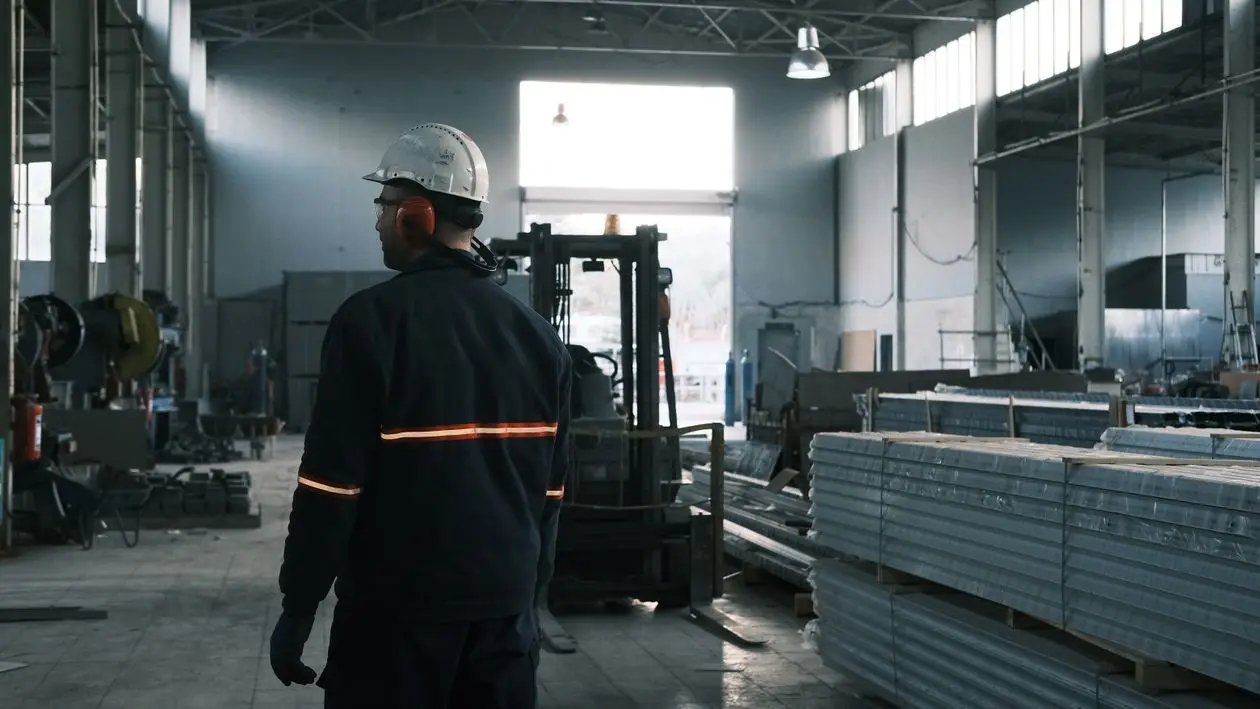
EU Machinery Regulation 2023/1230 does not arrive as a paperwork update you can park until December 2026. On 20 January 2027 it replaces the Machinery Directive outright, with no transition window — and the part that fails an audit first is rarely the CE mark on the housing. It is whether the technical file can prove the dimensions and safety data you declared.
Here is what actually changes, the dates to put in a project plan, and the documents an overseas machinery exporter needs ready before the container leaves the yard.
EU Machinery Regulation 2023/1230 at a glance
The Regulation keeps the same essential health and safety requirements the Directive had, then adds obligations for software, cyber-safety and higher-risk product categories. The practical difference for a supplier is what the file must contain and how the instructions and declaration may be delivered.
| Item | Machinery Directive 2006/42/EC (today) | Machinery Regulation (EU) 2023/1230 (from 20 January 2027) |
|---|---|---|
| Legal form | Directive — transposed nationally | Regulation — directly applicable, no national variation |
| Technical documentation | Annex VII | Annex IV, Part A (expanded) |
| Instructions for use | Paper by default | Digital allowed, with conditions; paper on request |
| EU declaration of conformity | Paper accompanying the product | May be digital, accessible for at least 10 years |
| Software and AI safety functions | Not addressed | Covered, including safety-related software |
| Cybersecurity for safety control systems | Not addressed | Required, proportionate to the risk |
| Higher-risk categories | Annex IV (old) | Annex I, Parts A and B |
| Authorised representative | Not offered | Can be appointed by written mandate |
Two numbers put the scale in perspective. Recital 27 of the Regulation records that around 98% of companies in the machinery sector are small or medium-sized enterprises — so this is not a rule written for the large OEMs alone. And under Article 6(9), EU countries must now feed accident and health-damage data back to the Commission, which means the safety record of a machine model becomes visible across the single market.
The timeline: three dates, not one
Most summaries give a single date. Three matter, and one of them is a correction you may still see quoted wrongly.
- 29 June 2023 — published, and 19 July 2023 — in force. The EU Machinery Regulation 2023/1230 was published in Official Journal L 165 and entered into force on the twentieth day after publication. From that point the legal text existed; it did not yet bite.
- 4 July 2023 — the corrigendum. The original text carried a clerical error in its application dates. A corrigendum corrected the general application date to 20 January 2027. Guides still circulating "14 January 2027" are reading the uncorrected version.
- 20 January 2027 — it applies, and Directive 2006/42/EC is repealed. There is no transition phase during which a supplier may choose between the two texts. From that day, machinery placed on the EU market is judged against the Regulation.
One comfort clause remains: machinery placed on the EU market before 20 January 2027 in conformity with the Directive is not pulled off the shelf. Units already in the channel stay under the old rules. The moment is about placement, not about the calendar on the shipping carton — but it also means stock sitting in a European warehouse is the last of the old-regime machines.
Two blocks switched on early: the rules on notified bodies and market surveillance have applied ahead of the main date, which is why a notified body you used for a Directive type-examination may already be operating under the Regulation.
What the technical file must now contain (Annex IV, Part A)
This is the section that quietly decides whether a machine can be sold. The technical documentation moved from Annex VII of the Directive to Annex IV, Part A of the Regulation, and the content list is explicit. At minimum it must hold:
- a complete description of the machinery and its intended use;
- the risk assessment documentation, including the list of applicable essential health and safety requirements and the protective measures chosen for each, plus residual risks;
- design and manufacturing drawings and schemes of the product, its components, sub-assemblies and circuits;
- the descriptions and explanations needed to read those drawings and understand how the machine operates;
- references to the harmonised standards or common specifications applied — and, where only part of a standard was used, which part;
- where no harmonised standard was applied, a description of the other technical specifications used to meet each requirement;
- reports and results of design calculations, tests, inspections and examinations;
- a description of the production means used to keep units conforming to the design;
- a copy of the instructions for use and the information listed in section 1.7.4 of Annex III;
- where relevant, the EU declaration of incorporation and assembly instructions for partly completed machinery, and copies of declarations of conformity for incorporated products;
- for series production, the internal measures that keep every unit in conformity;
- and, on a reasoned request from a national authority, the source code or programming logic of safety-related software.
The retention rule is the one suppliers miss: manufacturers must keep the technical documentation and the EU declaration of conformity at the disposal of market surveillance authorities for at least 10 years after the product is placed on the market or put into service.
There is a dimension trap buried in that list. Points (c) and (d) require drawings and schemes that are readable and internally consistent, and point (g) requires the test and inspection results to match what the drawings declare. A common failure is not a missing document — it is a drawing whose dimension disagrees with the nameplate, the instruction manual, or the test report, because someone retyped a number in three places. This is exactly the problem an industrial spec diagram is built to prevent: the measured value is locked onto the drawing so it survives a resize or a re-export, instead of being redrawn by hand. A number that is measured and anchored to the real edges of a component holds; a number that was retyped is a guess waiting to be contradicted. If you want the difference spelled out, see spec sheet vs technical drawing.
Digital instructions and the digital declaration of conformity
The Regulation finally settles a question the Directive left ambiguous: instructions for use may be provided in digital format. It is not a free pass. Article 10(7) attaches conditions:
- the machine, its packaging or an accompanying document must state how to access the digital instructions;
- the format must let the user print, download and save the instructions — including when they are embedded in the machine's own software;
- they must stay accessible online for the product's expected lifetime and for at least 10 years after placing on the market;
- at the user's request at the time of purchase, the manufacturer must supply paper instructions free of charge within one month;
- and for machinery that a non-professional user could reasonably use, the safety information essential for safe use must still be supplied in paper.
The EU declaration of conformity follows the same logic. It may travel as a digital document — accessible online for the expected lifetime and at least 10 years — or, alternatively, the instructions may carry an internet address or machine-readable code pointing to it. For a distributor, that changes the packing-list conversation: "the declaration is in the box" is no longer the only acceptable answer, but "it is online somewhere" is not enough either.
Marking and the nameplate: what the machine itself must show
Marking is where a customs or market-surveillance officer checks a physical unit in minutes. Under the Regulation the machine must bear, at least:
| On the machine (or packaging/document if size makes it impossible) | Detail |
|---|---|
| Model, series or type designation | Identifies the product line |
| Year of construction | The year the manufacturing process was completed |
| Batch or serial number | Or another unique identifying element |
| Manufacturer identity | Name, registered trade name or trade mark |
| Contact | Postal address plus website, email or other digital contact |
The CE marking itself is governed by Article 24 and must be affixed after the conformity assessment is complete — never before. If you are already fighting the physical rules of the mark, the 5 mm minimum and where it may sit are covered in CE marking size requirements.
Who carries the duty
The Regulation distributes obligations along the chain, and exporters who ship through a European importer should know exactly where the line falls.
- Manufacturer — runs the risk assessment, draws up the technical documentation, carries out the conformity assessment, draws up the EU declaration of conformity and affixes the CE marking. If you sell under your own name or trademark into the EU, you are the manufacturer even if you did not design the machine.
- Importer — must ensure the manufacturer has done the above, keep the documentation available for authorities, and put its own name and contact on the product or packaging.
- Authorised representative — a manufacturer outside the EU may appoint one by written mandate. Note the limit: the obligation to draw up the technical documentation set out in Annex IV cannot be delegated to the authorised representative, nor can the core manufacturer duties in Article 10(1).
- Distributor — acts with due care and must be able to produce the documentation on request, in a language the authority understands.
If you are a non-EU supplier selling directly, the practical question is not whether you can appoint an authorised representative — it is whether your European customer or their compliance team will demand one before they place a purchase order.
Readiness checklist
- Confirm the exact product categories you ship, and whether any fall in Annex I, Parts A or B (the stricter conformity routes)
- Map your current technical file against Annex IV, Part A and mark the gaps
- Check every drawing, nameplate and instruction manual for dimension consistency — one number, one source
- Add the software and cyber-safety risk assessment if any safety function is software-driven
- Decide the instructions format and publish the digital access route on the machine or its packaging
- Set up a 10-year retention process for the technical file and the EU declaration of conformity
- Confirm who will be the EU economic operator — you, your importer, or an appointed authorised representative
- Re-issue the EU declaration of conformity in the Annex V, Part A format
- Re-check the CE marking size and placement on the updated artwork
- Put the 20 January 2027 date in the production schedule, not the shipping schedule
FAQ
When does the EU Machinery Regulation 2023/1230 apply?
It applies from 20 January 2027. The date comes from a corrigendum published on 4 July 2023 that corrected a clerical error in the original text, which read 14 January 2027. On that day Directive 2006/42/EC is repealed and there is no transition phase.
Does the Machinery Regulation replace the Machinery Directive?
Yes. Regulation (EU) 2023/1230 repeals Directive 2006/42/EC (and Council Directive 73/361/EEC). Because it is a regulation rather than a directive, it applies directly in every member state without national transposition, which is what removes the country-by-country variation the Directive allowed.
What has to be in the technical file under Annex IV?
At minimum: a full description and intended use, the risk assessment, design and manufacturing drawings and schemes, the explanations needed to read them, references to the standards applied, test and inspection results, the production conformity measures, a copy of the instructions, and — on request — the source code of safety-related software. It must be kept available for at least 10 years.
Can the instructions for use be digital only?
Not quite. Digital delivery is allowed, but the machine must show how to reach the instructions, the user must be able to print, download and save them, they must stay online for at least 10 years, and paper must be supplied free of charge within one month on request. For products a non-professional could use, the essential safety information must still ship in paper.
What is the most common reason a technical file gets rejected?
Inconsistent numbers. The drawings, the nameplate, the instruction manual and the test report are usually produced by different people at different times, and a dimension that was retyped can drift out of agreement with the others. The reliable fix is to stop retyping: lock the measured dimension onto the drawing with geometry that is deterministic — snap the line to the real edge, type the true number, export at the size the file expects — so the value is anchored to the object rather than copied between documents. That is the difference between a measurement and a guess that happens to look right.
Does a non-EU manufacturer need an authorised representative in the EU?
It is optional under the Regulation — a manufacturer may appoint one by written mandate. But an economic operator established in the EU must be responsible for the product, which in practice is often the importer. The authorised representative cannot take over the duty to draw up the technical documentation, so appointing one does not outsource the engineering work.
Sources & References
- EUR-Lex — Regulation (EU) 2023/1230 on machinery — the full text: Article 10 manufacturer duties, Article 54 application dates, Annex III essential requirements, Annex IV technical documentation, and Annex V declarations.
- European Commission — Machinery — official position that the Regulation applies on a mandatory basis from 20 January 2027, that a corrigendum corrected the application dates, and the list of changes.
- EUR-Lex — Directive 2006/42/EC on machinery — the text being repealed, including the Annex VII technical-file list the Regulation replaces.
- EUR-Lex — Machinery safety requirements (official summary) — the plain-language summary of Regulation (EU) 2023/1230, its scope, and the repeal of Directive 2006/42/EC as of 20 January 2027.