Fill in the form and download a commercial invoice as a PDF. Your details carry over to the packing list, proforma invoice and quotation, so the four documents always match.
Pro adds your logo and a company stamp or signature. See Pro
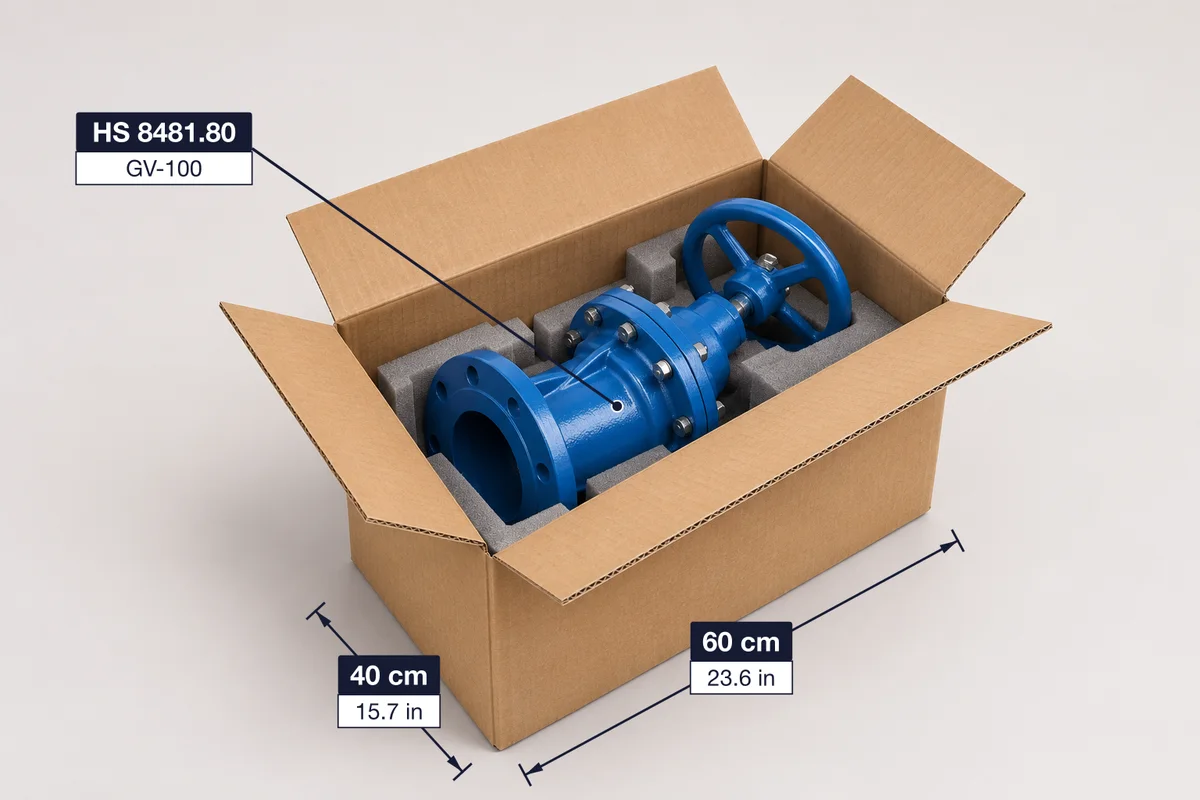
An invoice lists what shipped. A product photo with the dimensions marked shows the buyer what to expect before the carton arrives.
A commercial invoice is the seller's bill for goods sold across a border. Customs uses it to identify the goods and work out duty and tax, the buyer uses it to pay and to import, and banks read it when payment runs through a letter of credit.
There is no single worldwide form. Requirements differ by country, but almost every commercial invoice carries the fields below.
| Field | What to write | Why it matters |
|---|---|---|
| Seller and buyer | Full legal names and addresses | Customs checks who sold the goods and who imports them |
| Invoice number and date | Your own number and the date of issue | Ties the invoice to the packing list, B/L and payment |
| Description of goods | What the item is, what it is made of and what it is for | Vague wording is one of the most common reasons for customs queries |
| HS code | At least the first six digits | Decides the duty rate. The six-digit code is shared internationally; countries add further digits |
| Country of origin | Where the goods were made, not where they shipped from | Affects duty, quotas and preferential rates |
| Quantity and unit price | Quantity, unit and price per unit | Customs checks that quantity × price equals the line amount |
| Currency and total | One currency for the whole invoice, with the total | The total is the declared value |
| Incoterm and named place | Such as FOB Ningbo or CIF Hamburg | Shows who pays for freight and insurance, and what the price includes |
| Payment terms | Such as 30% deposit, 70% against copy of B/L | Must match the sales contract or letter of credit |
| Shipping details | Ports, vessel or flight, B/L or AWB number | Links the invoice to the shipment |
This is a general guide, not customs advice. Rules differ by country and by product, so confirm the wording with your freight forwarder or customs broker before you ship.
The three documents look alike but do different jobs. Most shipments need the commercial invoice and the packing list. The proforma invoice comes earlier, before the goods ship.
| Document | When | What it does | Shows prices |
|---|---|---|---|
| [Quotation](/tools/quotation-template) | Before the order | Offers a price for a limited time | Yes |
| [Proforma invoice](/tools/proforma-invoice-template) | After the deal, before shipping | Confirms the terms so the buyer can pay a deposit, open a letter of credit or apply for an import licence | Yes |
| Commercial invoice | When the goods ship | The final bill and the customs value | Yes |
| [Packing list](/tools/packing-list-template) | When the goods ship | Lists what is in each carton, with weights and sizes | Usually not |
Most exporters keep separate Word or Excel files for each document, then retype the same numbers. That is where the mismatches start. Here, the quotation, proforma invoice, commercial invoice and packing list all read from one set of details. Change a quantity once and it changes on every document.
Your draft stays in your browser, so a refresh doesn't lose it. Nothing you type is uploaded while you work. The content is yours: the template adds up your figures and flags gaps, but it never fills in a value, an HS code or an origin for you.
Related: CBM calculator · container loading calculator · shipping mark generator · export price calculator
It is the seller's bill for goods sold across a border. It shows who sold what to whom, at what price and under which terms. Customs uses it to assess duty and tax, and the buyer uses it to pay and import the goods.
The seller or exporter. A freight forwarder may help prepare it, but the seller is responsible for what it says.
Not always, but many countries, carriers and banks expect a signed one. The PDF includes a signature line. Pro adds your company stamp or signature image. Check with your forwarder for your route.
Many countries and carriers expect it, usually at least the first six digits. The right code depends on the product, so confirm it with your customs broker. This template never suggests a code: it only reminds you if one is missing.
Yes. Customs still needs a value, even when nothing is being paid. State a realistic value and mark the goods as samples of no commercial value.
A proforma invoice is issued before shipping so the buyer can arrange payment or import permits. A commercial invoice is the final bill for goods actually shipped. Most customs authorities want the commercial invoice for clearing commercial shipments.
Yes. Filling it in needs no account, and downloading the PDF needs a free one. The free PDF has a small line in the footer. Pro removes it and adds your logo and stamp.
No. The PDF is an image of the page, which keeps every language looking right but means the text can't be selected. Keep your draft open if someone needs to copy details.