Fill in what the carrier needs, check it against your invoice and packing list, and send the draft to your forwarder. The carrier issues and signs the real bill of lading; this gets the wording right before it does.
Enter the packages, gross weight per package (kg) and package size (cm) for each line. Totals and CBM are worked out for you.
Pro adds your logo and a company stamp or signature. See Pro
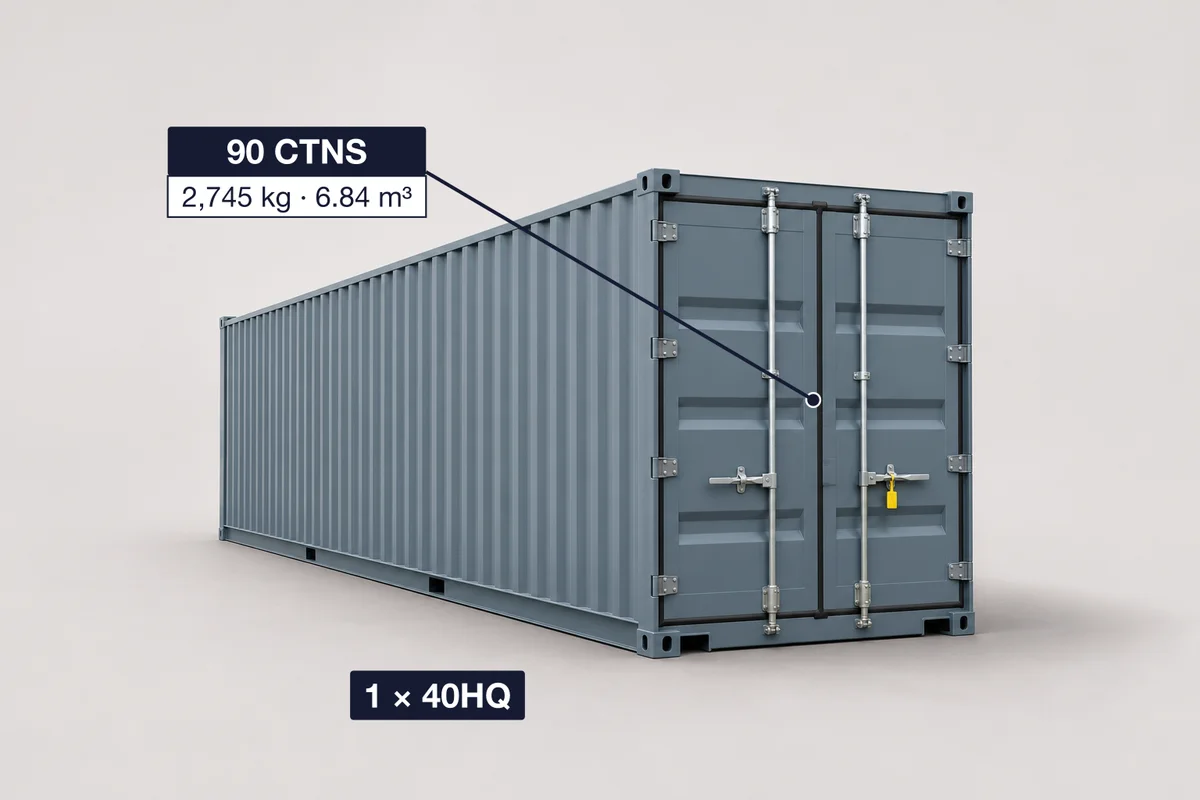
A photo of the packed carton or the loaded container, with its marks and size labelled, backs up the description on the bill of lading.
A bill of lading is the carrier's receipt for the goods and the evidence of the contract of carriage. An original B/L is also a document of title: whoever holds it can claim the cargo. That is why banks and buyers read every line of it.
Your forwarder or the carrier types the B/L from the shipping instructions you send. This template lays those instructions out as a draft B/L, so both sides check the same page.
| Box | What to write | Watch out for |
|---|---|---|
| Shipper | Your company, as on the invoice | Under a letter of credit it may have to match the credit exactly |
| Consignee | The buyer, or “TO ORDER” / “TO ORDER OF [bank]” | “To order” makes the B/L negotiable; a named consignee does not |
| Notify party | Who the carrier tells on arrival, usually the buyer or its broker | Give a phone or email the agent can actually reach |
| Vessel, voyage and ports | From the booking confirmation | Port of loading and discharge must match the booking and the credit |
| Marks and numbers | What is printed on the cartons | Same as on the packing list and the cartons themselves |
| Packages and description | Number and kind of packages, a plain description, HS code if the destination requires it | Keep the wording consistent with the invoice; vague descriptions get queried |
| Gross weight and measurement | Total kg and m³ | Must agree with the packing list and the container's verified gross mass |
| Freight | Prepaid or collect | Follows the Incoterm: CFR and CIF are usually prepaid, FOB usually collect |
| Originals | Number of originals, telex release or sea waybill | Agree this with the buyer before shipping |
The signed B/L is issued by the carrier or a freight forwarder acting as carrier (NVOCC). A shipper cannot issue its own bill of lading; the PDF from this page is marked as a draft for checking.
| Option | How the buyer gets the cargo | Typical use |
|---|---|---|
| Original bill of lading (often 3 originals) | Hands one original to the carrier's agent at destination | Letters of credit and documents against payment, when the seller keeps control until paid |
| Telex release (surrendered B/L) | The shipper surrenders the originals at origin and the carrier tells its destination office to release the cargo | Buyer has already paid, or the parties trust each other |
| Sea waybill | Released to the named consignee on proof of identity; no original needed | Regular trade between related or trusted parties; not a document of title |
The bill of lading, the commercial invoice and the packing list describe the same shipment, and customs, banks and buyers compare them. Most B/L amendments, and many letter of credit discrepancies, come from small differences: 90 cartons on one and 92 on another, “gate valves” on one and “valves” on the other.
This template uses the same goods, cartons and weights as the invoice and packing list on this site, so the numbers cannot drift apart. The shipping mark generator lays out the marks, and the CBM calculator checks the volume on its own.
No. A bill of lading is issued by the carrier, or by a freight forwarder acting as carrier (an NVOCC), and signed by them or their agent. The shipper supplies the details. This page makes the draft you send for that purpose.
It makes the bill of lading negotiable: the cargo goes to whoever holds the original, properly endorsed. “To order of [bank]” is common under letters of credit, so the bank controls the goods until the buyer pays.
Both are receipts and evidence of the contract of carriage. An original bill of lading is also a document of title and has to be surrendered to collect the cargo. A sea waybill is not; the cargo is released to the named consignee.
The shipper hands the original bills of lading back to the carrier at origin, and the carrier sends a message (once a telex) to its office at destination to release the cargo without originals. It is used when payment is already settled.
Some destinations and carriers require it, for example for advance cargo declarations, and many shippers add it anyway. If in doubt, add the same code as on your commercial invoice.