Prepare the certificate of origin with the same goods, packages and weights as your invoice, then take it to the issuing body to be certified. The certification box stays empty until they stamp it.
Use the same descriptions and HS codes as on the commercial invoice. Gross weight is per package, in kg.
Pro adds your logo and a company stamp or signature. See Pro
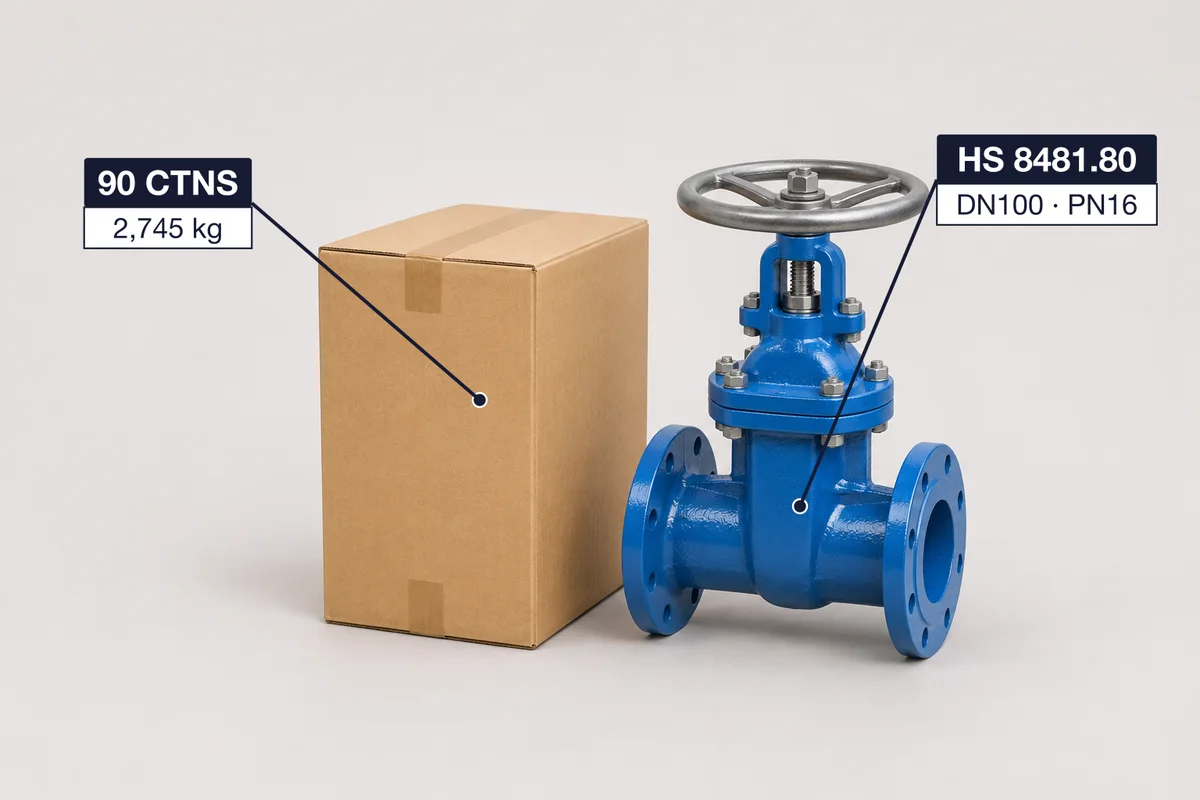
A labelled photo of the product, its marking and its packaging helps when a buyer or the chamber asks how the goods are made.
A certificate of origin states the country where the goods were produced. Importing customs, banks under a letter of credit and some buyers ask for it.
The exporter fills in the form and signs the declaration; a chamber of commerce or another authorized body in the exporting country checks it and certifies it. This template follows the layout of the common non-preferential certificate.
| Box | What to write |
|---|---|
| Exporter | Your company name and address |
| Consignee | The buyer or the party receiving the goods |
| Means of transport and route | Sea, air or road, and from where to where |
| Country of origin | Where the goods were produced, not where they ship from |
| Country of destination | Where the goods are going |
| Marks and numbers | As printed on the packages |
| Number and kind of packages | For example 90 CARTONS |
| Description of goods and HS code | The same wording and code as on the commercial invoice |
| Quantity and gross weight | From the invoice and packing list |
| Invoice number and date | The commercial invoice the certificate belongs to |
| Declaration by the exporter | Signed by you: the details are correct and the goods originate in the stated country |
| Certification | Left blank for the issuing body's stamp, signature and date |
| Type | What it is for | Form |
|---|---|---|
| Non-preferential certificate (this template) | Proves the country of origin for customs, letters of credit and import rules | The general certificate issued by chambers of commerce |
| Preferential proof of origin | Claims a lower duty under a trade agreement | The form or origin statement the agreement sets, such as EUR.1, an RCEP certificate or ASEAN–China Form E, with its own rules of origin |
A non-preferential certificate does not lower duties. If your buyer asks for a preferential certificate, check the trade agreement and the issuing authority's own form.
The chamber or authority compares the certificate with the commercial invoice and may ask for evidence that the goods are made where you say: a production record, a bill of materials, or a declaration from the manufacturer if you are a trader.
Origin is decided by where the goods were produced or last substantially transformed, not by the port they ship from. Goods assembled in one country from parts made in another may need more explanation, so keep the supplier documents for those lines.
A chamber of commerce or another body authorized in the exporting country; in some countries customs or a government trade agency. The exporter fills in the form and signs the declaration, and the issuing body certifies it.
No. This is the general, non-preferential certificate. Preferential proofs of origin follow the form and rules of the trade agreement they belong to.
No. It is needed when the importing country, a letter of credit or the buyer asks for it. Check with your buyer before shipping, because it is hard to get one after the goods have left.
Yes. Fill in the origin on each line that differs and the certificate shows an origin column. Some issuing bodies prefer one certificate per origin; ask yours.
Use the same code as on your commercial invoice. The first six digits are international; longer codes are national tariff lines, so give the six-digit code at least.