
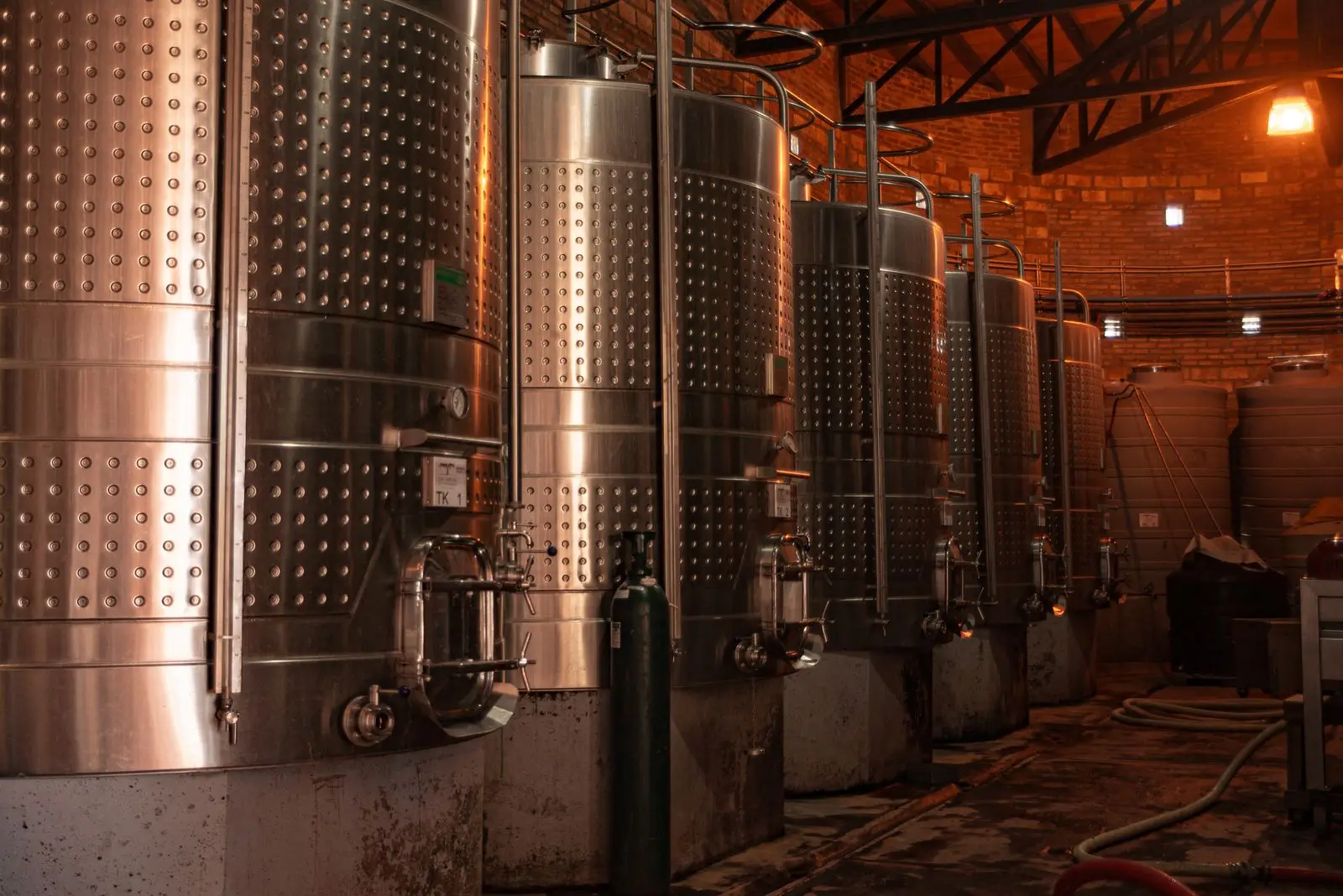
ISO tank container dimensions are the easy part: the frame is a standard 20 ft box and every tank in the fleet sits on the same footprint. The hard part is that the shell inside that frame is not standard at all, and the two numbers a buyer actually cares about — how much the tank holds and how much it may legally weigh — never line up the way a quote implies. Get the difference right and you win the load; get it wrong and a "26,000-litre" tank turns out to carry 17,000 litres of the customer's product.
This is a working reference for the numbers that decide a bulk liquid shipment, written for exporters, traders and suppliers who quote tanks rather than guess at them.
ISO tank container dimensions: the whole range in one table
Almost every ISO tank container shares one external frame and differs only in the shell, the pressure rating and therefore the usable capacity. Here is the family at a glance.
| Tank type | Typical instruction code | External frame (L × W × H) | Typical shell capacity | Built for |
|---|---|---|---|---|
| Light-duty chemical | T1–T4 | 6,058 × 2,438 × 2,591 mm | 21,000–25,000 L | benign, lower-hazard liquids |
| General chemical (the workhorse) | T11 | 6,058 × 2,438 × 2,591 mm | 24,000–26,000 L | most non-hazardous and many hazardous chemicals |
| High-hazard / aggressive | T14–T22 | 6,058 × 2,438 × 2,591 mm | 20,000–26,000 L | aggressive cargoes needing thicker shells and higher test pressures |
| Non-refrigerated liquefied gas | T50 | 6,058 × 2,438 × 2,591 mm | pressure shell, ~20,000–26,000 L | LPG, ammonia, refrigerants |
| Refrigerated liquefied gas | T75 | 6,058 × 2,438 × 2,591 mm | insulated pressure shell | cryogenic and refrigerated gases |
| Food-grade | service-specific | 6,058 × 2,438 × 2,591 mm | 21,000–26,000 L | juice, wine, oils, liquid food |
| Swap-body (road-only) | — | longer than 20 ft, not a ship/rail frame | often above 30,000 L | lighter liquids on road legs only |
The frame column barely moves because it cannot: a tank container exists precisely so that a pressure vessel can drop into a standard container slot. The capacity column is where the commercial arguments live. For the full set of reference figures by tank type, see the ISO tank container dimensions page, which lists the standard values alongside the standards they come from.
What is an ISO tank container?
An ISO tank container is a stainless-steel pressure vessel mounted inside a standard 20 ft ISO frame, used to move liquids, liquefied gases and powders by road, rail and sea without repacking the product. The frame carries standard corner fittings, so the unit stacks and lifts exactly like a dry box, while the shell — the part that actually holds the cargo — is engineered to a UN portable tank instruction (a "T-code") and inspected at fixed intervals.
That split is the whole point of the design. The steel frame is commodity hardware; the shell, the T-code and the data plate are what a buyer is really purchasing. Two tanks can look identical on a trailer and be certified for completely different products.
The frame is standard; the capacity is not
The 20 ft footprint is fixed by ISO 668, the standard that sets the classification, dimensions and ratings for series 1 freight containers. A tank container's external length, width and height are therefore 6,058 mm × 2,438 mm × 2,591 mm — the same envelope as an ordinary 20 ft dry container — and its corner fittings are built to the same interface so a crane or chassis never has to treat it differently.
The shell inside that envelope is a different matter. The same frame can hold a 21,000-litre light-duty tank, a 26,000-litre general chemical tank, or a heavyweight gas pressure vessel. When a buyer asks "what are the tank container dimensions," they usually mean the frame; when they ask "how much does it hold," they mean the shell. Keeping those two questions apart prevents the most common quoting error in the trade.
Because the frame is a standard twenty, the tank travels and stacks like any other container — a crane or chassis never has to treat it as a special case.
Capacity vs usable volume: the fill rule nobody quotes
A tank container is never shipped full. Two things stop it: the physics of thermal expansion and the dangerous-goods rules that codify the physics.
Liquids expand as they warm. A tank loaded liquid-full at 15 °C can build hydraulic pressure as the cargo climbs toward the maximum temperature it could see in transit, which the transport rules treat as 55 °C in the general case. To leave room for that expansion, the regulations cap the degree of filling — the fraction of the shell's water capacity that may be liquid.
For many substances the cap is a temperature-compensated formula, not a flat percentage. Under the TP1 special provision, the maximum degree of filling is:
Degree of filling = 97 ÷ (1 + α × (tr − tf))
where α is the coefficient of cubic expansion of the liquid, tr is the maximum mean bulk temperature during transport and tf is the mean liquid temperature at the moment of filling. The rule is published in the UN portable tank provisions and carried into national law — the US version sits in 49 CFR 172.102, the table of hazardous materials special provisions.
Other provisions tighten the same idea: TP2 points back to the general filling rule, and TP3 governs solids carried above their melting point. The practical consequence is that the "capacity" printed on a data plate is a ceiling, not a target. A tank with a nominal capacity of 26,000 litres will almost never carry 26,000 litres of anything.
There is a floor as well as a ceiling. In an unbaffled tank, a partial load can surge from end to end and destabilise the road or rail unit, so operators avoid travelling far below roughly 80 % full. Baffled tanks add internal surge plates precisely so that a part load can move safely. If a parcel is small, the honest answer is often "a smaller tank" rather than "fill the big one a quarter full."
Tank container weight: why dense liquids run out of kilograms first
For most industrial chemicals, the binding constraint is not volume at all — it is weight. A typical general chemical tank container carries a maximum gross mass of 36,000 kg, with a tare of roughly 3,400–4,000 kg, leaving a payload near 32,000 kg. (One widely-specified T7 unit lists a 26,000-litre shell, a 3,370 kg tare and a 32,630 kg maximum payload — see the manufacturer's T7 technical parameter matrix.)
That payload figure sets an invisible density ceiling. Over a 26,000-litre shell:
32,630 kg ÷ 26,000 L ≈ 1.26 kg/L
Any cargo denser than about 1.26 kg/L hits the weight limit before the shell is full. Mineral acids, caustic solutions and many solvents are well above that line. Concentrated sulfuric acid, for example, runs about 1.84 kg/L, so a 26,000-litre tank tops out near 17,700 litres — roughly two-thirds full — before it reaches 32,630 kg. The tank is "only" 68 % full and already at its legal maximum.
The same gap explains why a tank quote must state gross, tare and payload together, never "capacity" alone. The gross vs net vs volumetric weight distinction is the same trap in a different costume: the number the buyer assumes is carrying the load is not always the number the transport document uses.
The T-code: what the tank is certified to carry
The T-code is the portable tank instruction that a substance's dangerous-goods entry requires. It is not a size; it is a certification level, and it decides which products the shell may legally carry.
- T1 through T22 are the general portable tank instructions for Class 1 and Classes 3 to 9 dangerous goods. The numbers rank shells by design and test pressure and by the hazard of the cargoes permitted: low numbers suit benign liquids, T11 covers most non-hazardous and many hazardous chemicals, and higher codes such as T14–T22 add thicker walls, higher test pressures and special fittings for aggressive cargoes.
- T50 covers non-refrigerated liquefied gases — LPG, ammonia, refrigerants — in heavier pressure vessels.
- T75 covers refrigerated liquefied gases, which need insulation and a different pressure regime.
The governing text is the IMO International Maritime Dangerous Goods (IMDG) Code, with the road and rail equivalents (ADR/RID) carrying the same instructions. The shell's classification and testing requirements come from ISO 1496-3, the ISO standard for series 1 tank containers, also published in Europe as EN ISO 1496-3.
The rule that catches exporters out: a tank may carry a cargo whose entry requires its own T-code or a lower one, but never a higher one. Quote a T11 tank against a cargo that the IMDG Code lists with a T14 instruction and the booking will not sail, however full the tank looks.
A single data plate ties all of this together — shell capacity, tare, maximum gross mass, test pressure, design temperature and permitted cargoes. Read the plate before you quote, and quote from the plate.
Common tank container sizing mistakes
- Quoting "26,000 litres" as if it were the deliverable quantity, without applying the fill limit.
- Ignoring density: assuming volume is the constraint on a cargo heavier than about 1.26 kg/L.
- Confusing the external frame dimensions with the internal shell capacity (they answer different questions).
- Matching a T-code to the tank's size instead of to the cargo's dangerous-goods entry.
- Omitting gross, tare and payload from the offer so the buyer cannot check the road limit.
- Forgetting that a swap-body tank is not a 20 ft ISO frame and cannot travel by ship or rail the same way.
- Treating the data plate as fixed — capacities, tare and test pressure vary by manufacturer and build.
How to put tank container dimensions on a quote
A tank quote has to carry four numbers in one place: the frame envelope (so the buyer checks handling), the shell capacity (so they size the parcel), the tare and maximum gross mass (so they check the road limit), and the T-code (so they check the cargo is legal). When those four live in different documents, the buyer reconciles them — or, worse, assumes the wrong one.
The fix is to put the measured figures where the buyer's eye already is: annotate the tank photo with the certified shell capacity, tare and maximum gross, drawn from the tank's own data plate and snapped to the frame edges, so the quote, the plate and the picture read the same. An industrial spec diagram built this way exports at the size a marketplace or RFQ attachment expects, which is the difference between a photo the buyer trusts and a number they have to email you to confirm.
The contrast that matters: a restyled or AI-generated image can render a plausible-looking capacity that traces to nothing. A measured annotation pins the real, certified value to the real edge — which is the whole reason a tank spec is worth quoting carefully in the first place. It also pairs naturally with the packaging comparison buyers run next; if the parcel is too small for a tank, the IBC tote vs steel drum decision changes the whole shipment.
FAQ
How many litres does an ISO tank container hold?
A standard ISO tank container holds roughly 21,000 to 26,000 litres, with 24,000 litres the most common working size; swap-body and specialty tanks can exceed 30,000 litres. The usable figure is always lower than the nominal capacity because the dangerous-goods fill limit, not the shell volume, decides the load.
What is the difference between a 20 ft tank container and a swap-body tank?
A 20 ft tank container sits on the standard ISO 668 frame (6,058 × 2,438 × 2,591 mm) and travels by ship, rail and road. A swap-body tank is longer than a 20 ft ISO frame and is a road-only unit, so it cannot be stacked or shipped in a standard container slot the same way.
How much does a 20 ft tank container weigh?
Tare weight is typically about 3,400 to 4,000 kg for a general chemical tank, and the maximum gross mass commonly reaches 36,000 kg, giving a payload near 32,000 kg. Heavier pressure vessels for liquefied gases carry higher tare weights and correspondingly lower payloads.
What does a T-code mean on a tank container?
A T-code is the UN portable tank instruction a substance requires, defined in the IMDG Code and ADR/RID — for example T11 for a general chemical tank, T50 for non-refrigerated liquefied gases and T75 for refrigerated liquefied gases. It certifies what the shell may legally carry, and a tank may carry cargo requiring its own code or a lower one, never a higher one.
How should a supplier present tank container dimensions to a buyer?
Give the frame envelope, shell capacity, tare, maximum gross mass and T-code together, in one document, and label the tank image with the same measured figures so nothing has to be reconciled. Locking the certified numbers onto the photo — measured from the data plate, not typed from memory — is exactly what keeps a quote, a spec sheet and a listing from disagreeing with each other.
Sources & References
- ISO 1496-3:2019 — Series 1 freight containers: Specification and testing, Part 3: Tank containers for liquids, gases and pressurized dry bulk
- NSAI — EN ISO 1496-3:2019, the European adoption of the tank container standard
- ISO 668:2020 — Series 1 freight containers: Classification, dimensions and ratings (the 20 ft frame)
- eCFR — 49 CFR 172.102: special provisions, including TP1/TP2/TP3 degree-of-filling rules for portable tanks
- IMO — International Maritime Dangerous Goods (IMDG) Code, source of the portable tank instructions (T-codes)
- International Tank Container Organisation (ITCO) — industry body for tank container operations and technical guidance
- Jin Long Tank — T7 20 ft UN portable tank technical parameter matrix (26,000 L, 3,370 kg tare, 32,630 kg payload)